Diagram template
Architecture: environments
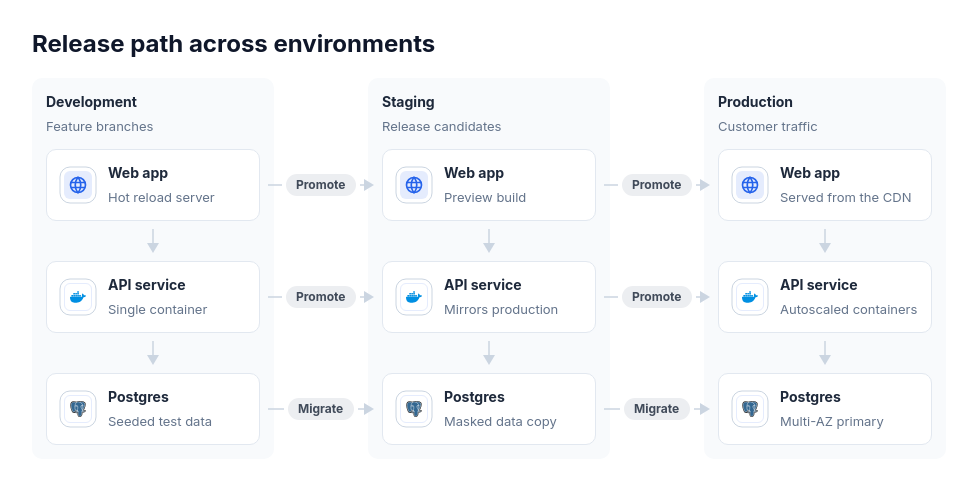
PowerThe same components repeated in parallel lanes and aligned in rows across them, with links between neighboring lanes of a row and between neighboring rows of a lane.
Categories
Included in
Power, Max
When to use it
Use for one system shown as two to four copies that are compared side by side: dev, staging, and production environments with promotion between them, region A, region B, and disaster recovery with replication, or blue and green stacks. Components of a row correspond across lanes, and a lane's rows read as its flow from top to bottom. Not for one-off networks of different components (the grouped panels design) or free-form dependencies between components.
Adjust after generating
Change the style, colors, and font, and these options, as often as you like without spending credits.
- Card shape
- Card fill
- Color distribution
- Card border
- Card shadow
- Typography
- Icon shape
- Icon size
- Icon fill
- Icon shell
- Spacing
- Alignment
- Material
- Connectors
- Line weight
What you fill in
Describe your topic in plain words and the AI fills these in. You can edit every field afterwards.
- Lanes
- 2 to 4, each with name and optional description
- Nodes
- 3 to 12, each with id, label, optional description, icon, lane, and row
- Edges
- 1 to 14, each with from, to, and optional label
Related templates
All architecture templates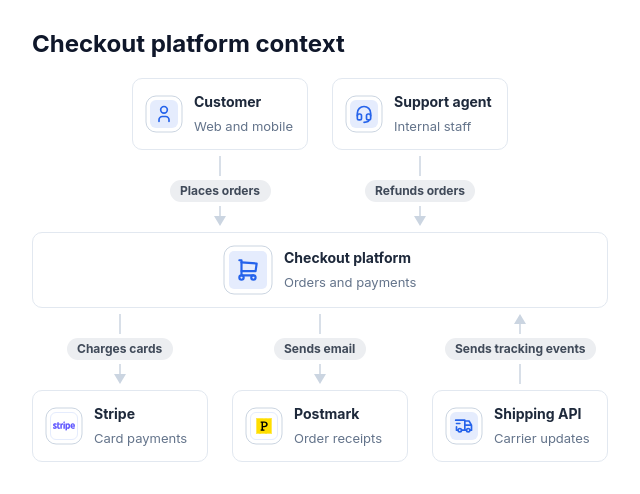 Architecture: system contextA C4 system context diagram, a "who uses it and what it depends on" slide, or an integration overview: one system, one to four actors that use it, and one to five external systems it calls or that call it, each link saying what it does.
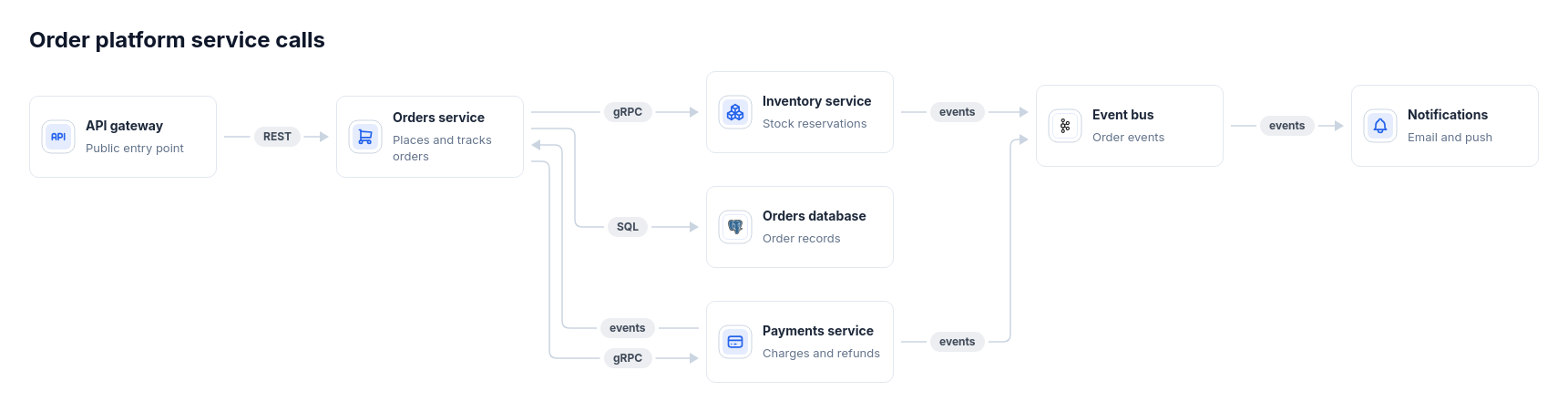 Architecture: dependency graphThree to twelve components that call or depend on each other with no fixed tiers, such as a microservice call map, a service dependency graph, or data lineage between systems, with links labeled by protocol or what flows (gRPC, REST, events).
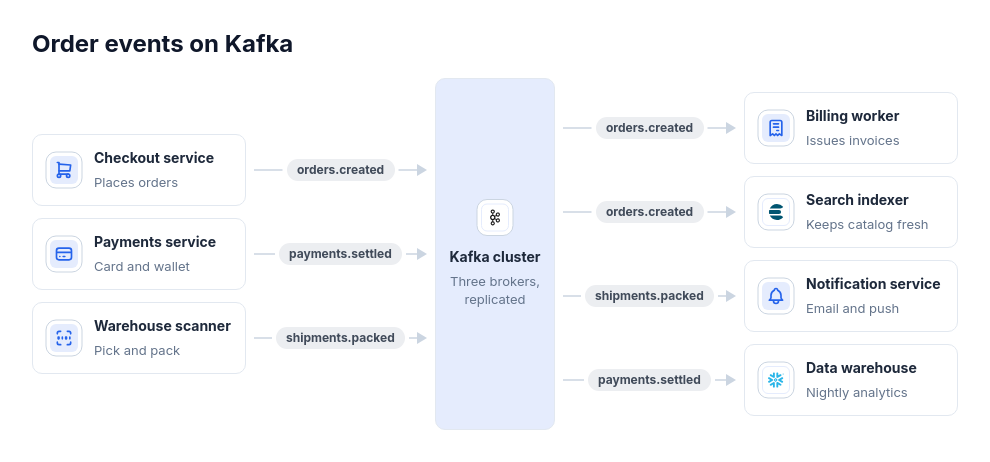 Architecture: event hubEvent flows through one broker, bus, or topic hub with one to five producers and one to five consumers, such as Kafka topics, Google Pub/Sub, SNS fanning out to SQS queues, EventBridge rules, or a webhook gateway delivering to several handlers; built for fan-in and fan-out.
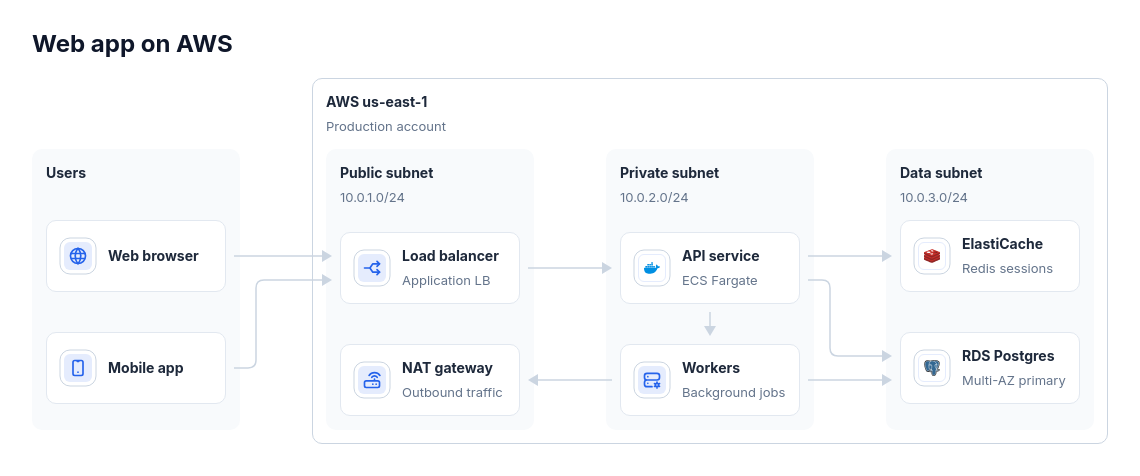 Architecture: grouped panels left to rightTwo to fourteen components placed in two to five networks, clusters, subnets, or accounts, such as an AWS VPC with public and private subnets or a Kubernetes cluster with namespaces, optionally inside one region with users or third-party services outside.
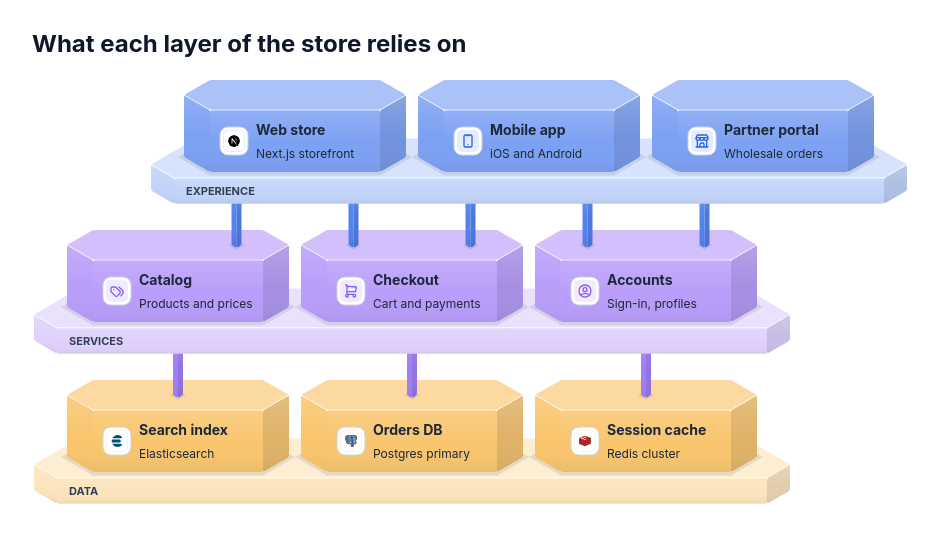 Architecture: isometric floating layer plates stacked with a clear gapA layered system where components rely on specific components in the layer directly below: software layers from experience through services to data, an operating model from strategy through operations to delivery teams, or a data stack from reports through warehouse and pipelines to sources.
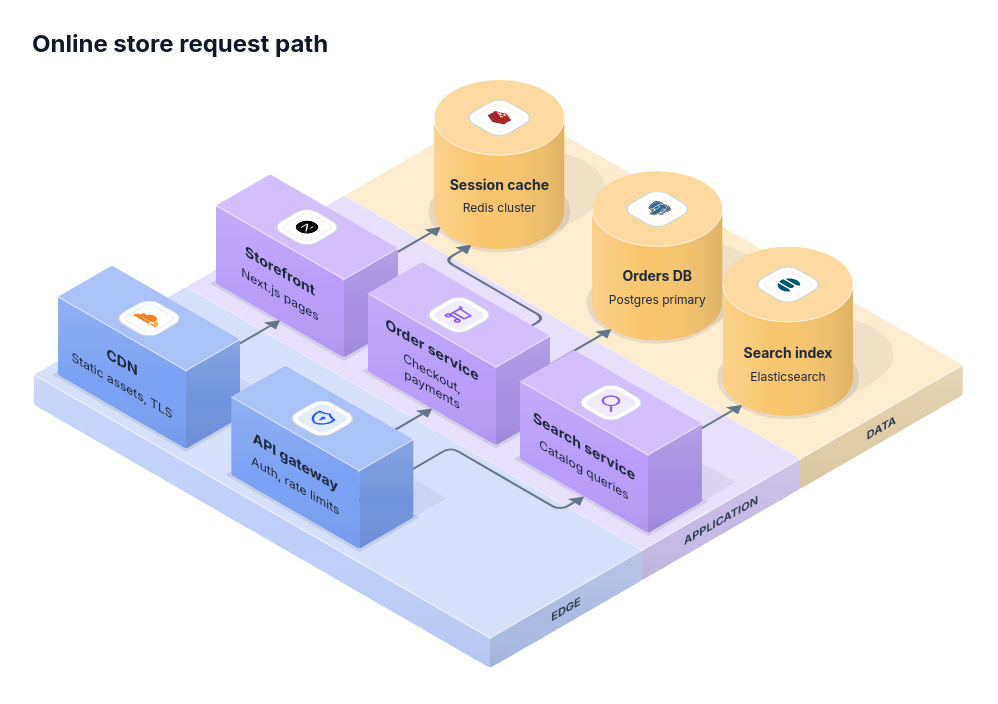 Architecture: isometric zone platforms on one floorTwo to four tiers, environments or network zones that a request or data flow crosses in order, each holding one to three services: a cloud web stack from edge to data, an IoT path from devices through gateways to analytics, a payments flow from channels through processing to ledgers.