Diagram template
Cycle: causal
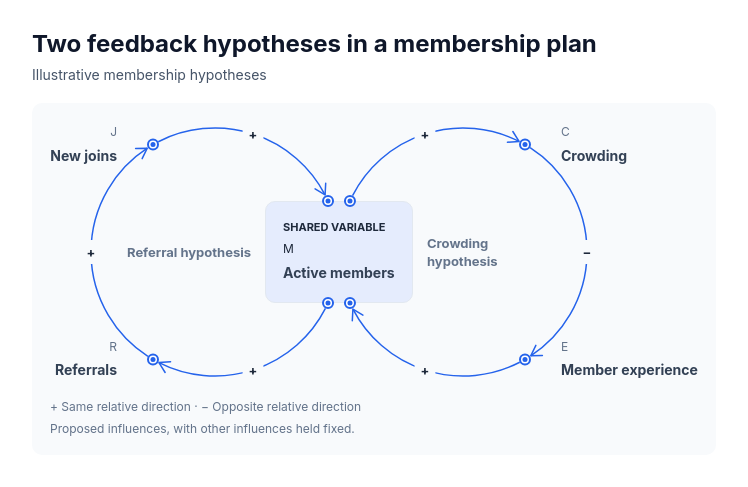
PowerTwo supplied three-link causal loops meet one shared variable drawn once. Separate shared-variable ports, exact variable keys and link-owned polarity signs keep both feedback paths readable.
Categories
Included in
Power, Max
When to use it
For a compact qualitative causal-loop view with exactly five variables and two three-link loops sharing one variable: a referral loop against crowding in a membership plan, workload against hiring in a team, adoption against support load in a product, or demand against price in a market. Positive and negative mean same or opposite relative influence with other influences held fixed, following MIT's causal-loop definitions. Not for loops of other sizes, execution cycles, forecasts, measured magnitudes, timing, dominant-loop, equilibrium or stability claims.
Adjust after generating
Change the style, colors, and font, and these options, as often as you like without spending credits.
- Card shape
- Card shadow
- Material
- Typography
- Spacing
- Card border
- Connectors
- Line weight
What you fill in
Describe your topic in plain words and the AI fills these in. You can edit every field afterwards.
- Subject
- Id and title
- Left
- Title and nodes
- Right
- Title and nodes
- Edges
- Exactly 6, each with from, to, and polarity
Related templates
All cycle templates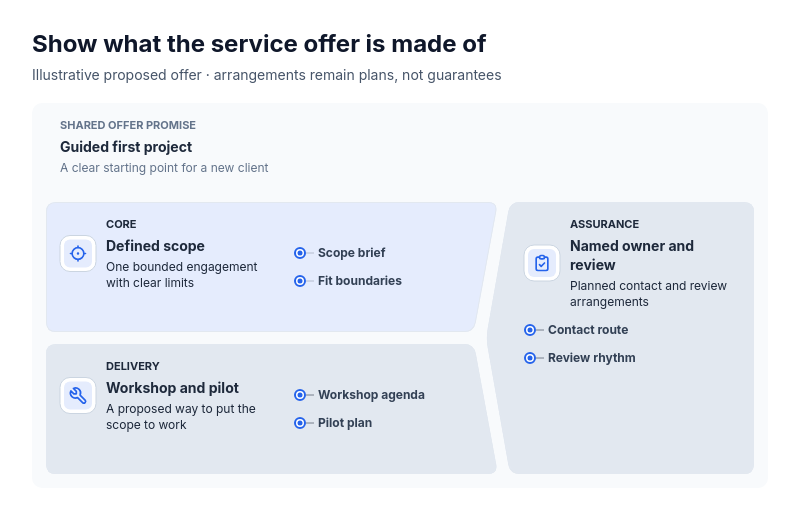 Anatomy: crowned subjectFor explaining what one thing is made of as a primary part, the part that carries it out and a part that spans both: a service offer (scope, delivery, assurance), a product (core function, how it ships, support), a course (content, format, learner support), an event (program, logistics, hosting) or a team charter (mission, ways of working, backing).
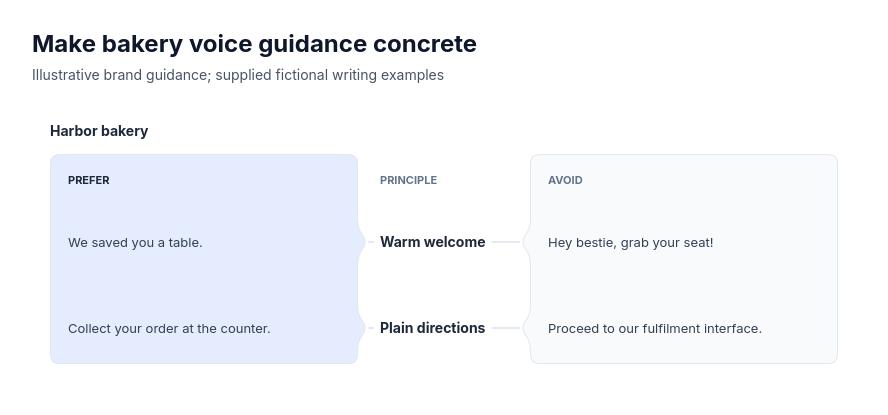 Comparison: principle seamsFor two to four supplied principles, each owning one exact preferred example and one exact example to avoid: brand voice guides, product interface copy, support reply standards, documentation style, naming conventions, inclusive language or meeting etiquette.
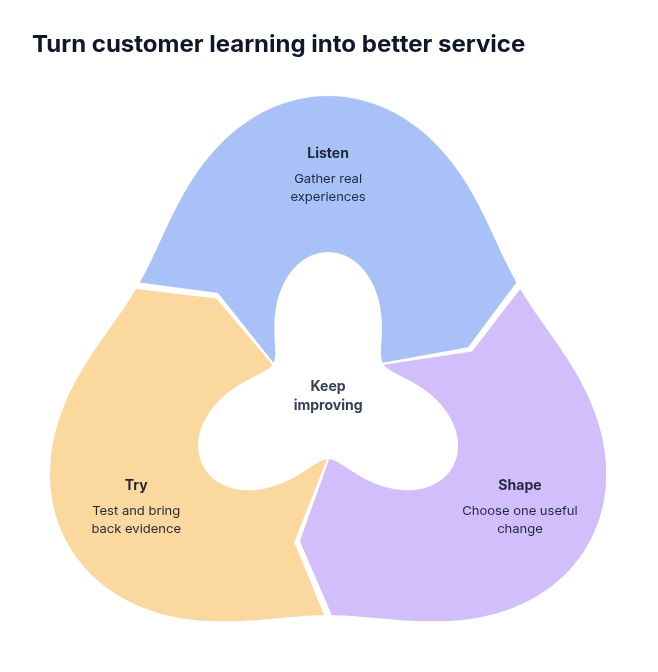 Cycle: clover contourThree-phase improvement rhythms, creative iteration or learning cycles.
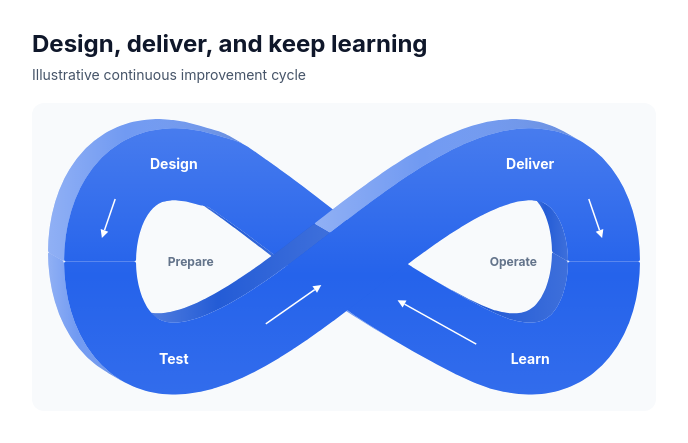 Cycle: dimensional infinityOne ordered four-stage process repeating through two phases, two stages per phase.
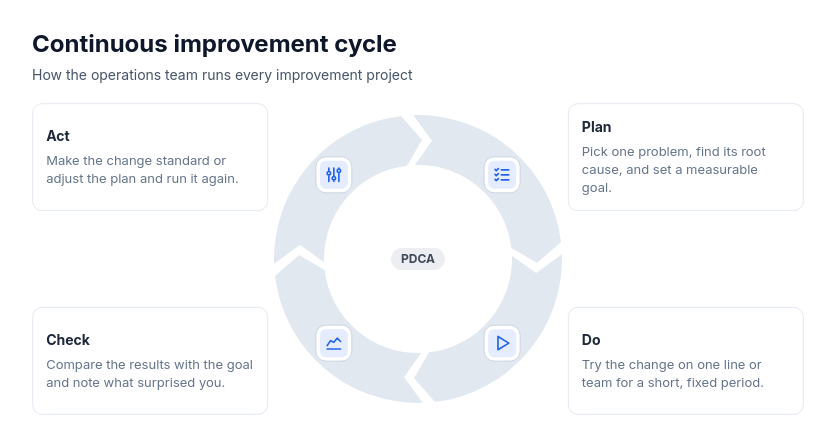 Cycle: donut of arrow segmentsThree to six phases that repeat in a loop, such as plan-do-check-act, a software or product lifecycle, a customer or sales cycle, or a data lifecycle.
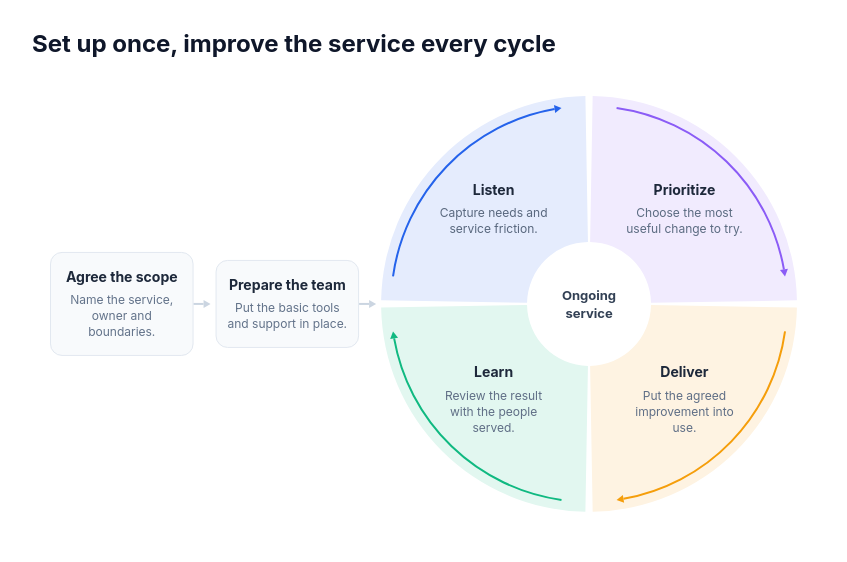 Cycle: one-time entry railFor service setup and delivery, customer activation and use, or community onboarding and participation.