Diagram template
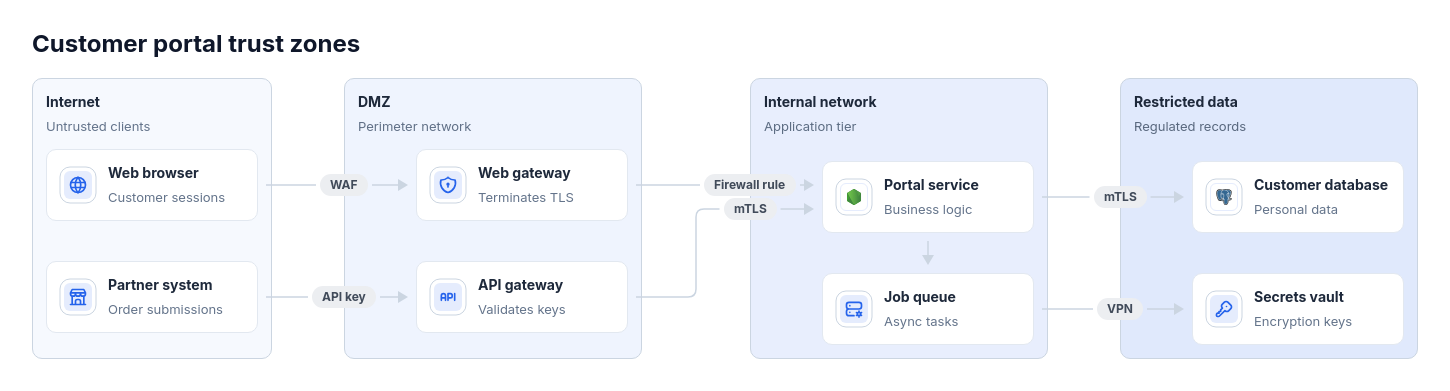
Architecture: trust zones ordered left to right
PowerComponent cards in zones ordered from least to most trusted, the panels deepening in tint along that order, with directed links between components and each crossing from one zone to the next labeled with the control that guards it.
Categories
Included in
Power, Max
When to use it
Use for security reviews, threat-model data-flow diagrams at the zone level, and network segmentation: two to five zones from least to most trusted (such as internet, DMZ, internal network, restricted data) with two to fourteen components and the control on each crossing (WAF, mTLS, API key, VPN, firewall rule). Not for cloud account or VPC containment (use the grouped panels or nested containers designs), data pipelines, process flows, org charts, or comparisons.
Adjust after generating
Change the style, colors, and font, and these options, as often as you like without spending credits.
- Card shape
- Card fill
- Color distribution
- Card border
- Card shadow
- Typography
- Icon shape
- Icon size
- Icon fill
- Icon shell
- Spacing
- Alignment
- Material
- Connectors
- Line weight
What you fill in
Describe your topic in plain words and the AI fills these in. You can edit every field afterwards.
- Groups
- 2 to 5, each with name and optional description
- Nodes
- 2 to 14, each with id, label, optional description, icon, and group
- Edges
- 1 to 14, each with from, to, and optional label
Related templates
All architecture templates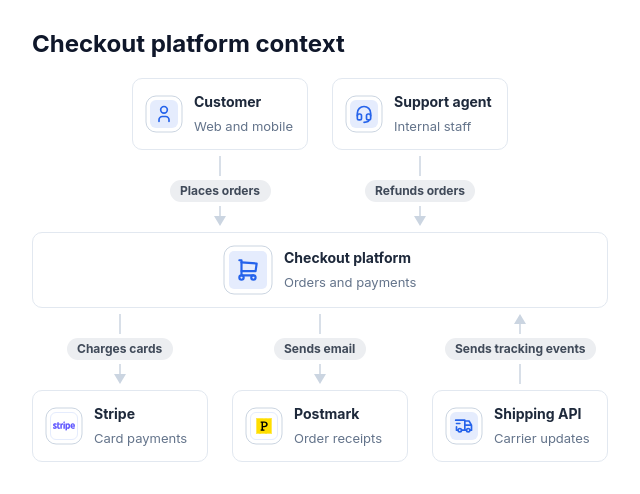 Architecture: system contextA C4 system context diagram, a "who uses it and what it depends on" slide, or an integration overview: one system, one to four actors that use it, and one to five external systems it calls or that call it, each link saying what it does.
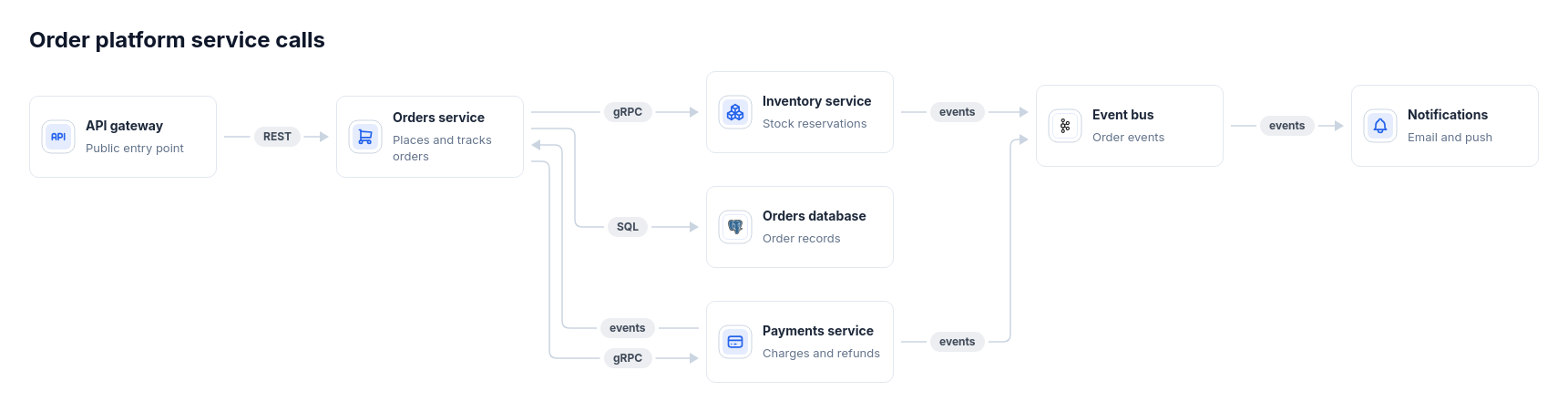 Architecture: dependency graphThree to twelve components that call or depend on each other with no fixed tiers, such as a microservice call map, a service dependency graph, or data lineage between systems, with links labeled by protocol or what flows (gRPC, REST, events).
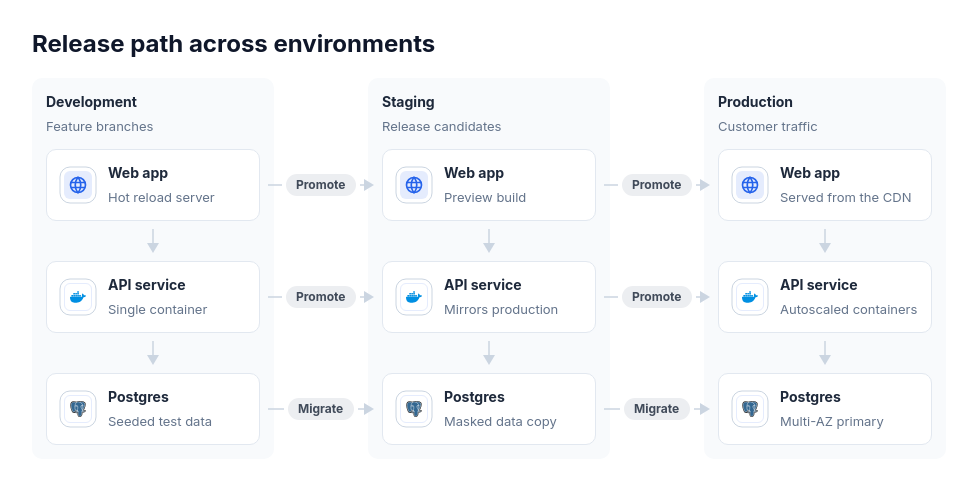 Architecture: environmentsOne system shown as two to four copies that are compared side by side: dev, staging, and production environments with promotion between them, region A, region B, and disaster recovery with replication, or blue and green stacks.
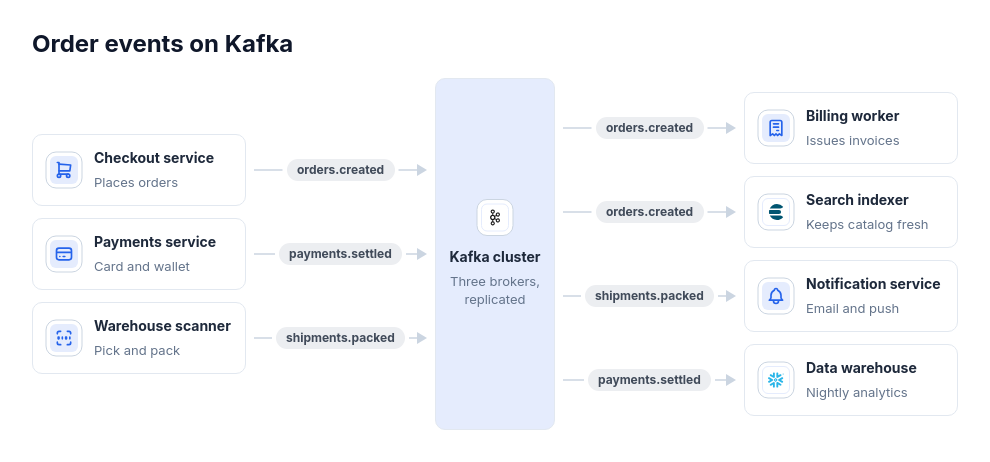 Architecture: event hubEvent flows through one broker, bus, or topic hub with one to five producers and one to five consumers, such as Kafka topics, Google Pub/Sub, SNS fanning out to SQS queues, EventBridge rules, or a webhook gateway delivering to several handlers; built for fan-in and fan-out.
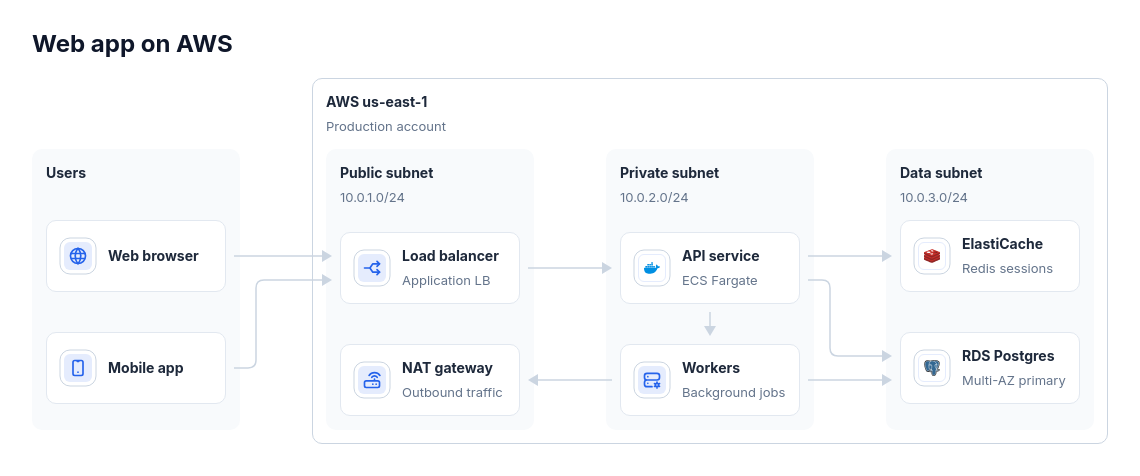 Architecture: grouped panels left to rightTwo to fourteen components placed in two to five networks, clusters, subnets, or accounts, such as an AWS VPC with public and private subnets or a Kubernetes cluster with namespaces, optionally inside one region with users or third-party services outside.
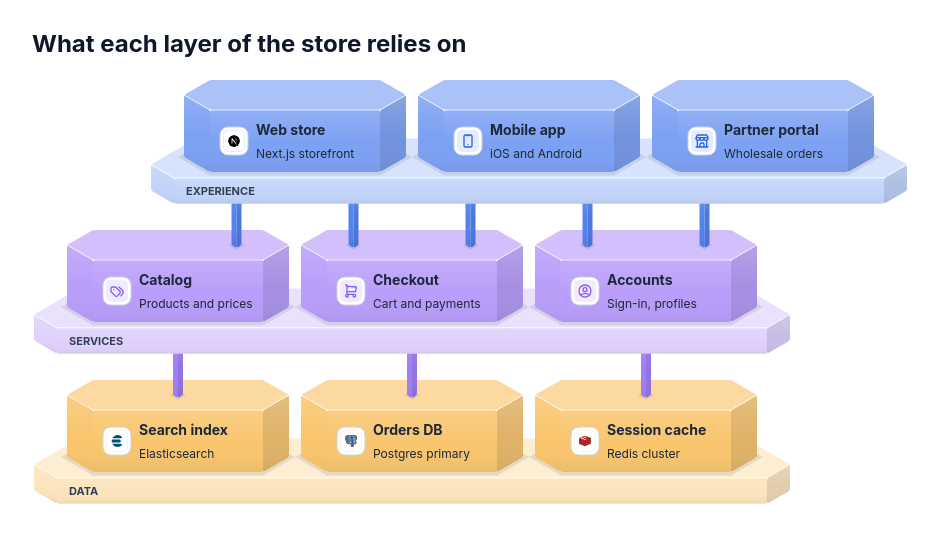 Architecture: isometric floating layer plates stacked with a clear gapA layered system where components rely on specific components in the layer directly below: software layers from experience through services to data, an operating model from strategy through operations to delivery teams, or a data stack from reports through warehouse and pipelines to sources.