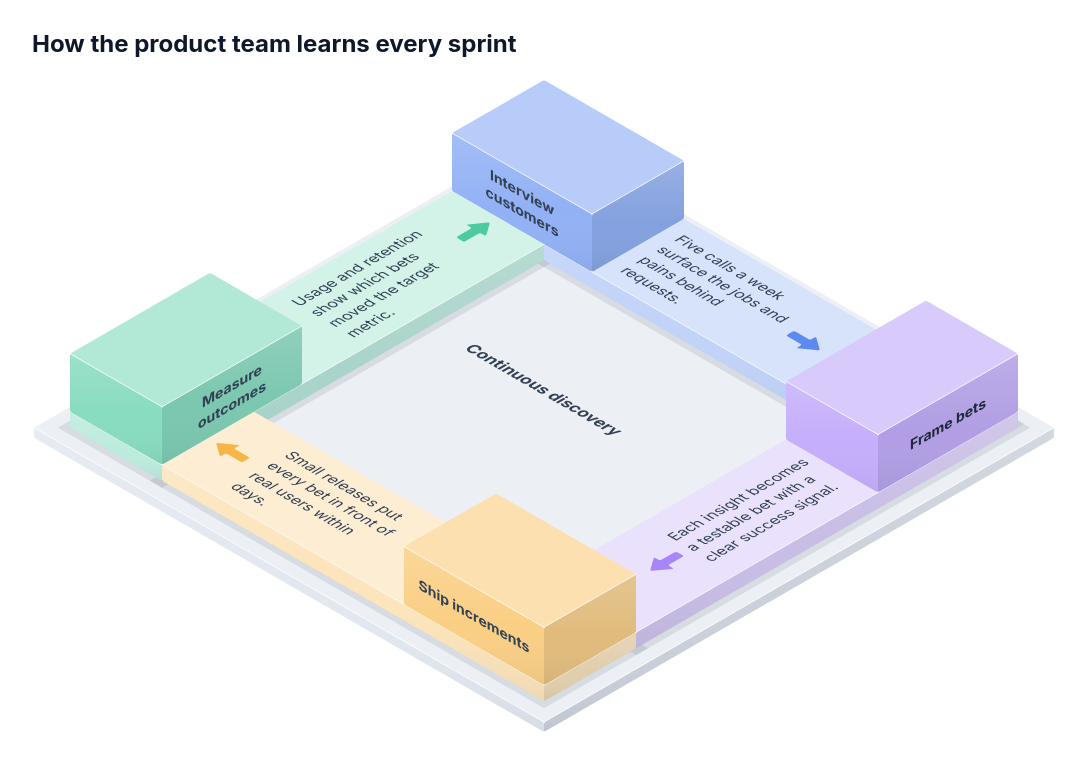
Diagram template
Cycle: isometric loop track
PowerA raised closed track loops around a floor; each stage is a solid block seated on the track, and the run of track it owns to the next stage carries its description and a painted direction arrow.
Categories
Included in
Power, Max
When to use it
For a recurring process of four to six stages, such as a delivery, feedback or improvement loop, where each stage hands over to the next and the last returns to the first. Track lengths and block sizes are schematic: they show order and recurrence, not duration, effort or volume. Not for branching processes, one-off sequences or more than six stages.
Adjust after generating
Change the style, colors, and font, and these options, as often as you like without spending credits.
- Typography
- Spacing
What you fill in
Describe your topic in plain words and the AI fills these in. You can edit every field afterwards.
- Center
- Text
- Stages
- 4 to 6, each with title and description
Related templates
All cycle templates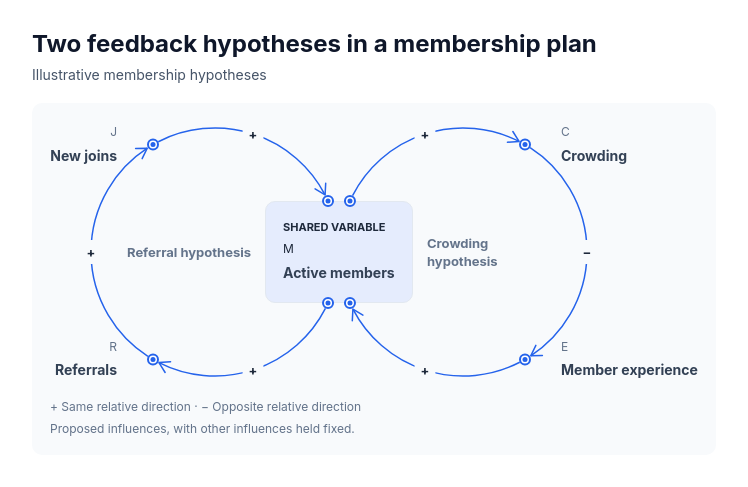 Cycle: causalFor a compact qualitative causal-loop view with exactly five variables and two three-link loops sharing one variable: a referral loop against crowding in a membership plan, workload against hiring in a team, adoption against support load in a product, or demand against price in a market.
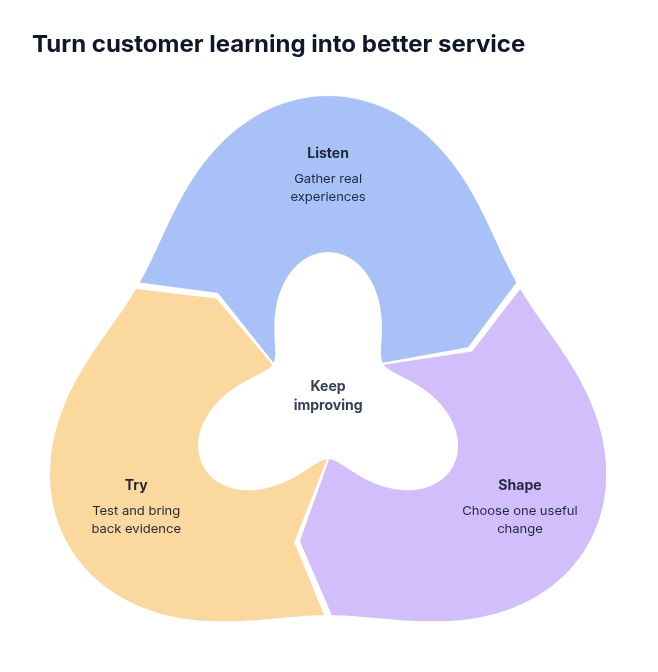 Cycle: clover contourThree-phase improvement rhythms, creative iteration or learning cycles.
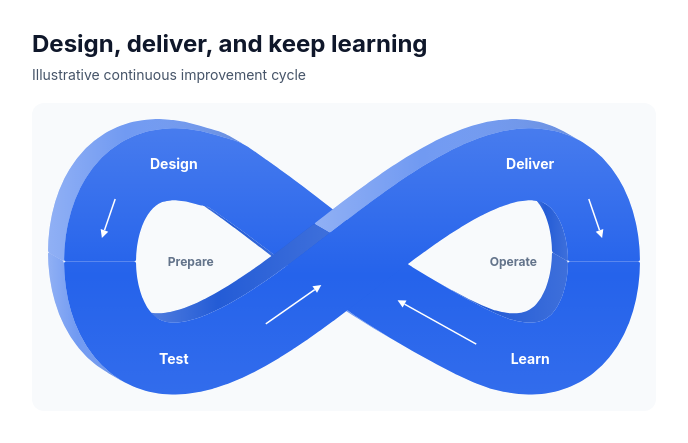 Cycle: dimensional infinityOne ordered four-stage process repeating through two phases, two stages per phase.
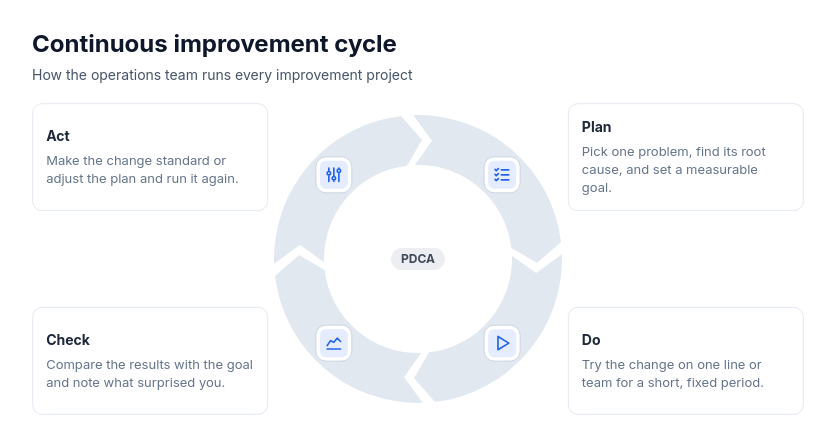 Cycle: donut of arrow segmentsThree to six phases that repeat in a loop, such as plan-do-check-act, a software or product lifecycle, a customer or sales cycle, or a data lifecycle.
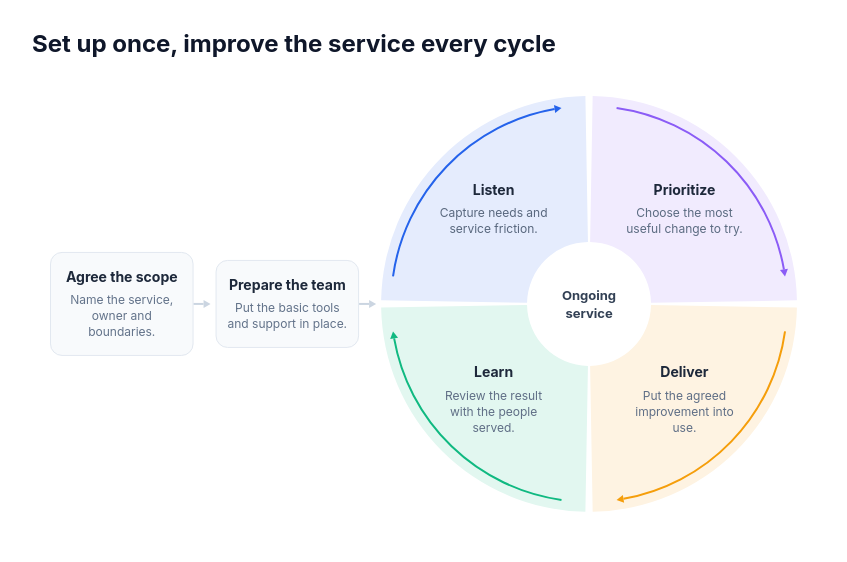 Cycle: one-time entry railFor service setup and delivery, customer activation and use, or community onboarding and participation.
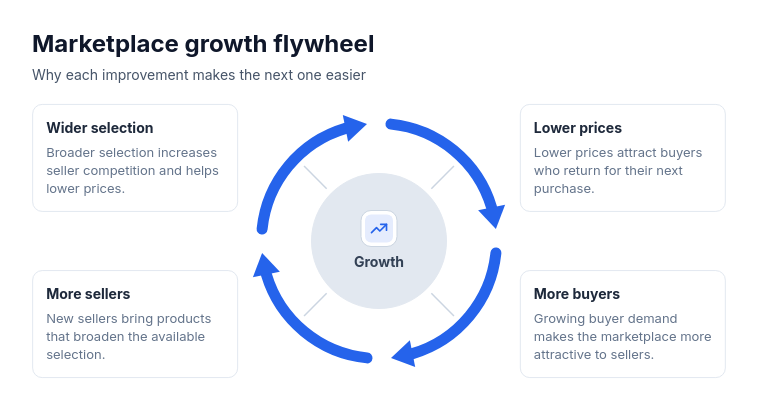 Cycle: flywheelThree to five forces that reinforce each other around one outcome, such as a growth, marketplace, content, or community flywheel.