Diagram template
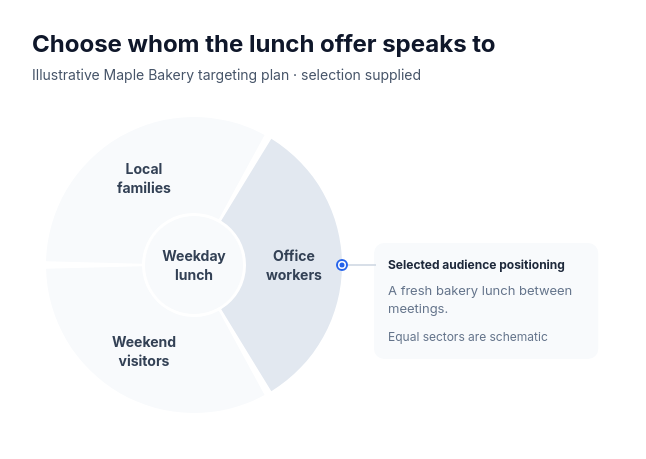
Framework: ring sectors
PowerEqual schematic sectors surround one shared core. The explicitly selected sector alone carries a measured statement callout; the source order of the options remains clockwise.
Categories
Included in
Power, Max
When to use it
For one supplied choice among three or four considered options with a single statement about the selected one: a target audience and its positioning, a pilot region and why it goes first, a shortlisted vendor and the deciding reason, or a chosen scenario and its premise. Selection must be explicit. Sector size does not establish population, priority, share or score; unselected options are considered, not rejected as ineligible. Not for ranking, weighted scoring or a separate statement per option.
Adjust after generating
Change the style, colors, and font, and these options, as often as you like without spending credits.
- Selected sector fill
- Statement panel shape
- Typography
- Spacing
- Statement leader
- Line weight
What you fill in
Describe your topic in plain words and the AI fills these in. You can edit every field afterwards.
- Subject
- Title and description
- Options
- 3 to 4, each with id and name
- Selected id
- Text
- Selected label
- Text
Related templates
All framework templates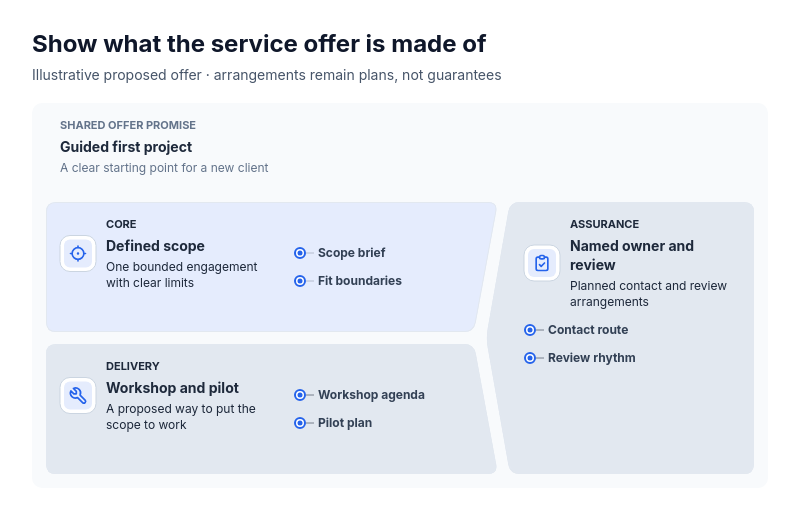 Anatomy: crowned subjectFor explaining what one thing is made of as a primary part, the part that carries it out and a part that spans both: a service offer (scope, delivery, assurance), a product (core function, how it ships, support), a course (content, format, learner support), an event (program, logistics, hosting) or a team charter (mission, ways of working, backing).
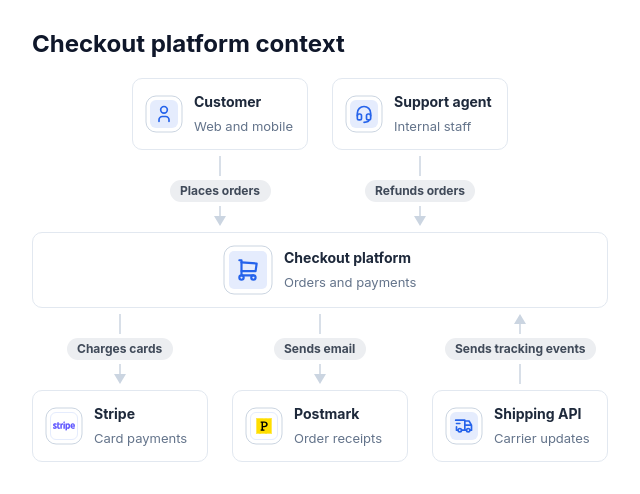 Architecture: system contextA C4 system context diagram, a "who uses it and what it depends on" slide, or an integration overview: one system, one to four actors that use it, and one to five external systems it calls or that call it, each link saying what it does.
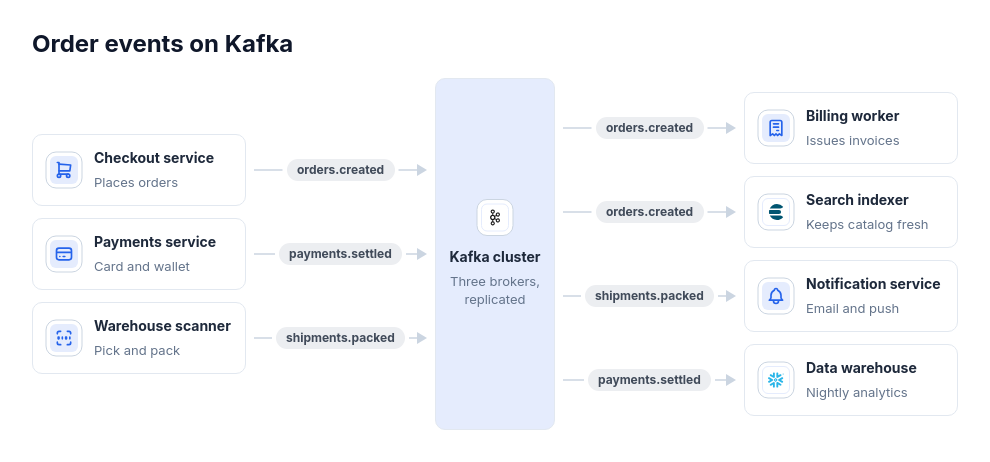 Architecture: event hubEvent flows through one broker, bus, or topic hub with one to five producers and one to five consumers, such as Kafka topics, Google Pub/Sub, SNS fanning out to SQS queues, EventBridge rules, or a webhook gateway delivering to several handlers; built for fan-in and fan-out.
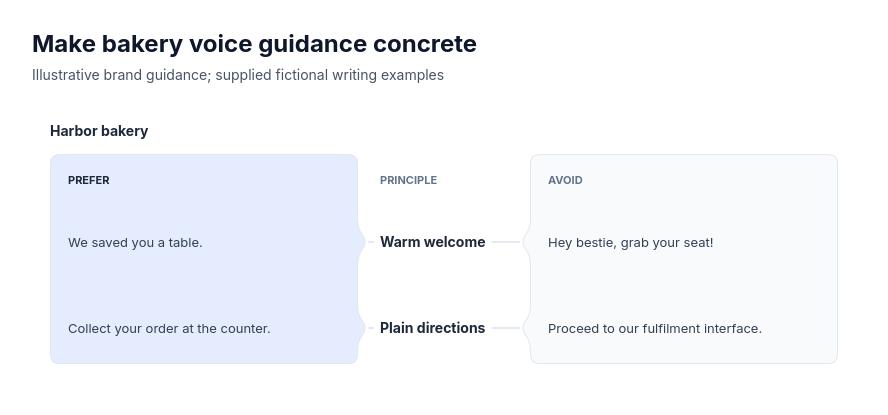 Comparison: principle seamsFor two to four supplied principles, each owning one exact preferred example and one exact example to avoid: brand voice guides, product interface copy, support reply standards, documentation style, naming conventions, inclusive language or meeting etiquette.
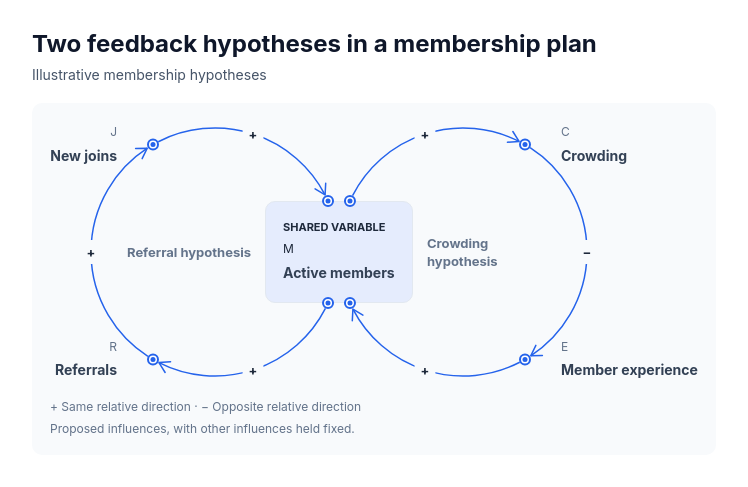 Cycle: causalFor a compact qualitative causal-loop view with exactly five variables and two three-link loops sharing one variable: a referral loop against crowding in a membership plan, workload against hiring in a team, adoption against support load in a product, or demand against price in a market.
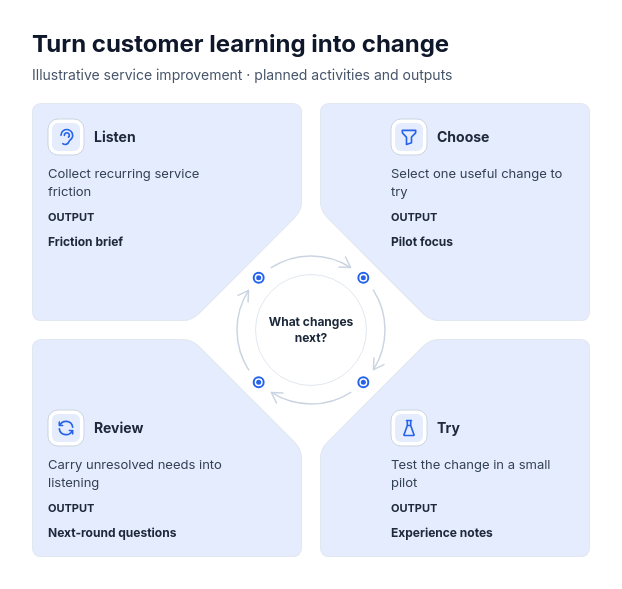 Cycle: quarter panelsFor four-step recurring loops where each step produces one named output: service improvement, editorial planning, quarterly operating reviews, product discovery or a study-practice-test-reflect learning cycle.