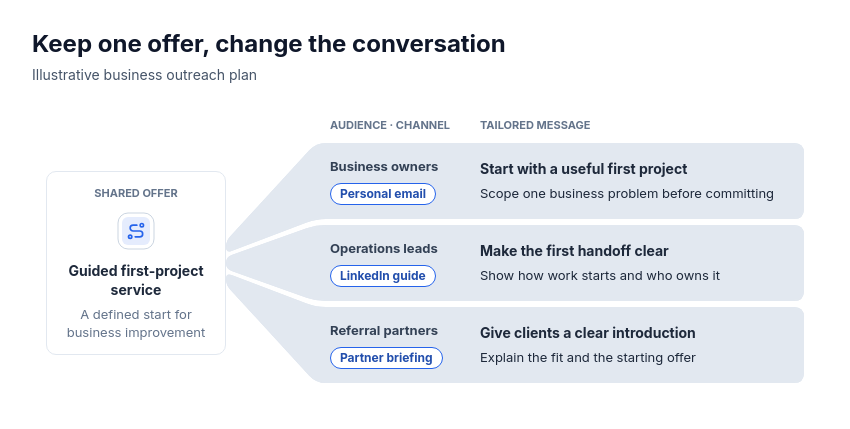
Diagram template
Framework: shared source fan
ProOne shared source opens into three or four widening fan fields. Each continuous branch owns its name, a tag capsule and its own tailored title and detail; upright reading fields preserve exact correspondence.
Categories
Included in
Pro, Power, Max
When to use it
For one shared basis adapted per branch: an offer tailored to audiences with their channels, a platform packaged into tiers with their prices, a policy applied per region with its owner, or a curriculum adapted per cohort with its format. Every branch keeps its name, tag and tailored detail together. Branch order, field size and tag position express ownership rather than sequence, size, priority or expected return. Not for unrelated subjects without a shared basis, observed results, forecasts or flat lists without branch-specific detail.
Adjust after generating
Change the style, colors, and font, and these options, as often as you like without spending credits.
- Card shape
- Card fill
- Card border
- Card shadow
- Material
- Typography
- Spacing
- Color distribution
- Icon shape
- Icon size
- Icon fill
- Icon shell
What you fill in
Describe your topic in plain words and the AI fills these in. You can edit every field afterwards.
- Subject label
- Text
- Branch label
- Text
- Detail label
- Text
- Subject
- Title, description, and icon
- Branches
- 3 to 4, each with name, title, optional description, and label
Related templates
All framework templates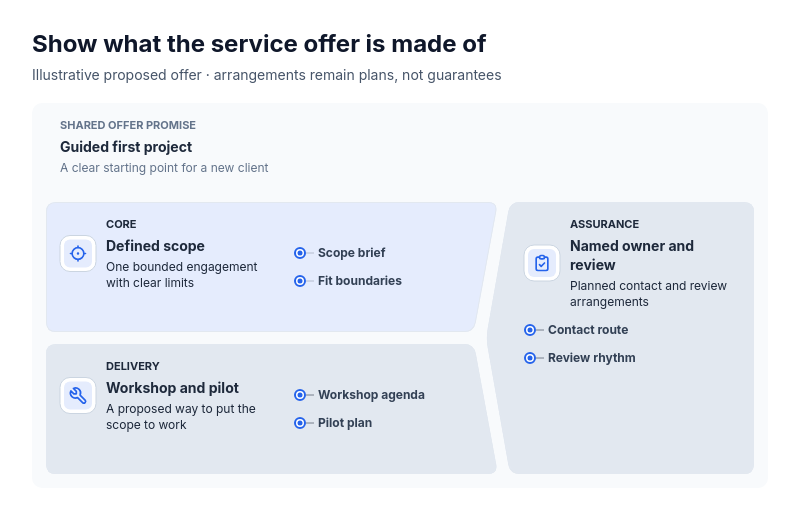 Anatomy: crowned subjectFor explaining what one thing is made of as a primary part, the part that carries it out and a part that spans both: a service offer (scope, delivery, assurance), a product (core function, how it ships, support), a course (content, format, learner support), an event (program, logistics, hosting) or a team charter (mission, ways of working, backing).
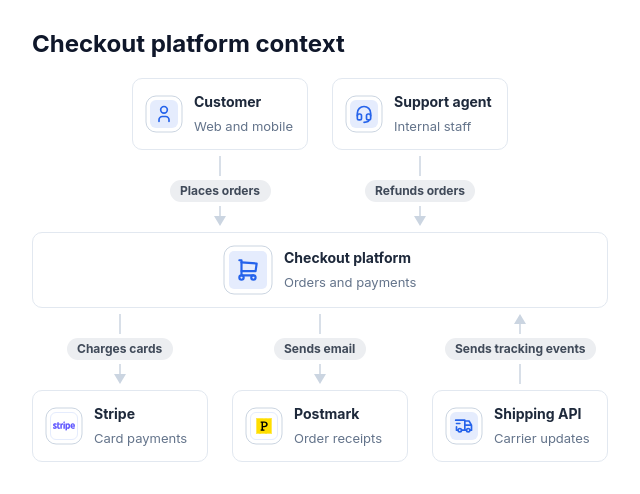 Architecture: system contextA C4 system context diagram, a "who uses it and what it depends on" slide, or an integration overview: one system, one to four actors that use it, and one to five external systems it calls or that call it, each link saying what it does.
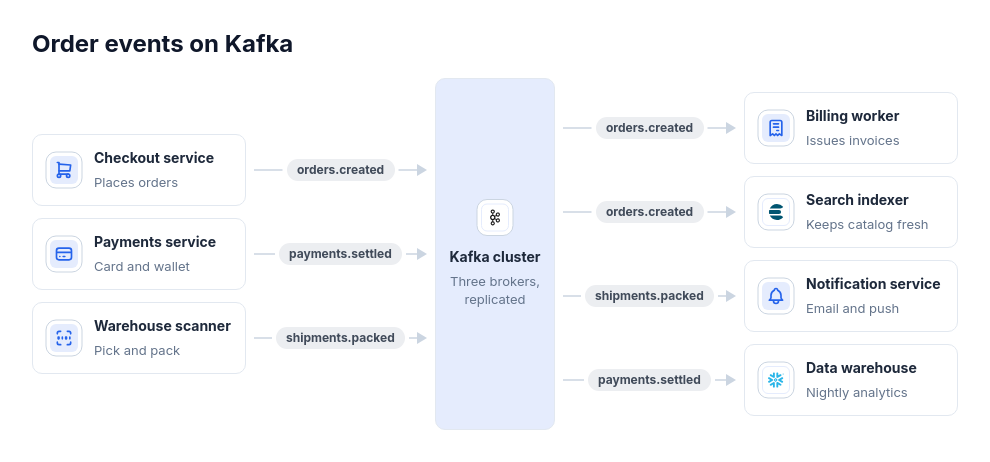 Architecture: event hubEvent flows through one broker, bus, or topic hub with one to five producers and one to five consumers, such as Kafka topics, Google Pub/Sub, SNS fanning out to SQS queues, EventBridge rules, or a webhook gateway delivering to several handlers; built for fan-in and fan-out.
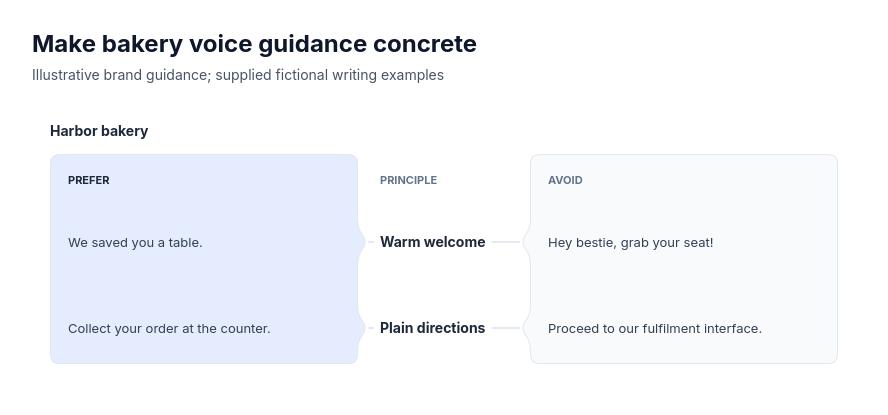 Comparison: principle seamsFor two to four supplied principles, each owning one exact preferred example and one exact example to avoid: brand voice guides, product interface copy, support reply standards, documentation style, naming conventions, inclusive language or meeting etiquette.
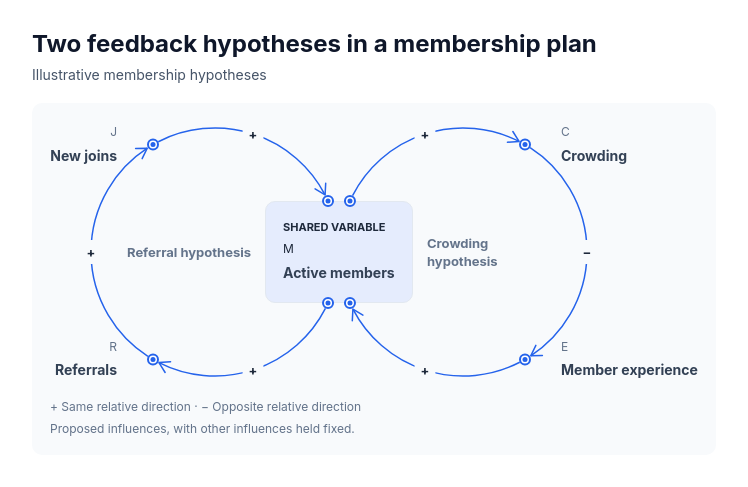 Cycle: causalFor a compact qualitative causal-loop view with exactly five variables and two three-link loops sharing one variable: a referral loop against crowding in a membership plan, workload against hiring in a team, adoption against support load in a product, or demand against price in a market.
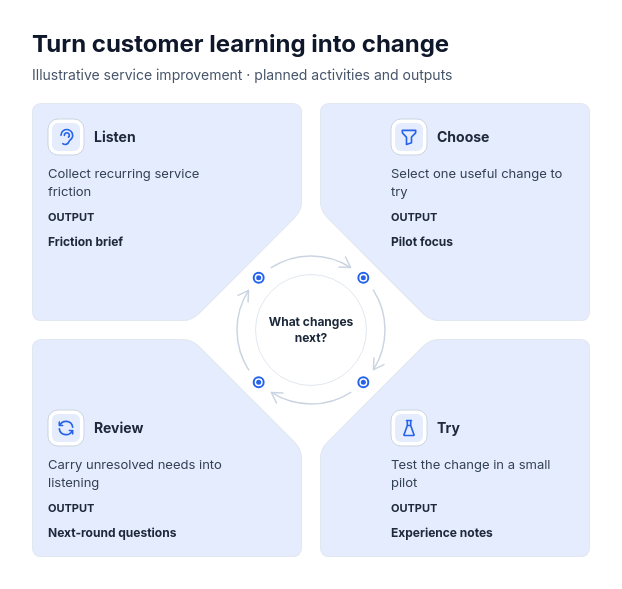 Cycle: quarter panelsFor four-step recurring loops where each step produces one named output: service improvement, editorial planning, quarterly operating reviews, product discovery or a study-practice-test-reflect learning cycle.