Diagram template
Comparison: paired states
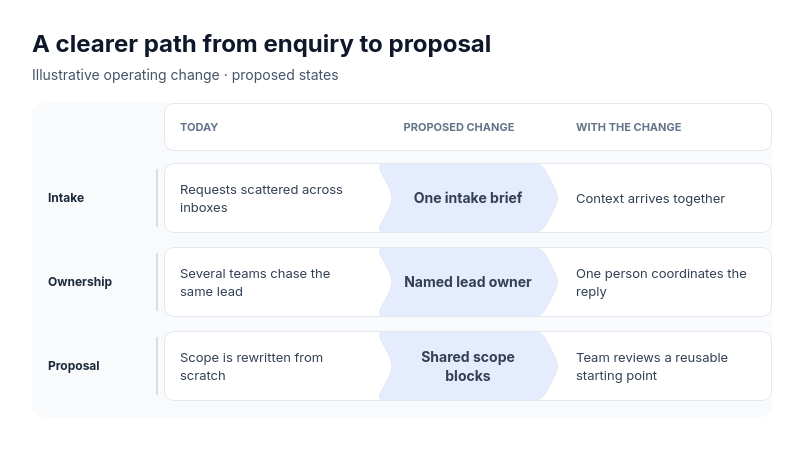
PowerAligned current and proposed states connect through a named change seam for each aspect; continuous row silhouettes retain exact correspondence across the transition.
Categories
Included in
Power, Max
When to use it
For proposals explaining which specific change connects each current condition to its proposed counterpart: a business process redesign, a product onboarding fix, a policy or classroom routine change, a team operating model, or a personal workflow. Each row owns its aspect, both states and proposed intervention. Geometry implies correspondence and intended transition, never observed success, causation or measured improvement. Not for independent before/after summaries or numeric comparisons.
Adjust after generating
Change the style, colors, and font, and these options, as often as you like without spending credits.
- Card shape
- Card border
- Card shadow
- Material
- Typography
- Spacing
What you fill in
Describe your topic in plain words and the AI fills these in. You can edit every field afterwards.
- Before label
- Text
- Center
- Text
- After label
- Text
- Rows
- 2 to 4, each with aspect, before, title, and after
Related templates
All comparison templates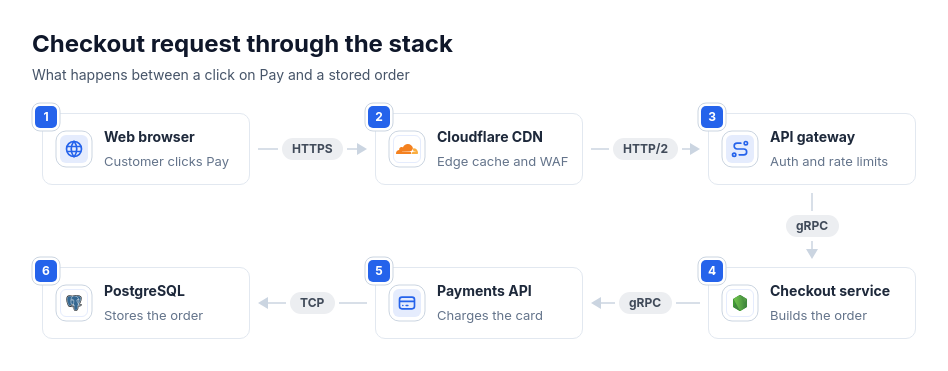 Architecture: request pathThree to eight hops of one request in order, such as a request through CDN, gateway, services, and database, an auth or checkout request trace, or a webhook delivery path, optionally with the protocol or measured time of each link.
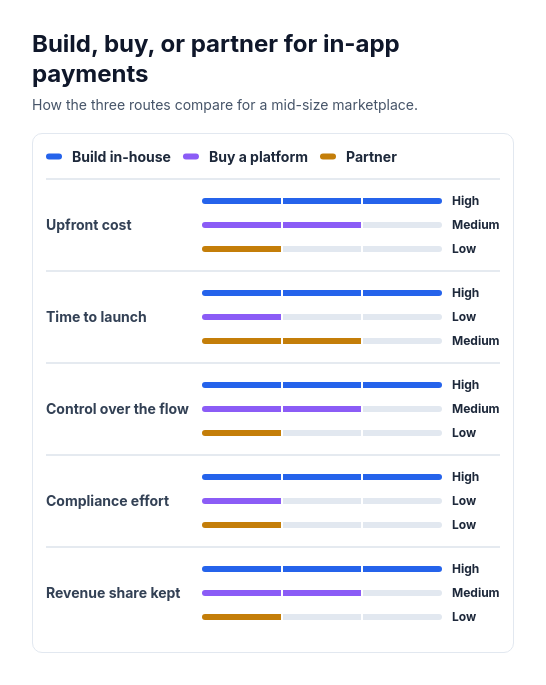 Attribute barsCompare two or three options across three to six attributes that can be scored or rated low, medium, or high, such as cost, speed, and effort.
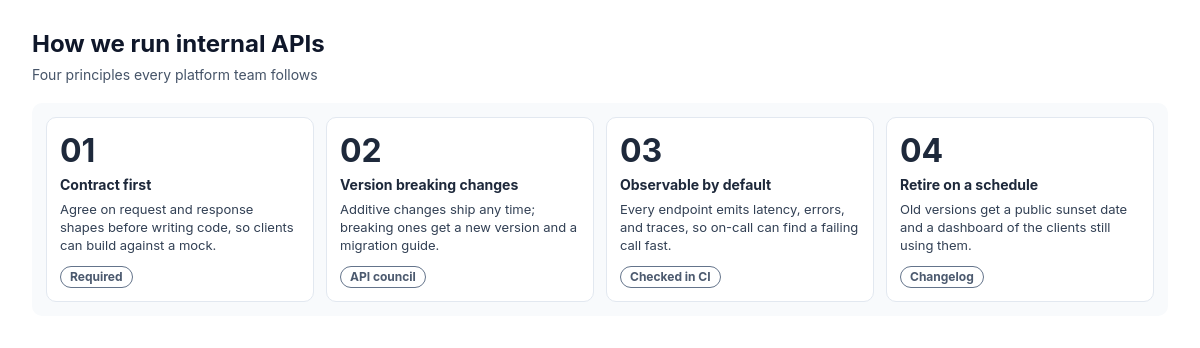 Numbered takeaways with optional footnotesParallel principles or takeaways.
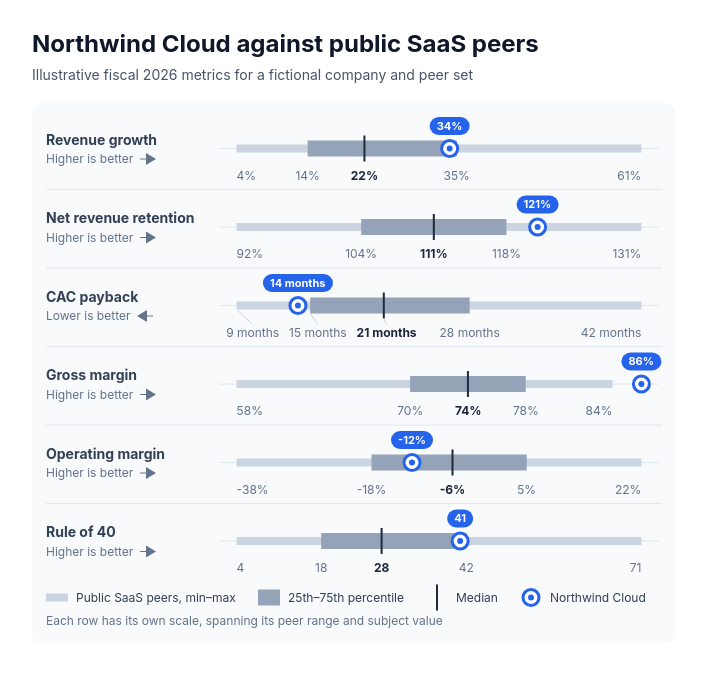 BenchmarkPlace one subject against a peer group's spread on two to eight metrics with different units: company or product benchmarks, a store or region against its network, salary or offer positioning against a market survey, a team or school against its organization.
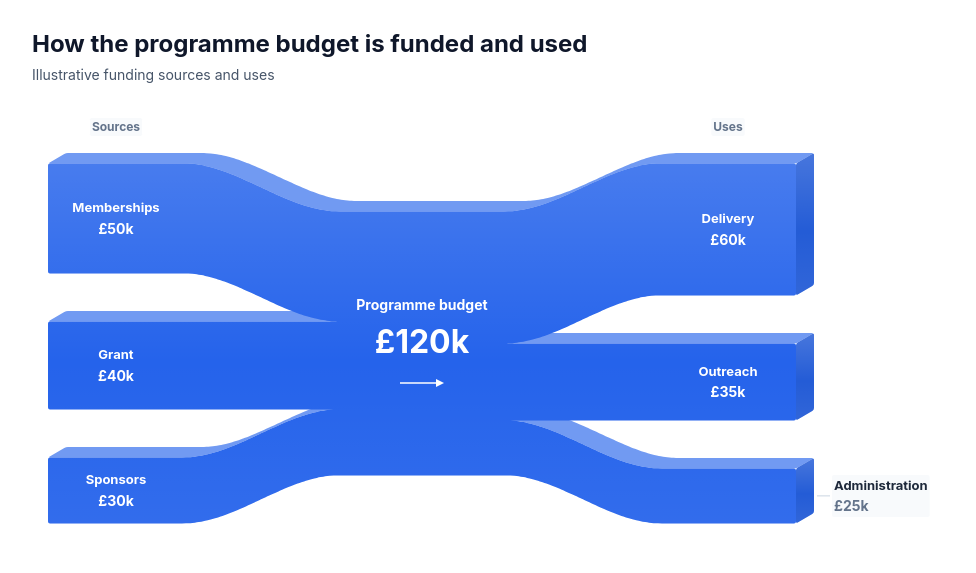 Conserved wholeTwo complete nonnegative marginal breakdowns of one positive common-unit total: funding sources and uses, staffing hours and work allocations, or energy supply and end uses.
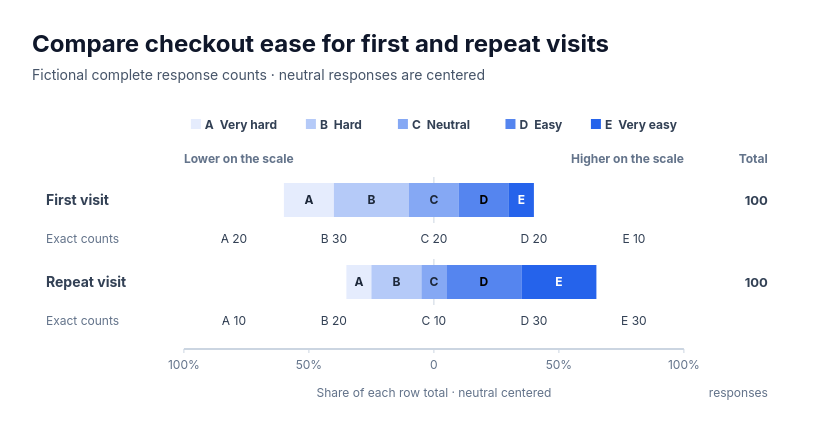 Chart: five-class ordered scaleFor complete supplied counts on one five-class ordered scale compared across two or three groups: survey agreement by segment, review star ratings by product, risk ratings by business unit, performance grades by team or difficulty ratings by release.