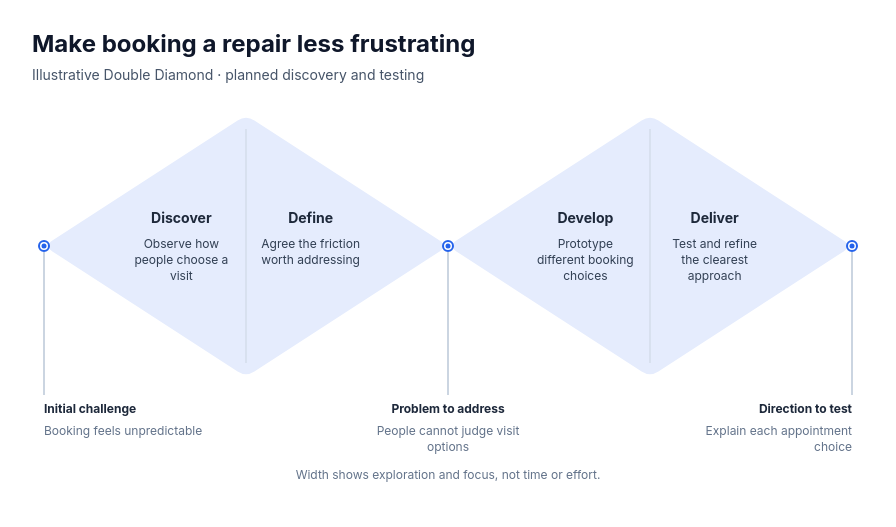
Diagram template
Double Diamond
PowerDiscover and Define occupy the expanding and narrowing halves of the first diamond; Develop and Deliver occupy the second. Exact challenge, definition and outcome anchors attach to the three shared endpoints.
Categories
Included in
Power, Max
When to use it
For a Design Council Double Diamond view of one discovery effort: a booking experience, public service, classroom activity or product proposition. Distinguishes understanding the problem from exploring solutions, without implying elapsed time, effort, automatic approval or a guaranteed final solution. Not a four-step execution checklist or measured funnel.
Adjust after generating
Change the style, colors, and font, and these options, as often as you like without spending credits.
- Typography
- Spacing
- Card shape
- Material
What you fill in
Describe your topic in plain words and the AI fills these in. You can edit every field afterwards.
- Relation
- Text
- Status
- Text
- Stages
- Exactly 4, each with id, name, and optional description
- Milestones
- Exactly 3, each with id, title, and label
Related templates
All framework templates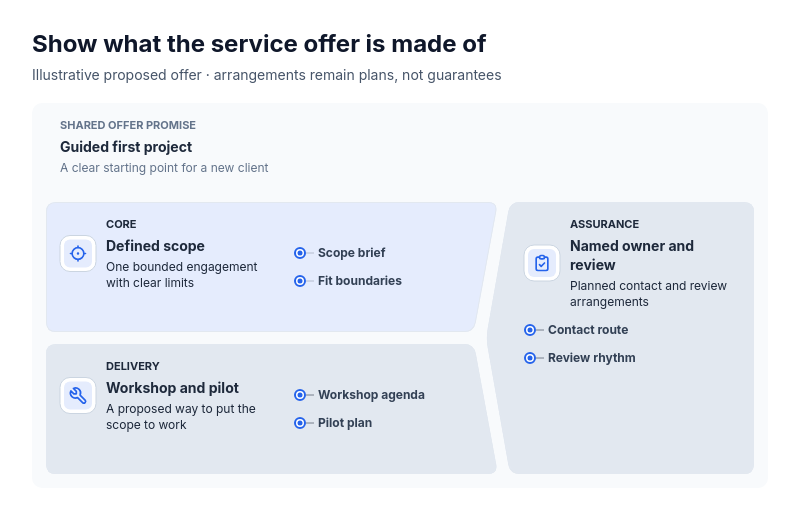 Anatomy: crowned subjectFor explaining what one thing is made of as a primary part, the part that carries it out and a part that spans both: a service offer (scope, delivery, assurance), a product (core function, how it ships, support), a course (content, format, learner support), an event (program, logistics, hosting) or a team charter (mission, ways of working, backing).
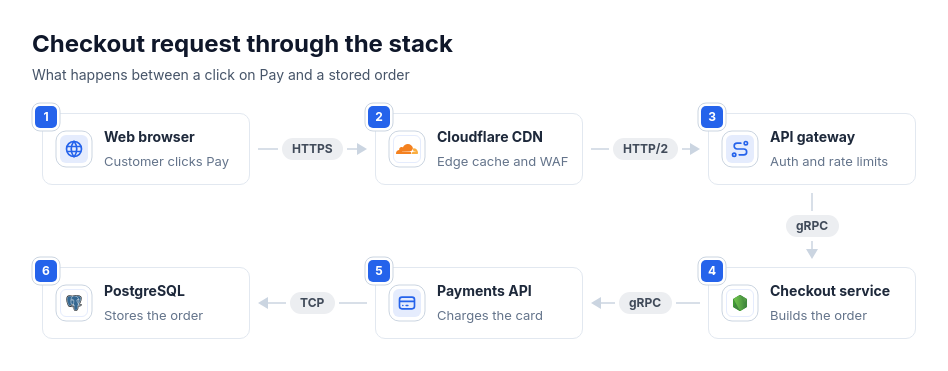 Architecture: request pathThree to eight hops of one request in order, such as a request through CDN, gateway, services, and database, an auth or checkout request trace, or a webhook delivery path, optionally with the protocol or measured time of each link.
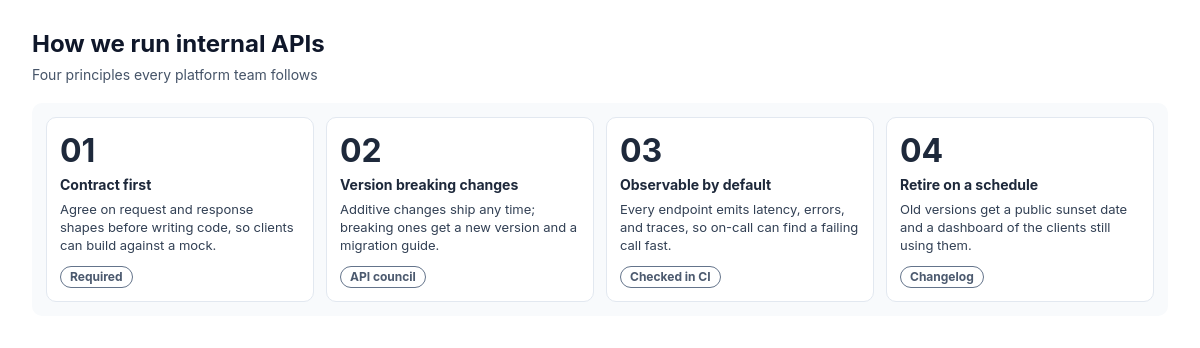 Numbered takeaways with optional footnotesParallel principles or takeaways.
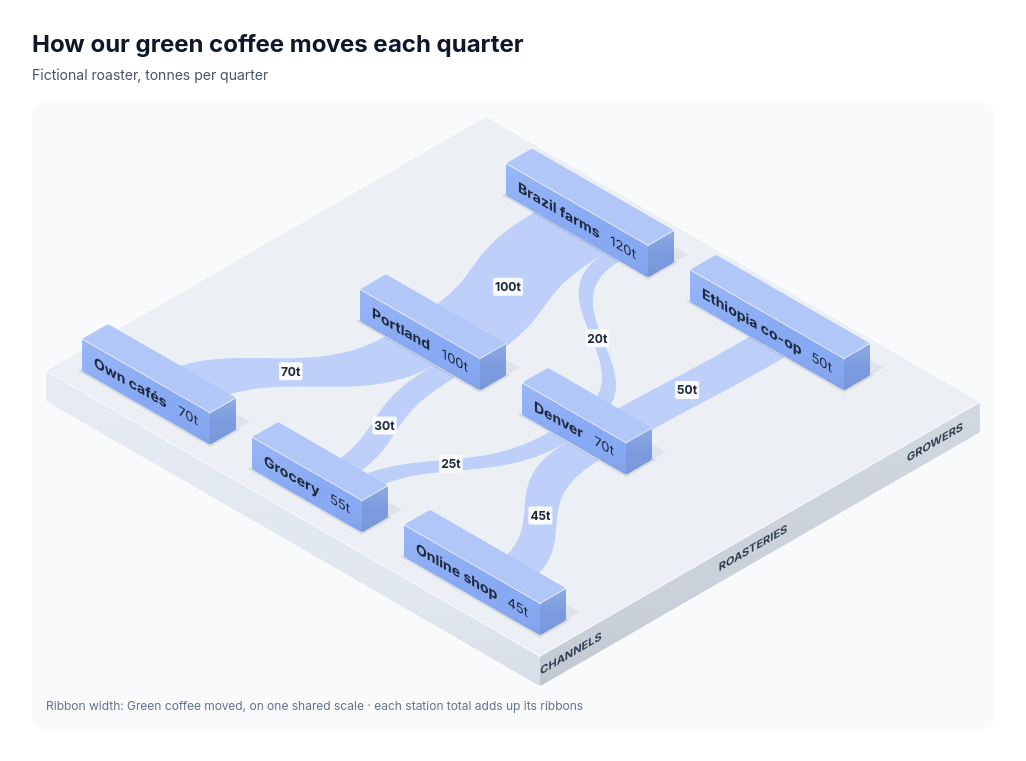 Chart: isometric station platforms in stage columnsOne measured quantity moving through a chain of stages where every middle station passes on exactly what it receives: supply chain volumes from suppliers through plants to stores, data moving between systems in a pipeline, students moving from intake routes through programmes into destinations.
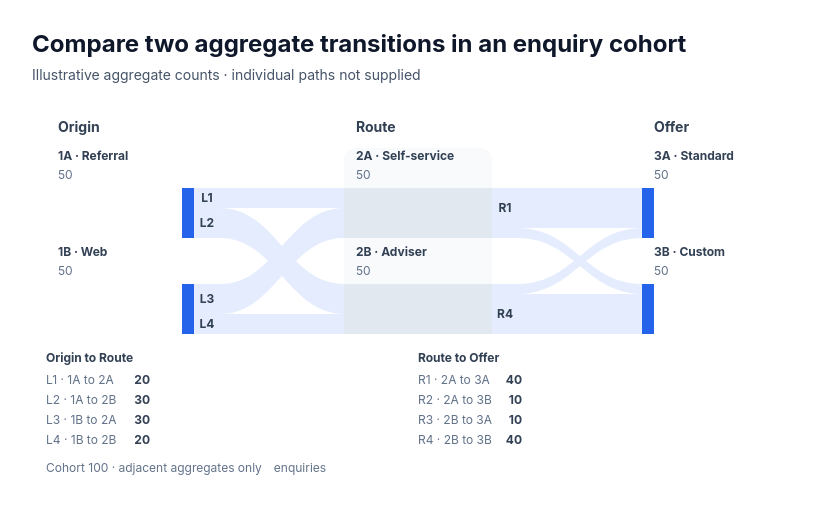 Chart: adjacent aggregate transfersFor an explicitly closed conserved cohort classified into two categories at each of three ordered stages, with all eight adjacent pair counts including known zeros: enquiries by origin, route and offer; students by entry track, course and outcome; patients by referral, pathway and setting; or orders by channel, warehouse and carrier.
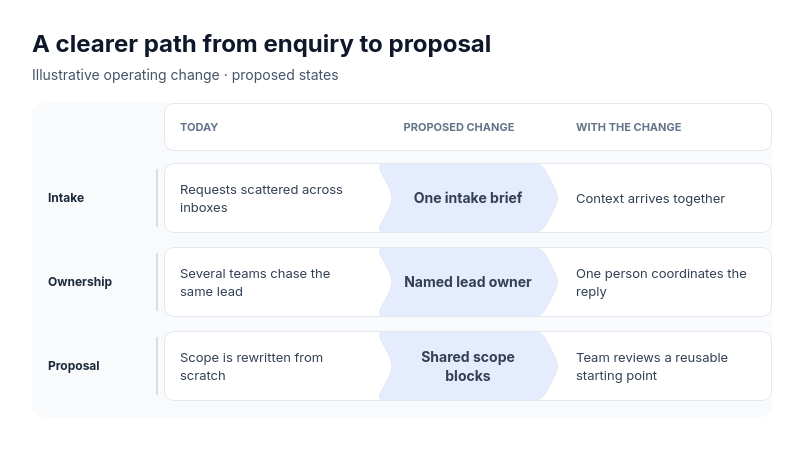 Comparison: paired statesFor proposals explaining which specific change connects each current condition to its proposed counterpart: a business process redesign, a product onboarding fix, a policy or classroom routine change, a team operating model, or a personal workflow.