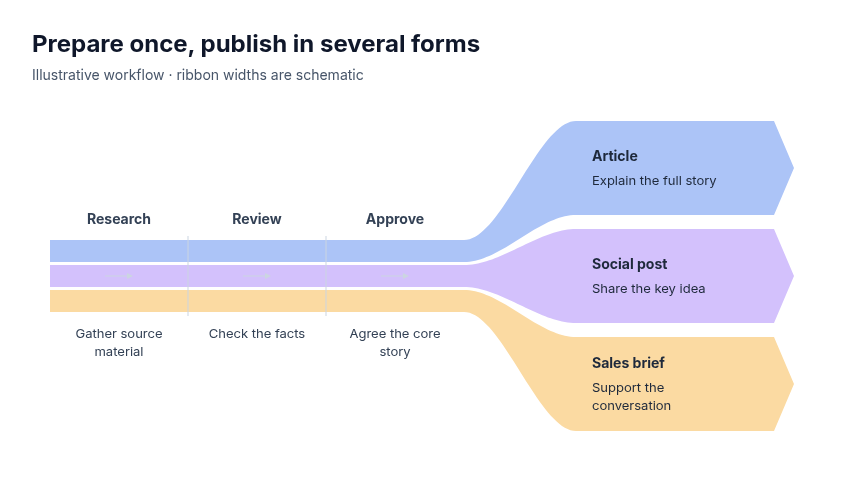
Diagram template
Process: shared stage trunk
MaxOutput-colored ribbons pass through one segmented serial trunk, then fan into directly attached output fields. Measured stage labels sit above and below the common preparation path.
Categories
Included in
Max
When to use it
Common content preparation into channels, data preparation into reports or shared induction into role-specific materials. The serial trunk explains what every output has in common before divergence. Adds preparation stages to a one-source fan; unlike a Sankey, ribbon widths are schematic. Not independent branching workflows, quantitative allocation or branching before preparation finishes.
Adjust after generating
Change the style, colors, and font, and these options, as often as you like without spending credits.
- Typography
- Material
What you fill in
Describe your topic in plain words and the AI fills these in. You can edit every field afterwards.
- Stages
- 2 to 3, each with title and description
- Outputs
- 2 to 4, each with title and description
Related templates
All process templates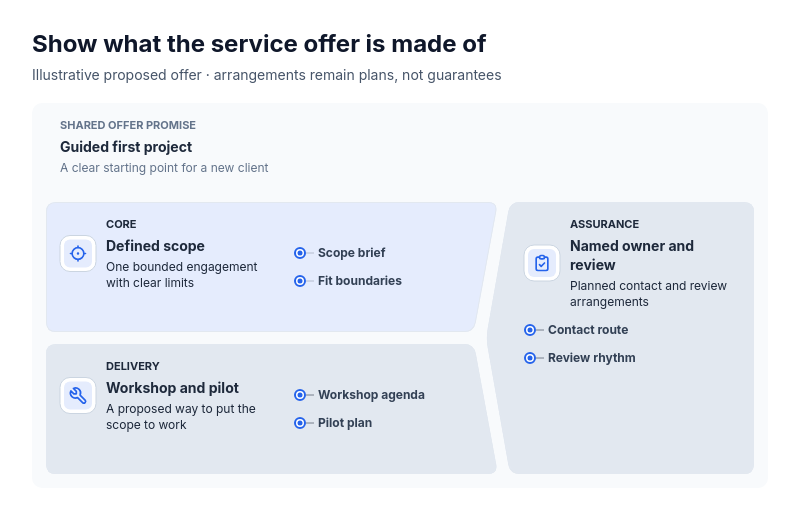 Anatomy: crowned subjectFor explaining what one thing is made of as a primary part, the part that carries it out and a part that spans both: a service offer (scope, delivery, assurance), a product (core function, how it ships, support), a course (content, format, learner support), an event (program, logistics, hosting) or a team charter (mission, ways of working, backing).
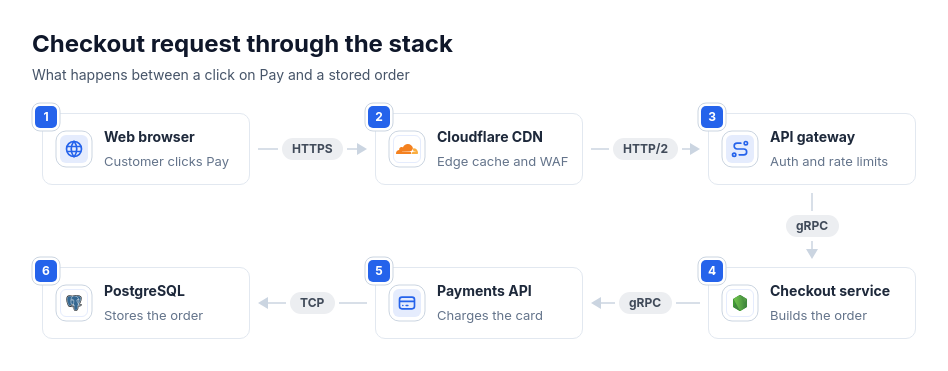 Architecture: request pathThree to eight hops of one request in order, such as a request through CDN, gateway, services, and database, an auth or checkout request trace, or a webhook delivery path, optionally with the protocol or measured time of each link.
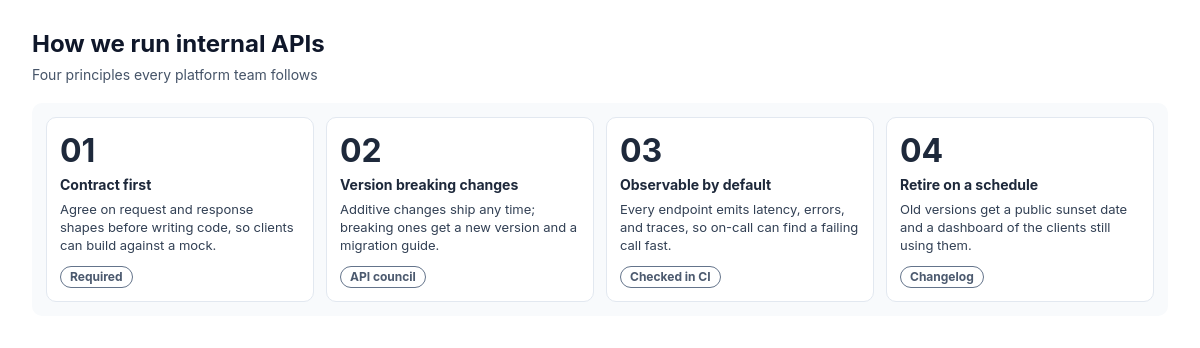 Numbered takeaways with optional footnotesParallel principles or takeaways.
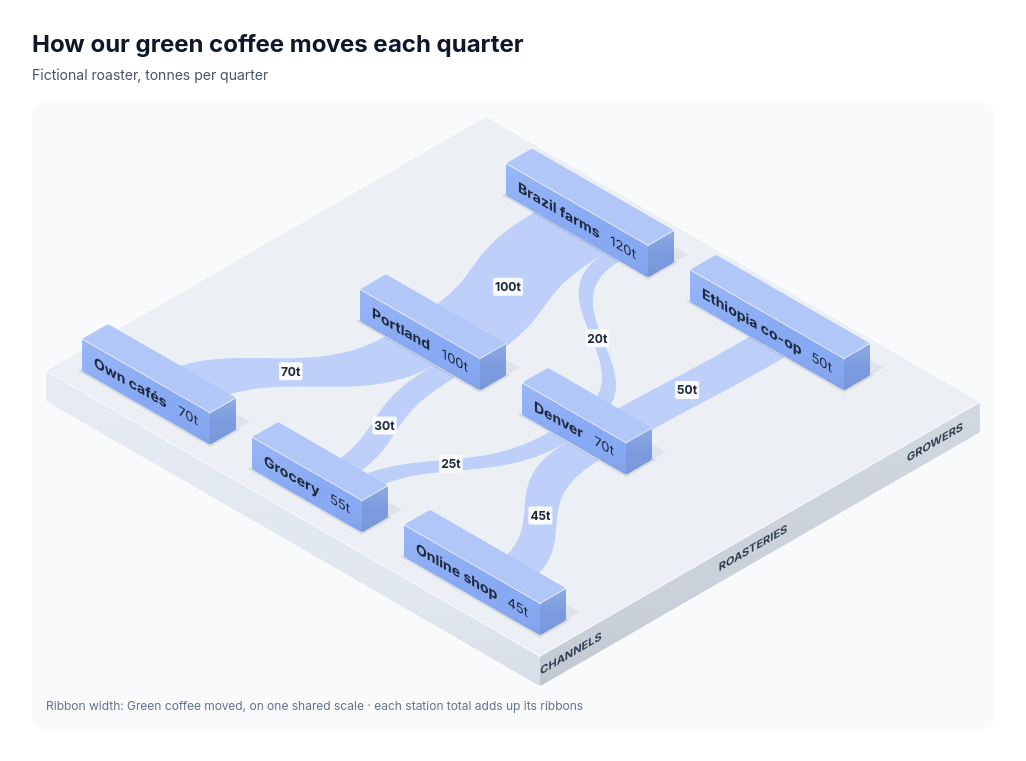 Chart: isometric station platforms in stage columnsOne measured quantity moving through a chain of stages where every middle station passes on exactly what it receives: supply chain volumes from suppliers through plants to stores, data moving between systems in a pipeline, students moving from intake routes through programmes into destinations.
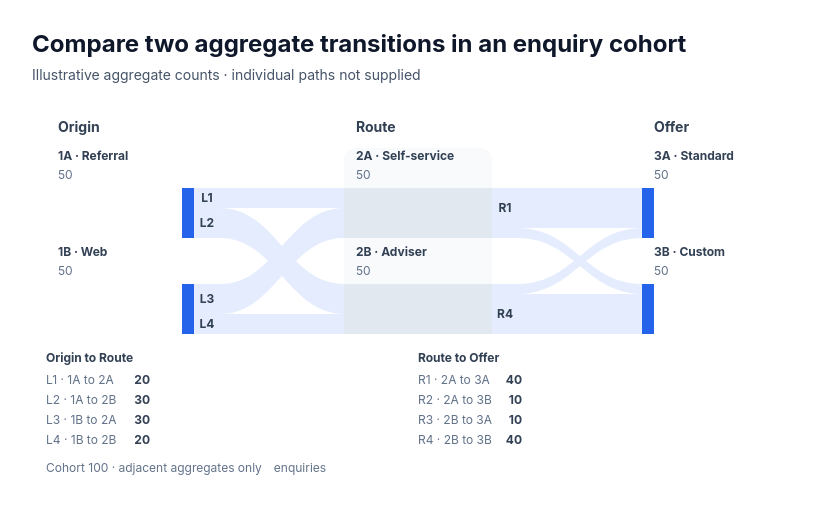 Chart: adjacent aggregate transfersFor an explicitly closed conserved cohort classified into two categories at each of three ordered stages, with all eight adjacent pair counts including known zeros: enquiries by origin, route and offer; students by entry track, course and outcome; patients by referral, pathway and setting; or orders by channel, warehouse and carrier.
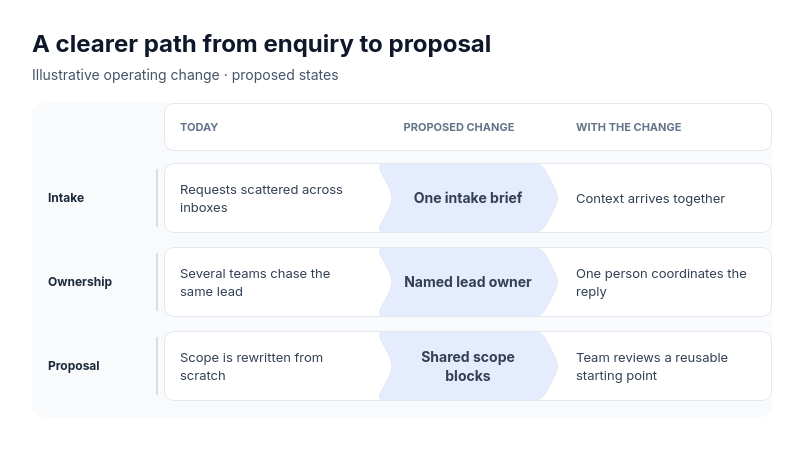 Comparison: paired statesFor proposals explaining which specific change connects each current condition to its proposed counterpart: a business process redesign, a product onboarding fix, a policy or classroom routine change, a team operating model, or a personal workflow.