Diagram template
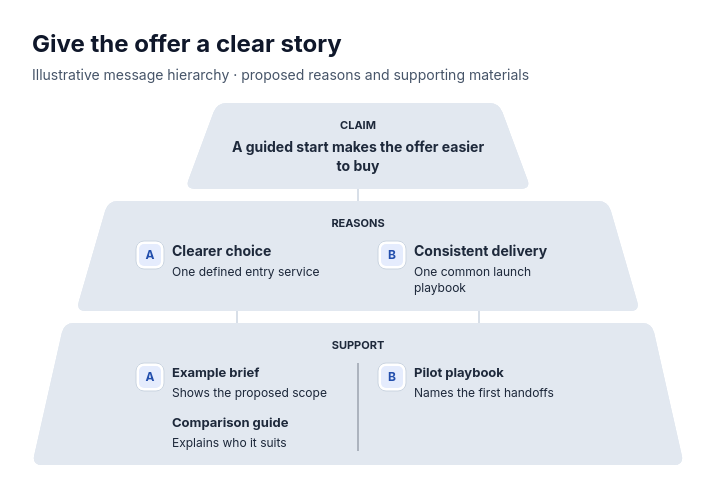
Pyramid: claim apex
PowerA proposed claim caps three measured tapered bands. Peer reasons split the middle band, and exact supporting items sit directly beneath their own keyed reason in the wider base.
Categories
Included in
Power, Max
When to use it
For any argument that connects one proposed claim to two or three supplied reasons and the specific support behind each: executive recommendations, offer pitches, research or policy summaries, hiring or investment cases, project proposals. The pyramid shows argument hierarchy and ownership, not quantified importance, proof of causality or observed results. Not for generic ranked levels, unrelated feature lists, unnamed evidence or arbitrary hierarchies.
Adjust after generating
Change the style, colors, and font, and these options, as often as you like without spending credits.
- Card shape
- Card fill
- Color distribution
- Card border
- Card shadow
- Typography
- Spacing
- Material
- Connectors
- Line weight
What you fill in
Describe your topic in plain words and the AI fills these in. You can edit every field afterwards.
- Subject
- Title
- Groups
- 2 to 3, each with id, title, and description
- Nodes
- 2 to 6, each with id, group, title, and description
Related templates
All pyramid templates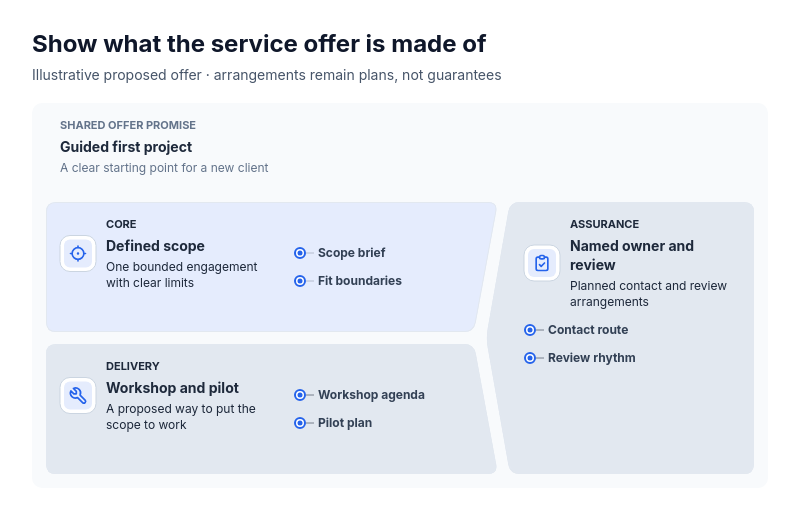 Anatomy: crowned subjectFor explaining what one thing is made of as a primary part, the part that carries it out and a part that spans both: a service offer (scope, delivery, assurance), a product (core function, how it ships, support), a course (content, format, learner support), an event (program, logistics, hosting) or a team charter (mission, ways of working, backing).
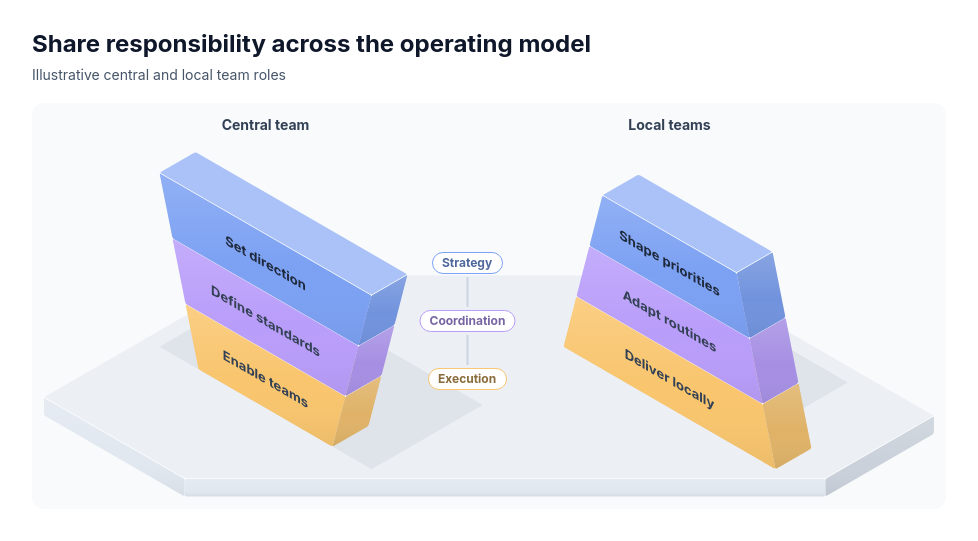 Comparison: isometric opposed pyramid tiersCompare central and local responsibilities, paired service-tier roles or two learning perspectives at the same ordered levels.
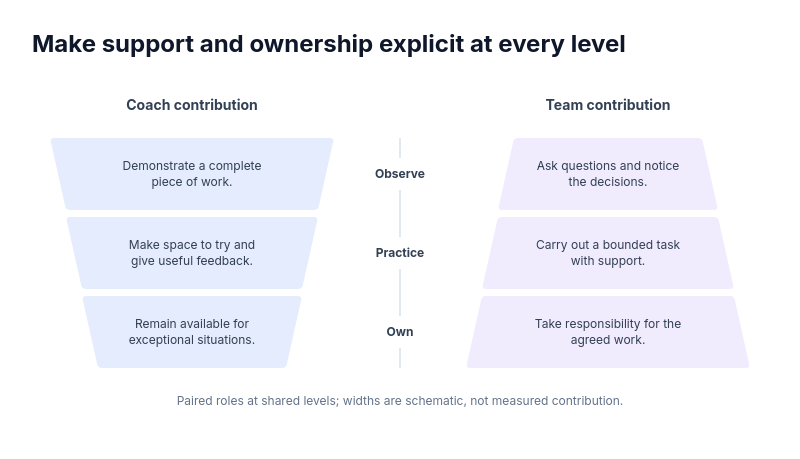 Comparison: opposed tapered tiersFor paired support and ownership roles, training perspectives or current and future responsibilities.
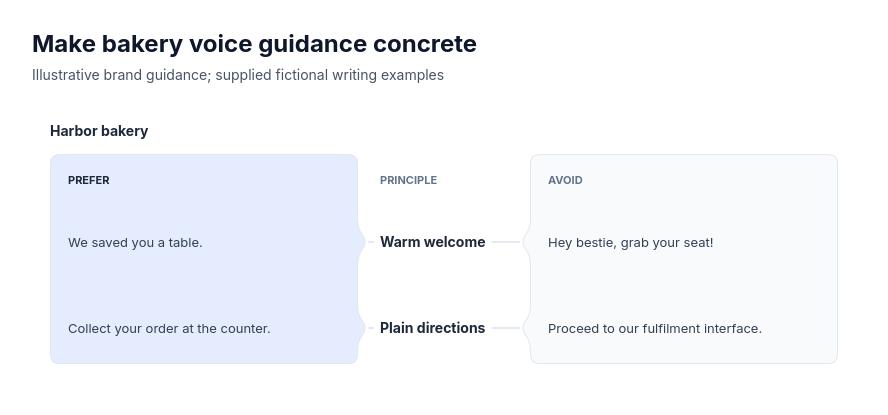 Comparison: principle seamsFor two to four supplied principles, each owning one exact preferred example and one exact example to avoid: brand voice guides, product interface copy, support reply standards, documentation style, naming conventions, inclusive language or meeting etiquette.
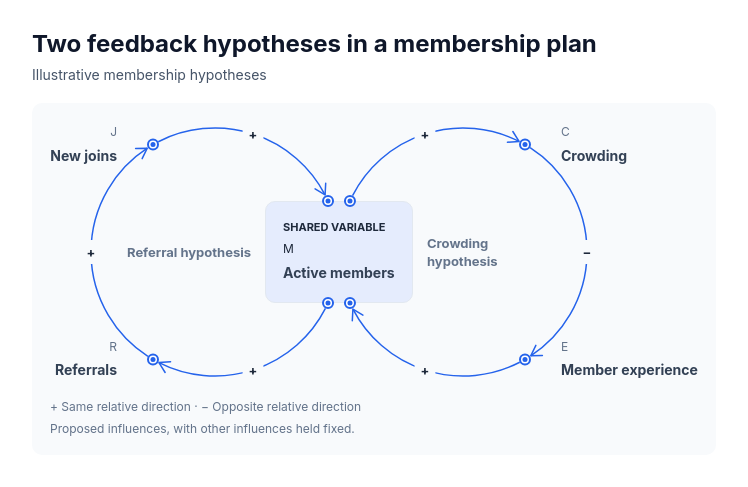 Cycle: causalFor a compact qualitative causal-loop view with exactly five variables and two three-link loops sharing one variable: a referral loop against crowding in a membership plan, workload against hiring in a team, adoption against support load in a product, or demand against price in a market.
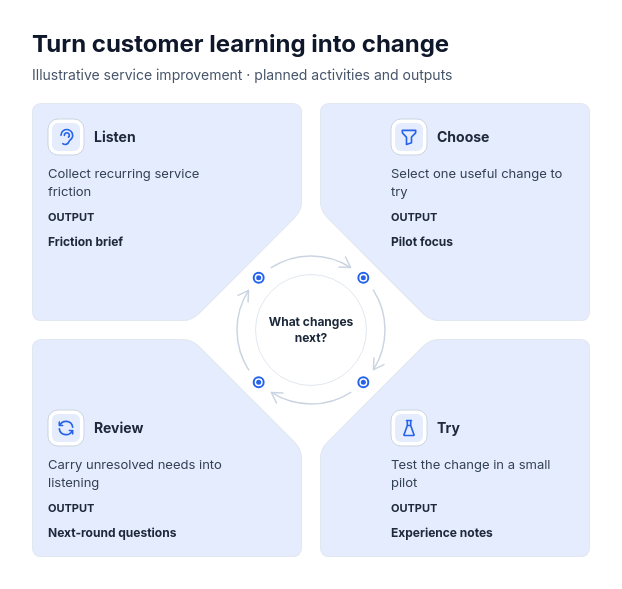 Cycle: quarter panelsFor four-step recurring loops where each step produces one named output: service improvement, editorial planning, quarterly operating reviews, product discovery or a study-practice-test-reflect learning cycle.