Diagram template
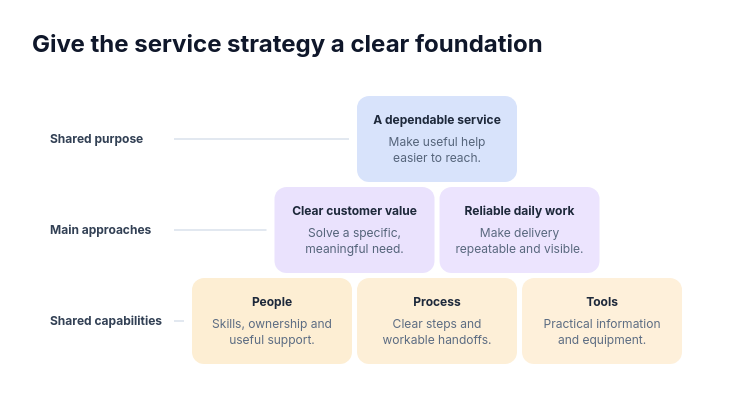
Pyramid: tier-owned bricks
PowerIndividually named bricks form ordered triangular tiers with exact tier membership and no invented cross-tier links.
Categories
Included in
Power, Max
When to use it
For strategy components, support models or learning pathways. A useful flat visual alternative to tier lists; triangle width is schematic and does not measure importance or prove parent-child dependencies.
What you fill in
Describe your topic in plain words and the AI fills these in. You can edit every field afterwards.
- Levels
- 3 to 5, each with id and name
- Entries
- 6 to 15, each with group, label, and description
Related templates
All pyramid templates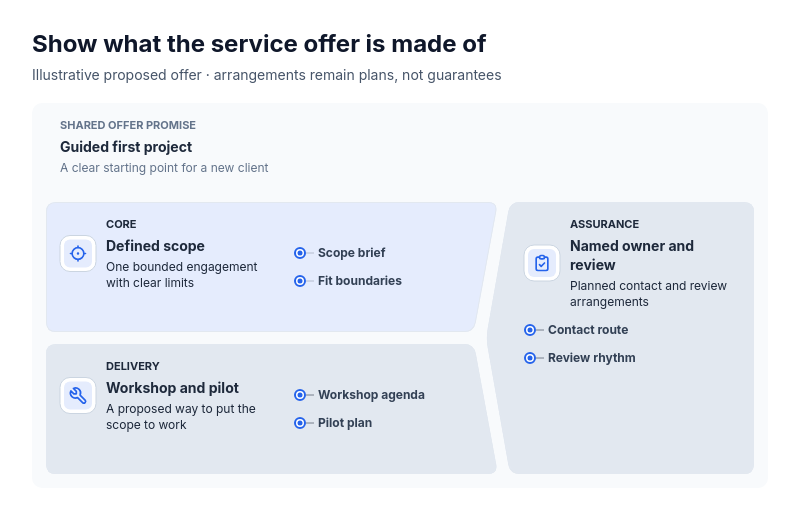 Anatomy: crowned subjectFor explaining what one thing is made of as a primary part, the part that carries it out and a part that spans both: a service offer (scope, delivery, assurance), a product (core function, how it ships, support), a course (content, format, learner support), an event (program, logistics, hosting) or a team charter (mission, ways of working, backing).
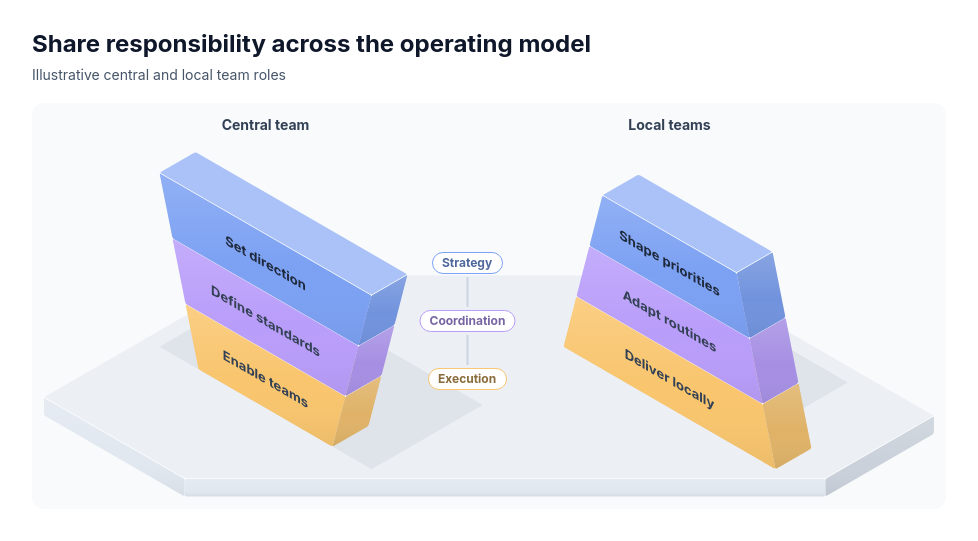 Comparison: isometric opposed pyramid tiersCompare central and local responsibilities, paired service-tier roles or two learning perspectives at the same ordered levels.
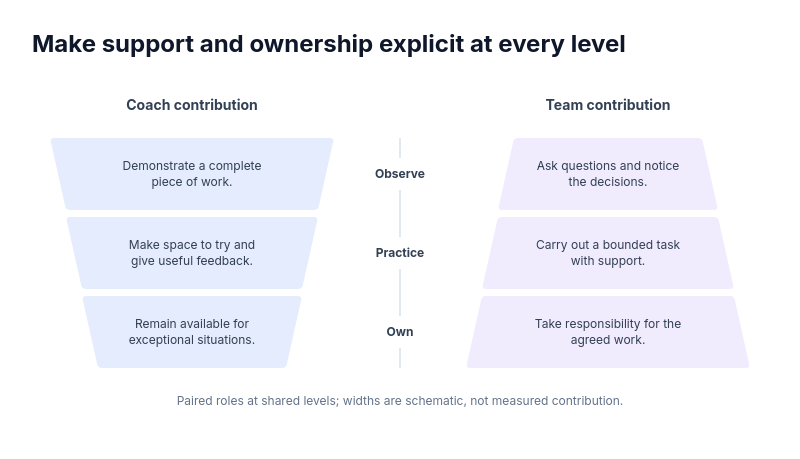 Comparison: opposed tapered tiersFor paired support and ownership roles, training perspectives or current and future responsibilities.
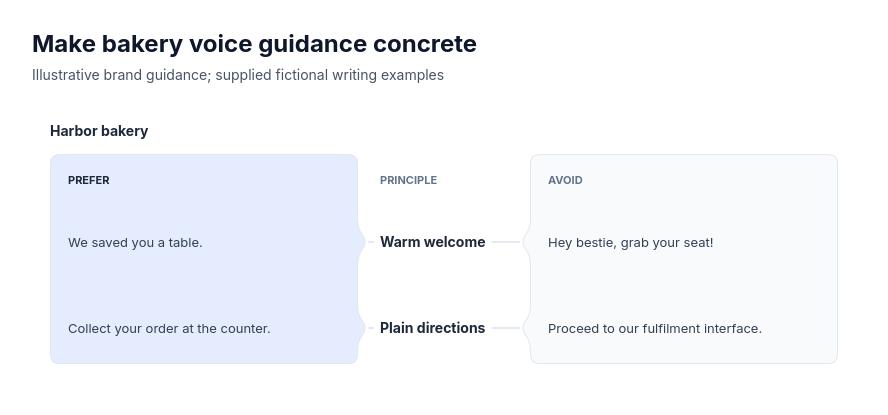 Comparison: principle seamsFor two to four supplied principles, each owning one exact preferred example and one exact example to avoid: brand voice guides, product interface copy, support reply standards, documentation style, naming conventions, inclusive language or meeting etiquette.
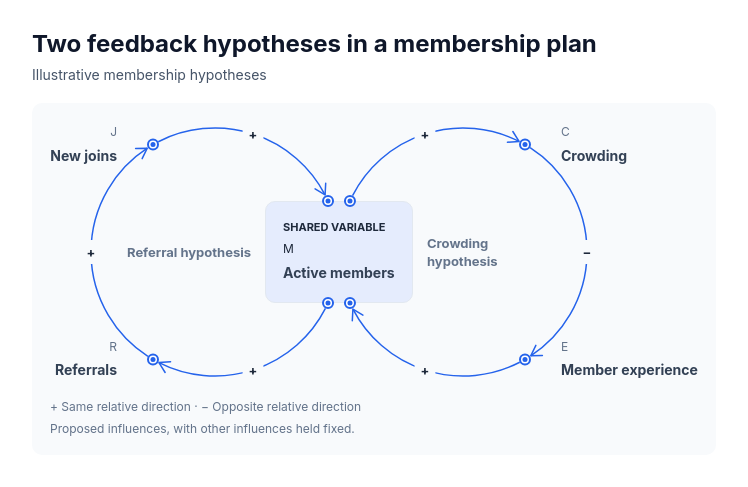 Cycle: causalFor a compact qualitative causal-loop view with exactly five variables and two three-link loops sharing one variable: a referral loop against crowding in a membership plan, workload against hiring in a team, adoption against support load in a product, or demand against price in a market.
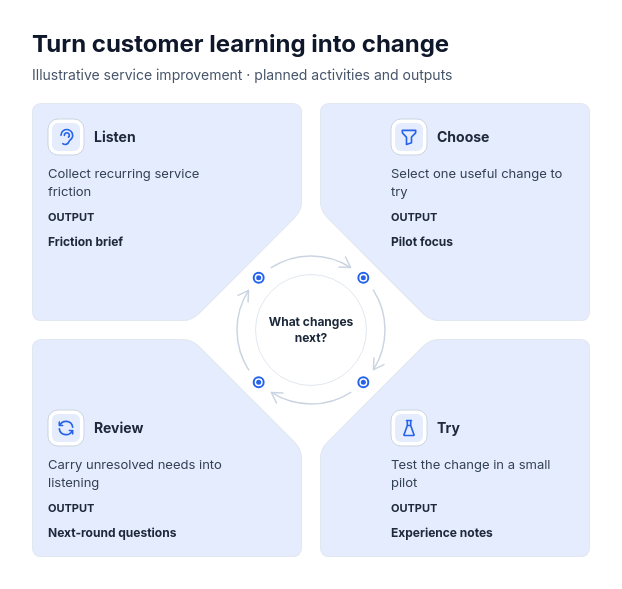 Cycle: quarter panelsFor four-step recurring loops where each step produces one named output: service improvement, editorial planning, quarterly operating reviews, product discovery or a study-practice-test-reflect learning cycle.