Diagram template
Steps: isometric block staircase
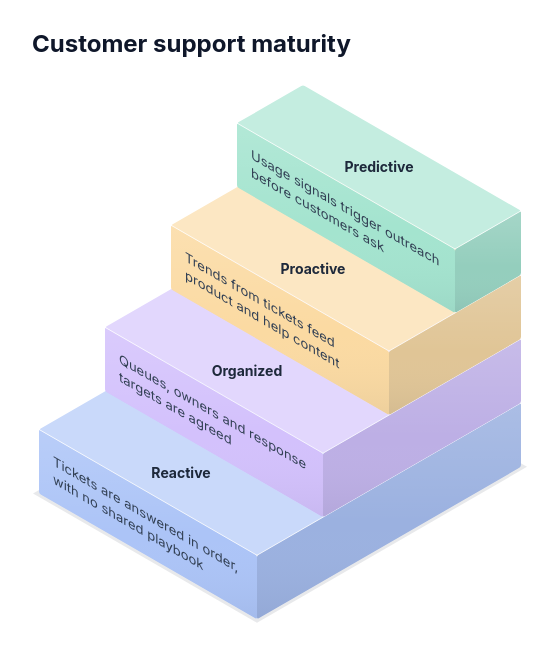
PowerThree to five level layers stack into one solid isometric staircase rising from lower left to upper right; each layer extends under every level above it, with its title on its tread and its description on its riser.
Categories
Included in
Power, Max
When to use it
Use for cumulative progressions where each level keeps what the previous ones established: maturity models, skill or career levels, service tiers, adoption stages. Step size is schematic, not measured effort or time. Not for independent options, repeating cycles or parallel tracks.
Adjust after generating
Change the style, colors, and font, and these options, as often as you like without spending credits.
- Typography
- Spacing
What you fill in
Describe your topic in plain words and the AI fills these in. You can edit every field afterwards.
- Levels
- 3 to 5, each with title and description
Related templates
All process templates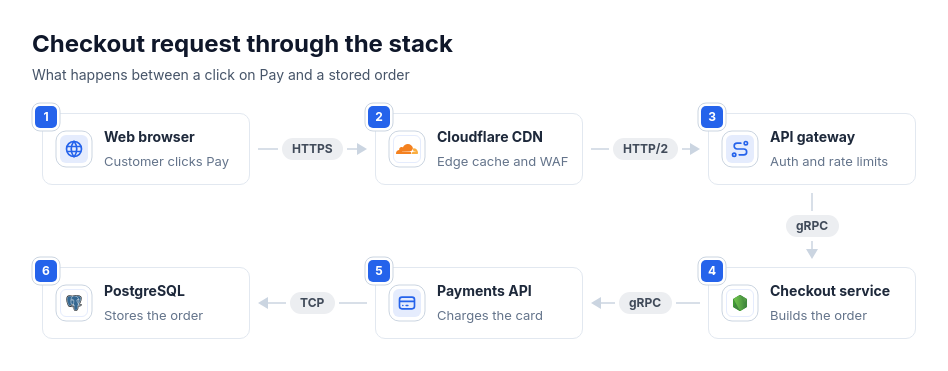 Architecture: request pathThree to eight hops of one request in order, such as a request through CDN, gateway, services, and database, an auth or checkout request trace, or a webhook delivery path, optionally with the protocol or measured time of each link.
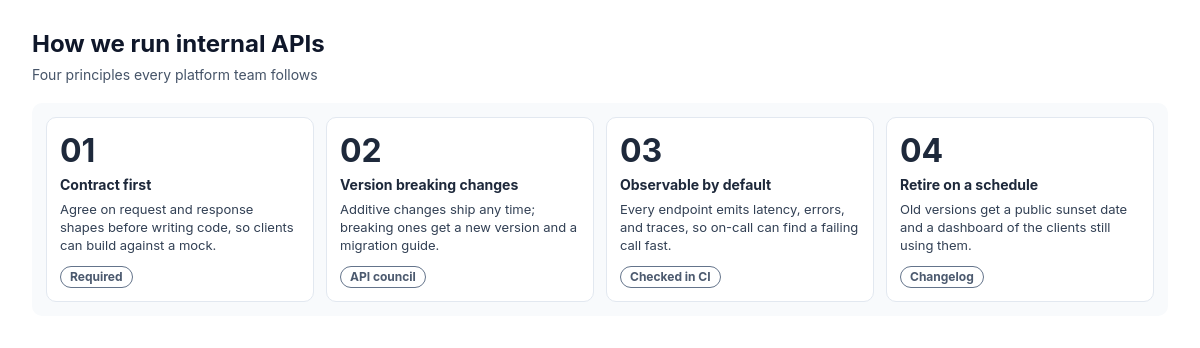 Numbered takeaways with optional footnotesParallel principles or takeaways.
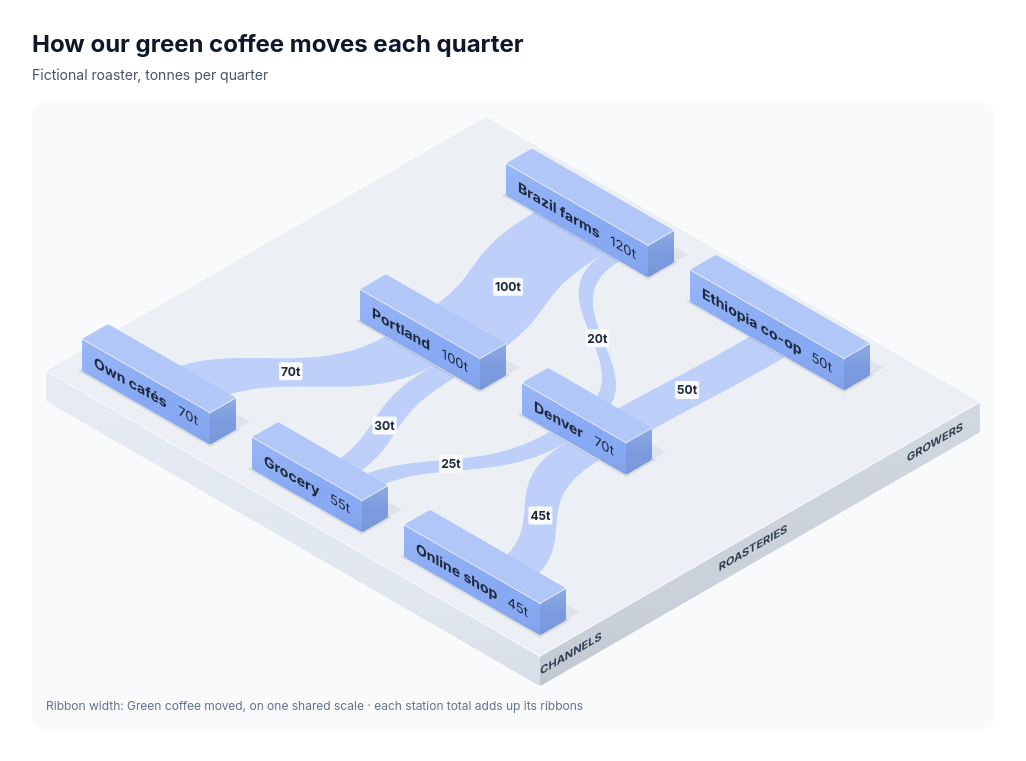 Chart: isometric station platforms in stage columnsOne measured quantity moving through a chain of stages where every middle station passes on exactly what it receives: supply chain volumes from suppliers through plants to stores, data moving between systems in a pipeline, students moving from intake routes through programmes into destinations.
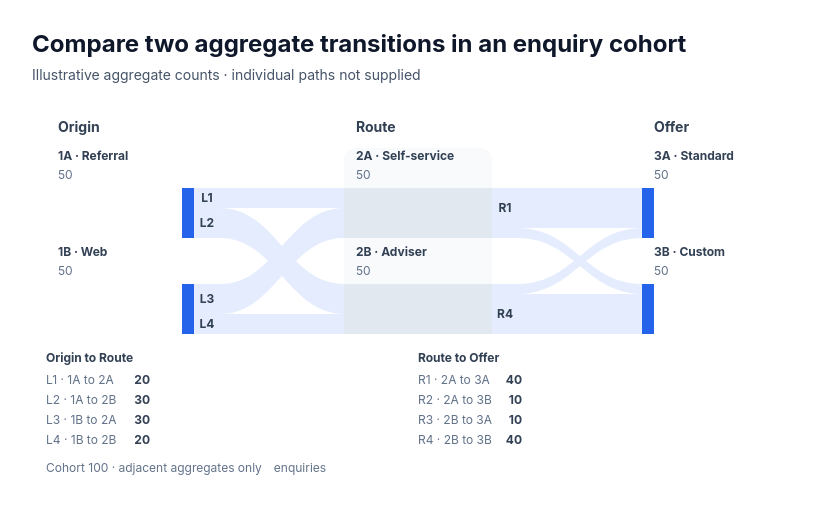 Chart: adjacent aggregate transfersFor an explicitly closed conserved cohort classified into two categories at each of three ordered stages, with all eight adjacent pair counts including known zeros: enquiries by origin, route and offer; students by entry track, course and outcome; patients by referral, pathway and setting; or orders by channel, warehouse and carrier.
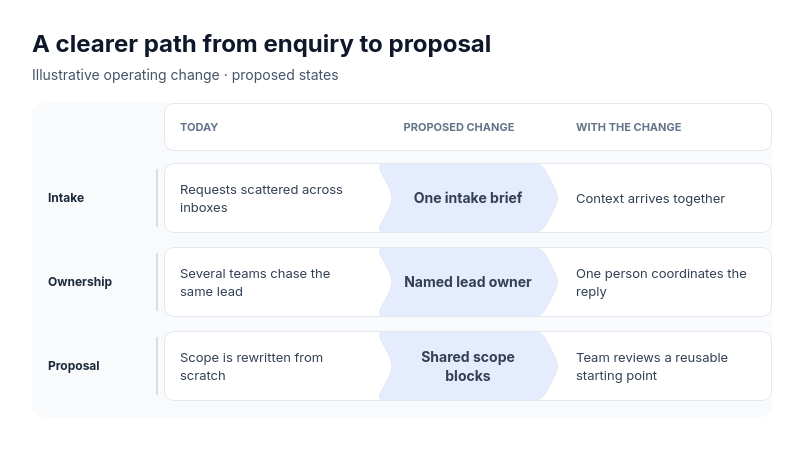 Comparison: paired statesFor proposals explaining which specific change connects each current condition to its proposed counterpart: a business process redesign, a product onboarding fix, a policy or classroom routine change, a team operating model, or a personal workflow.
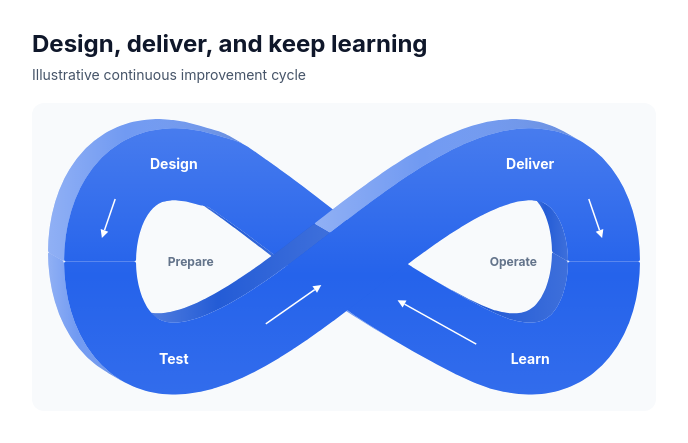 Cycle: dimensional infinityOne ordered four-stage process repeating through two phases, two stages per phase.