Diagram template
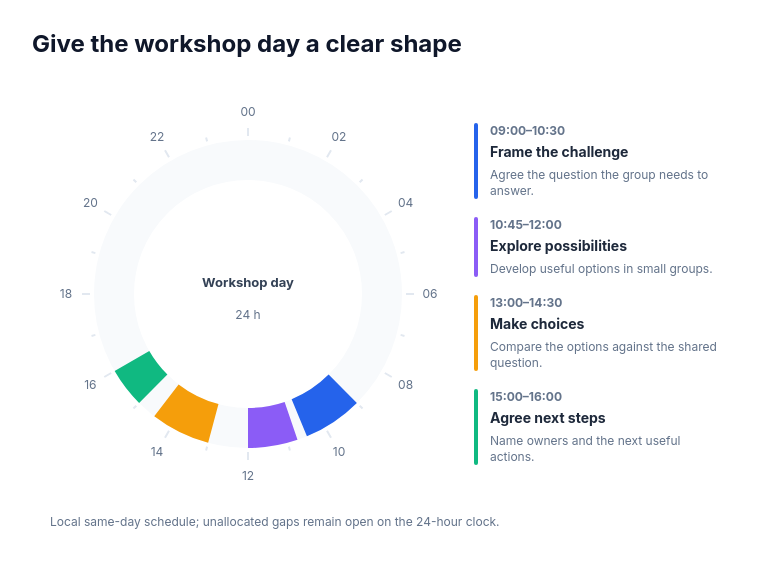
Timeline: 24-hour clock face
PowerExact same-day intervals occupy proportional arcs on a 24-hour clock face and retain their complete event descriptions in a matched ledger.
Categories
Included in
Power, Max
When to use it
For meeting agendas, event programs or training days with exact supplied local times. Requires ordered, nonoverlapping same-day intervals; does not infer current time, completion or attendance.
What you fill in
Describe your topic in plain words and the AI fills these in. You can edit every field afterwards.
- Center
- Text
- Footnote
- Text
- Stages
- 3 to 6, each with title, description, start, and end
Related templates
All timeline templates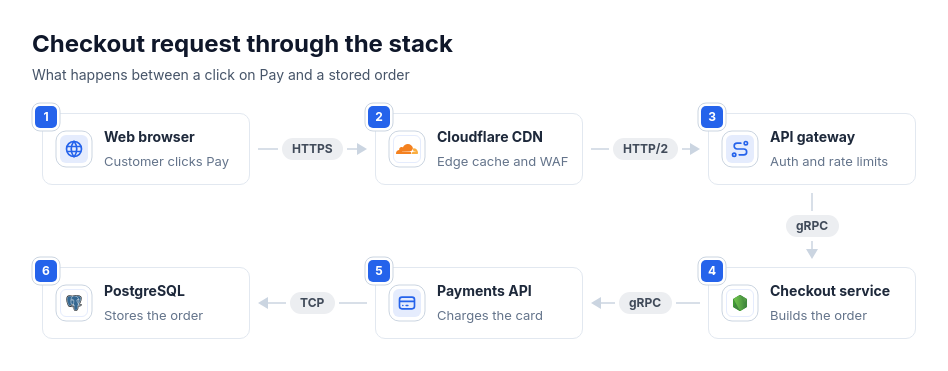 Architecture: request pathThree to eight hops of one request in order, such as a request through CDN, gateway, services, and database, an auth or checkout request trace, or a webhook delivery path, optionally with the protocol or measured time of each link.
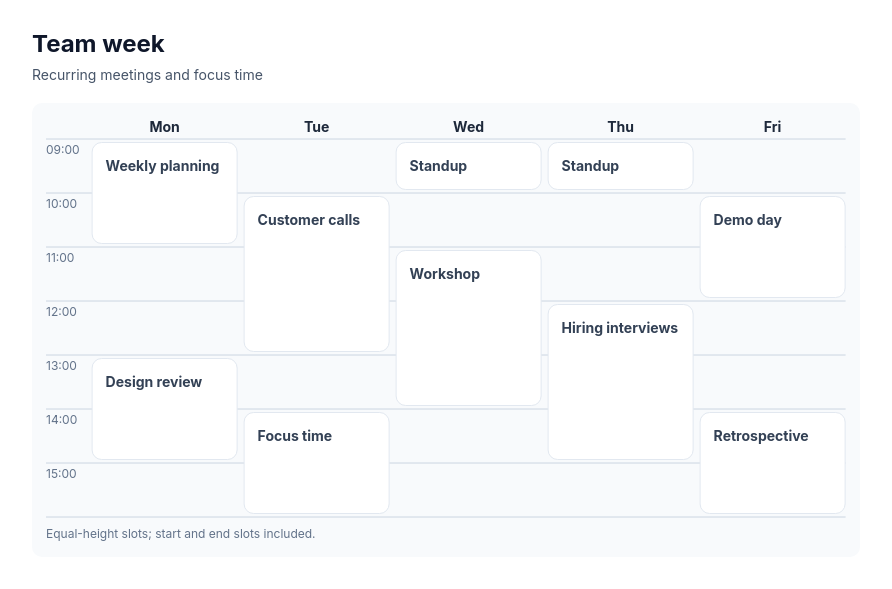 Calendar gridA schedule laid out by period and time slot, such as a week timetable, a conference day plan, a content calendar by week, or a weekly meal or workout plan, with events that occupy one or more consecutive slots.
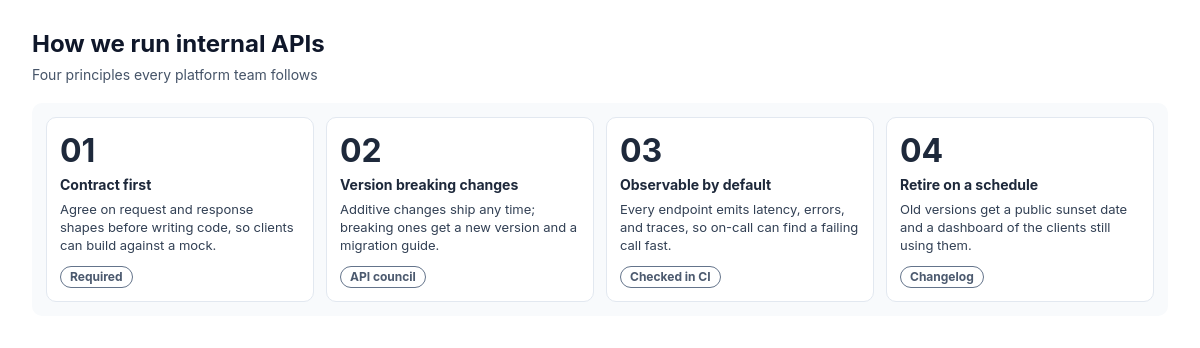 Numbered takeaways with optional footnotesParallel principles or takeaways.
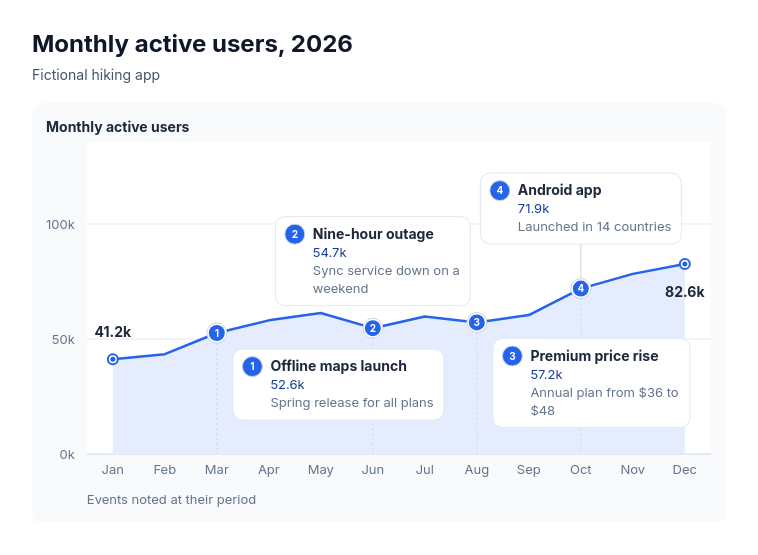 Annotated lineSuits explaining the turns in one measure over time: monthly active users with launches and outages, revenue with pricing changes, support volume with policy changes, website traffic with campaigns, headcount with reorganisations.
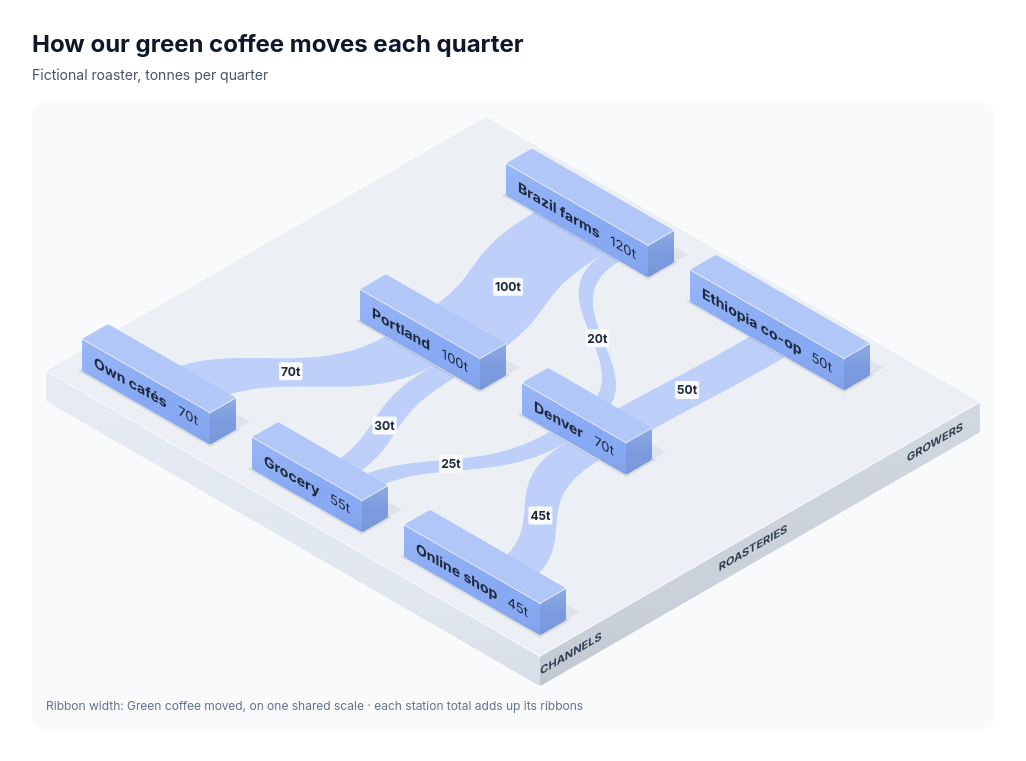 Chart: isometric station platforms in stage columnsOne measured quantity moving through a chain of stages where every middle station passes on exactly what it receives: supply chain volumes from suppliers through plants to stores, data moving between systems in a pipeline, students moving from intake routes through programmes into destinations.
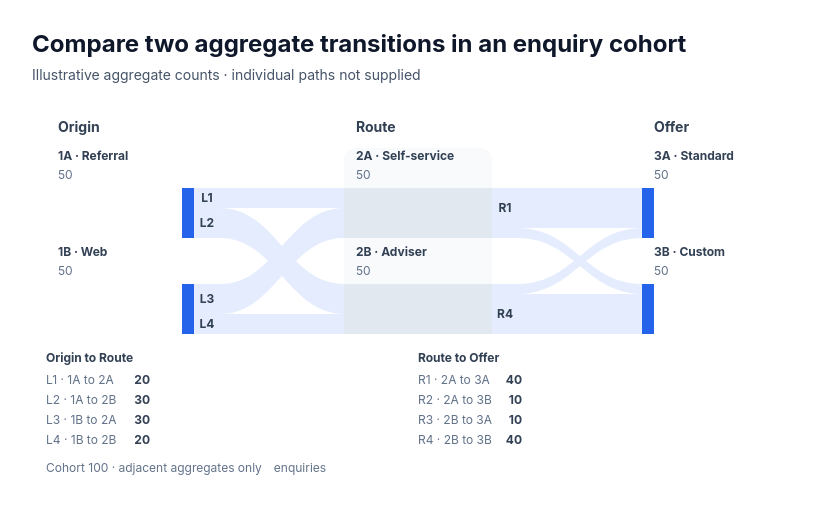 Chart: adjacent aggregate transfersFor an explicitly closed conserved cohort classified into two categories at each of three ordered stages, with all eight adjacent pair counts including known zeros: enquiries by origin, route and offer; students by entry track, course and outcome; patients by referral, pathway and setting; or orders by channel, warehouse and carrier.