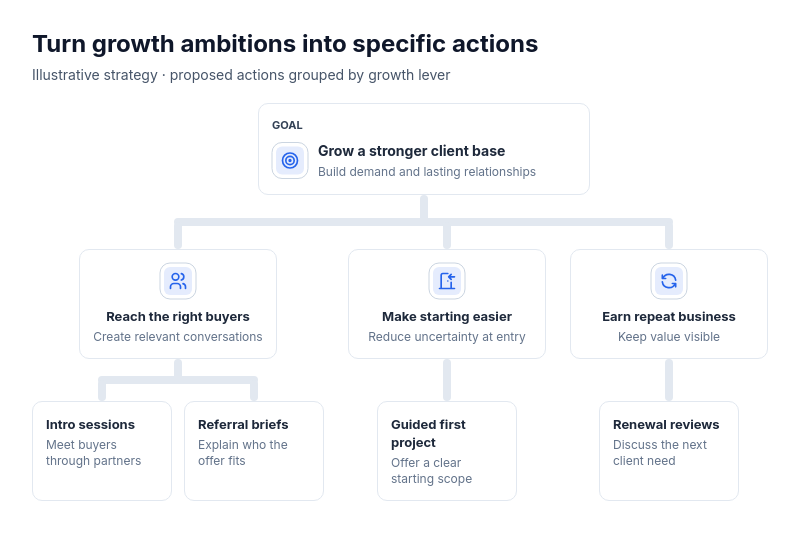
Diagram template
Tree: top-down branch ribbons
PowerOne labeled subject crowns a top-down ribbon tree. Two or three icon-headed groups each branch into one or two leaf cards with exact parent ownership.
Categories
Included in
Power, Max
When to use it
For compact two-level breakdowns of one subject: a goal into levers and actions, a product into capability areas and features, a program into workstreams and initiatives, or a topic into themes and examples. Ribbons show membership; their uniform thickness does not imply investment, priority or a proven causal result. Leaves preserve explicit parent references and supplied order within each group. Not for deeper or wider hierarchies, observed metrics, forecasts, sequential tasks or cross-group dependencies.
Adjust after generating
Change the style, colors, and font, and these options, as often as you like without spending credits.
- Card shape
- Card fill
- Color distribution
- Card border
- Card shadow
- Typography
- Icon shape
- Icon size
- Icon fill
- Icon shell
- Spacing
- Alignment
- Material
What you fill in
Describe your topic in plain words and the AI fills these in. You can edit every field afterwards.
- Subject label
- Text
- Subject
- Title, description, and icon
- Groups
- 2 to 3, each with id, name, description, and icon
- Nodes
- 2 to 6, each with id, group, title, and description
Related templates
All tree templates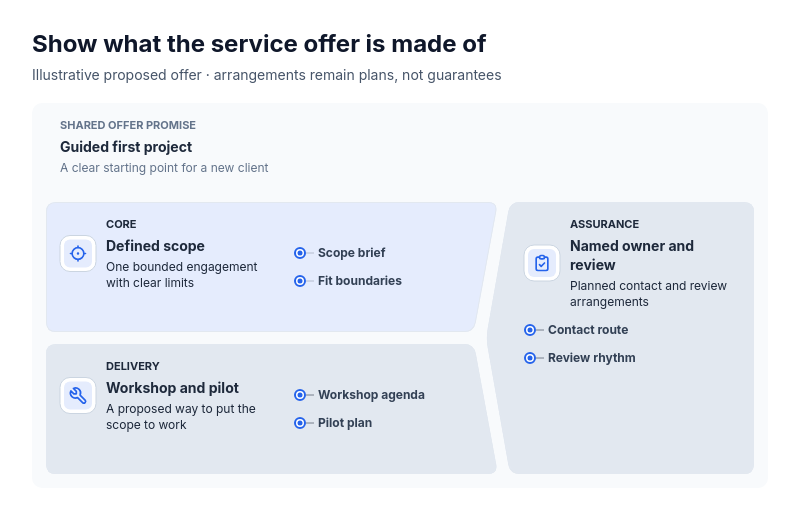 Anatomy: crowned subjectFor explaining what one thing is made of as a primary part, the part that carries it out and a part that spans both: a service offer (scope, delivery, assurance), a product (core function, how it ships, support), a course (content, format, learner support), an event (program, logistics, hosting) or a team charter (mission, ways of working, backing).
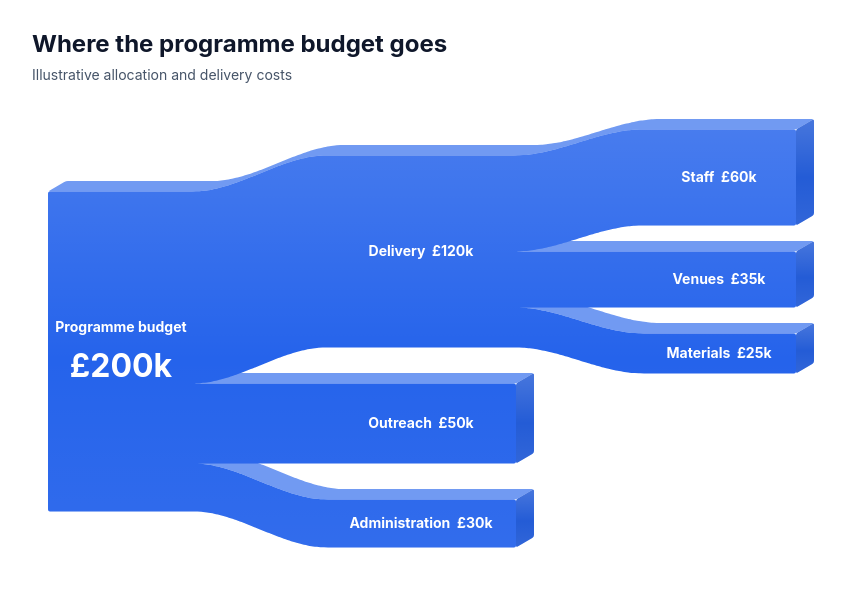 Allocation treeA positive common-unit allocation with two to four parts and an exact complete two-to-four-part breakdown of one selected parent.
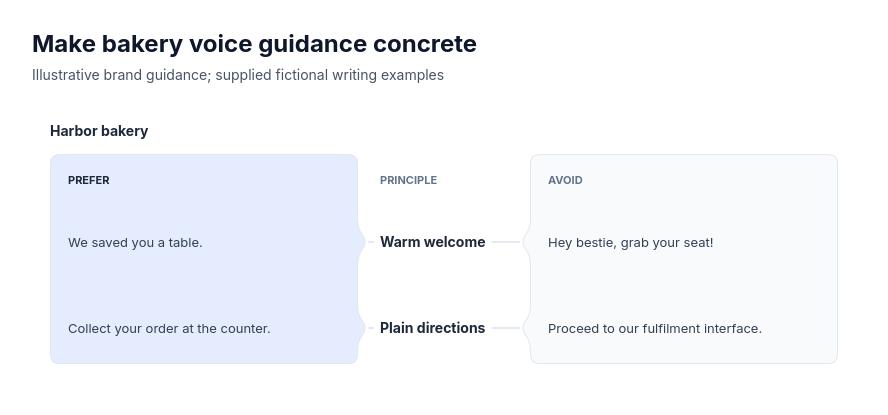 Comparison: principle seamsFor two to four supplied principles, each owning one exact preferred example and one exact example to avoid: brand voice guides, product interface copy, support reply standards, documentation style, naming conventions, inclusive language or meeting etiquette.
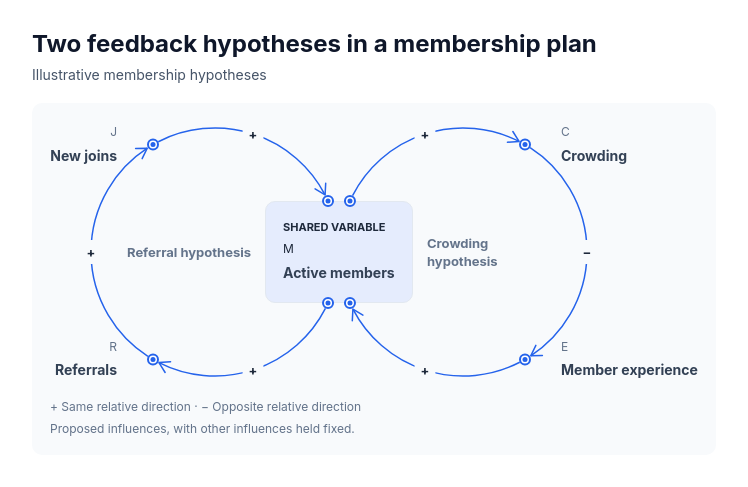 Cycle: causalFor a compact qualitative causal-loop view with exactly five variables and two three-link loops sharing one variable: a referral loop against crowding in a membership plan, workload against hiring in a team, adoption against support load in a product, or demand against price in a market.
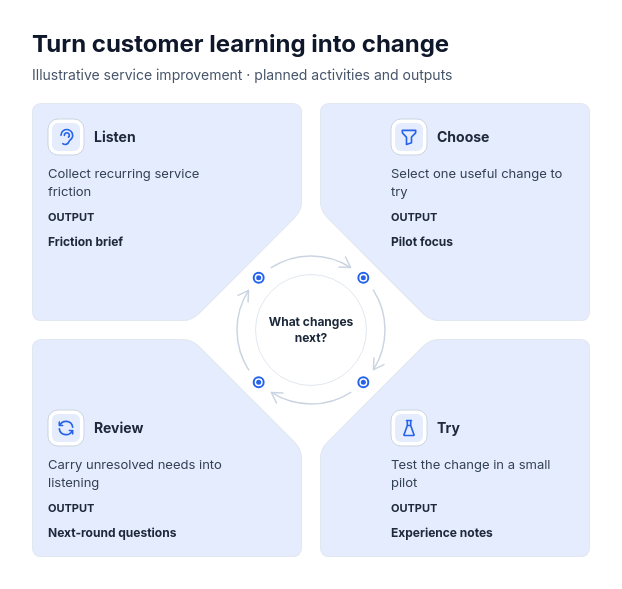 Cycle: quarter panelsFor four-step recurring loops where each step produces one named output: service improvement, editorial planning, quarterly operating reviews, product discovery or a study-practice-test-reflect learning cycle.
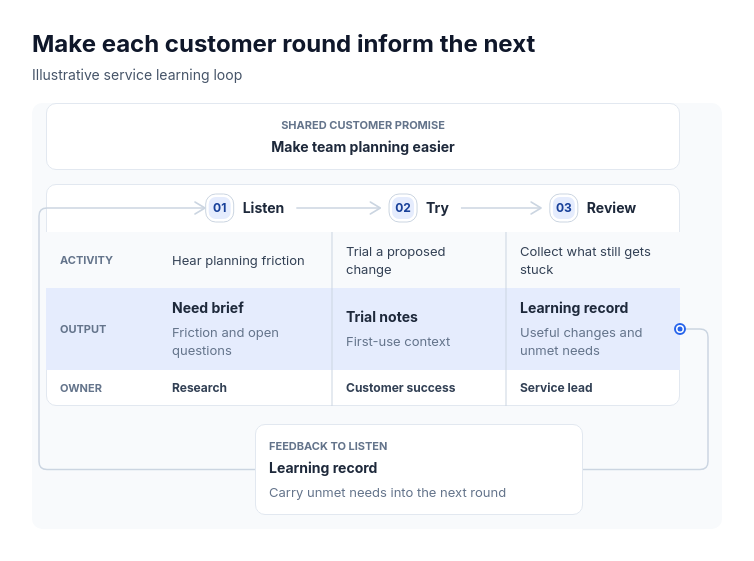 Cycle: stage ledgerFor 3–5 stage recurring loops with named owners, produced work and an explicit final-to-first feedback artifact: customer learning loops, hiring or onboarding routines, editorial cycles, release reviews and continuous-improvement rounds.