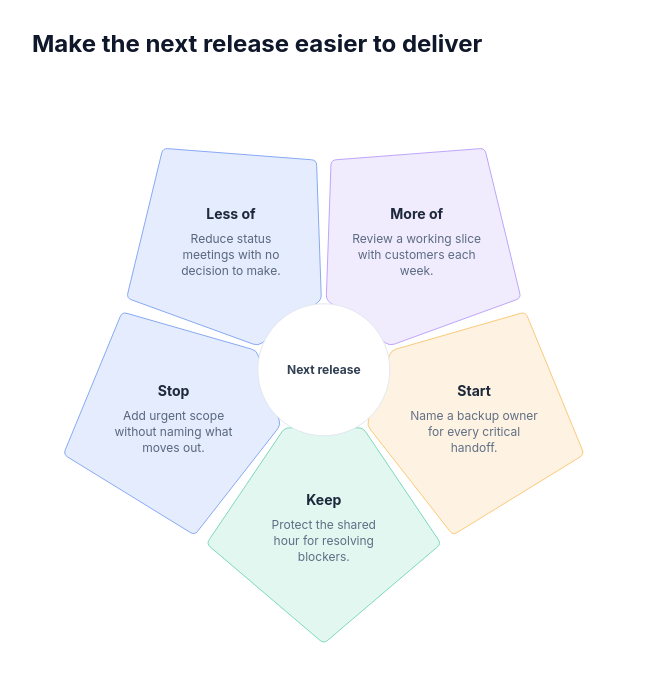
Diagram template
Framework: five-point review
PowerFive integrated pointed fields surround a common review center and retain fixed less/more/start/keep/stop roles.
Categories
Included in
Power, Max
When to use it
For project retrospectives, service reviews or personal working practices. Each field names a proposed action in a fixed role, without implying priority, measured performance or completion.
What you fill in
Describe your topic in plain words and the AI fills these in. You can edit every field afterwards.
- Center
- Text
- Groups
- Exactly 5, each with id, name, and description
Related templates
All framework templates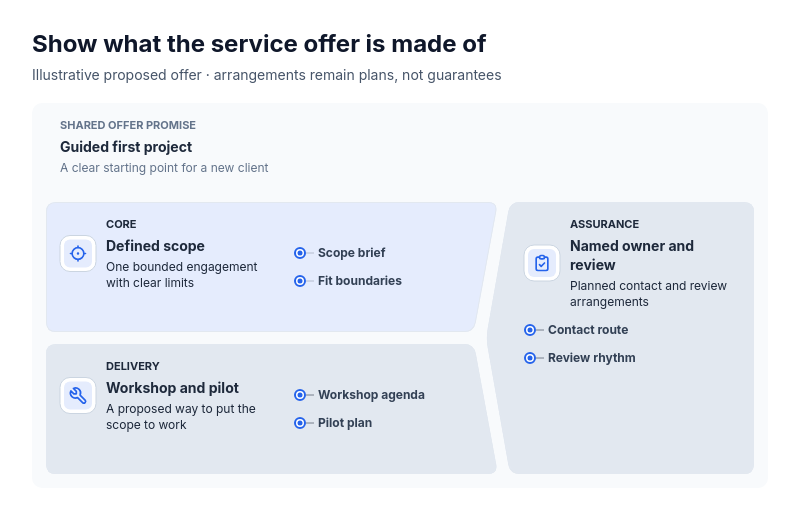 Anatomy: crowned subjectFor explaining what one thing is made of as a primary part, the part that carries it out and a part that spans both: a service offer (scope, delivery, assurance), a product (core function, how it ships, support), a course (content, format, learner support), an event (program, logistics, hosting) or a team charter (mission, ways of working, backing).
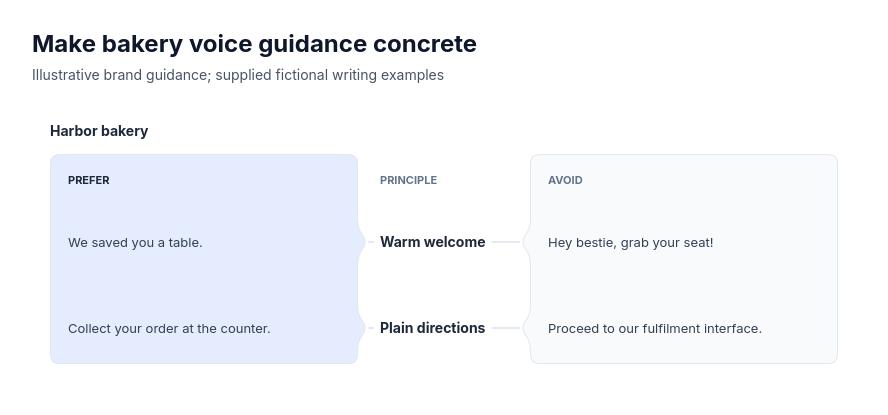 Comparison: principle seamsFor two to four supplied principles, each owning one exact preferred example and one exact example to avoid: brand voice guides, product interface copy, support reply standards, documentation style, naming conventions, inclusive language or meeting etiquette.
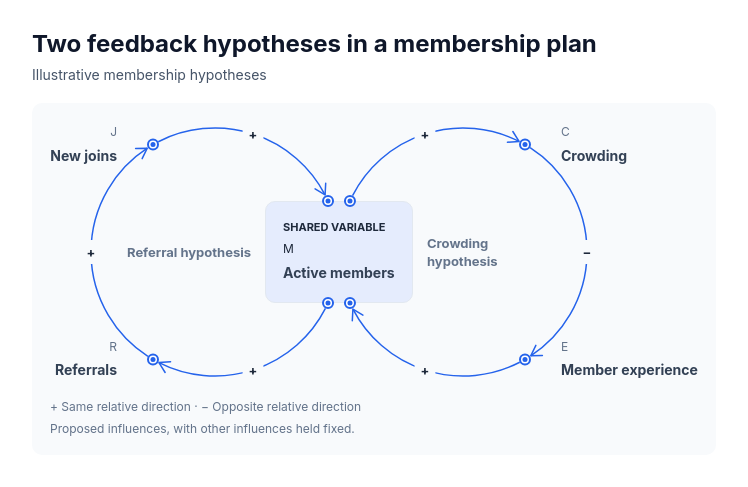 Cycle: causalFor a compact qualitative causal-loop view with exactly five variables and two three-link loops sharing one variable: a referral loop against crowding in a membership plan, workload against hiring in a team, adoption against support load in a product, or demand against price in a market.
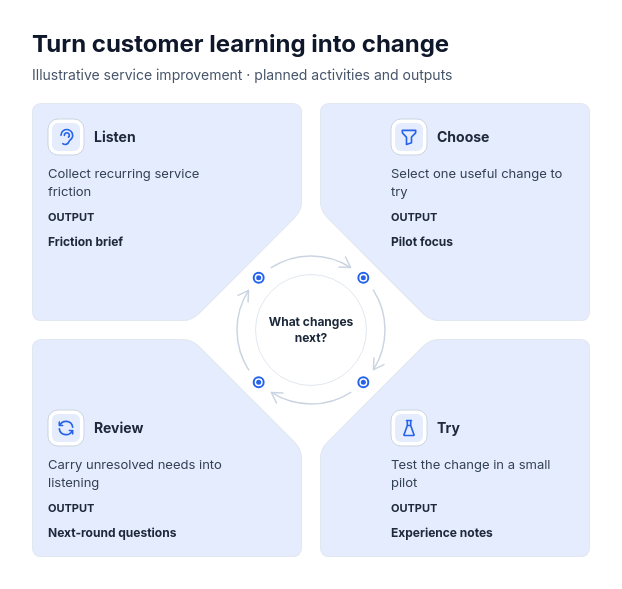 Cycle: quarter panelsFor four-step recurring loops where each step produces one named output: service improvement, editorial planning, quarterly operating reviews, product discovery or a study-practice-test-reflect learning cycle.
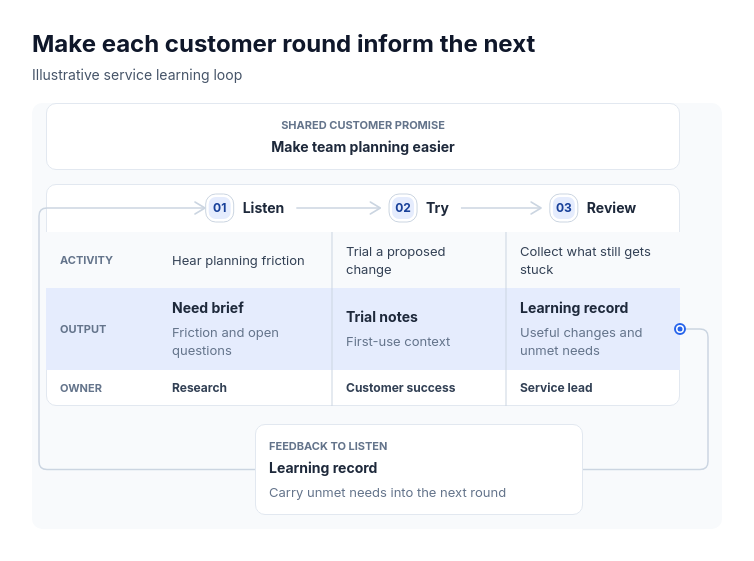 Cycle: stage ledgerFor 3–5 stage recurring loops with named owners, produced work and an explicit final-to-first feedback artifact: customer learning loops, hiring or onboarding routines, editorial cycles, release reviews and continuous-improvement rounds.
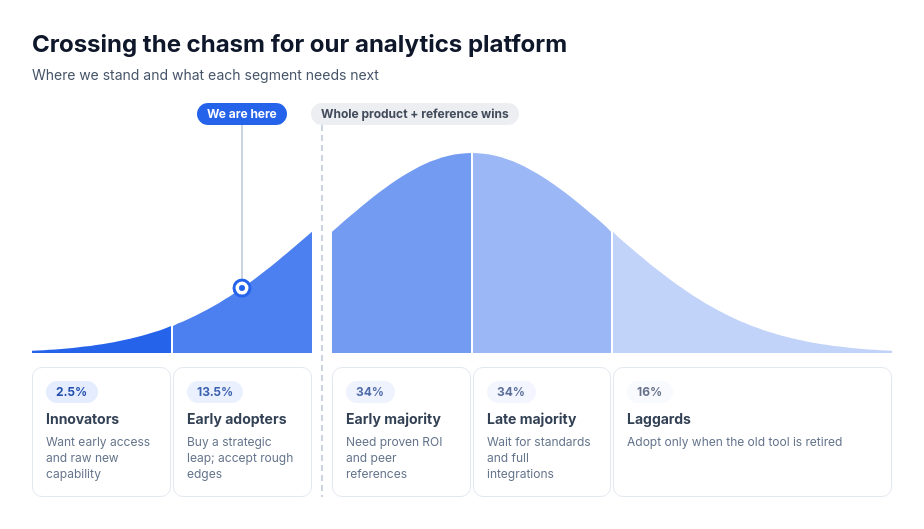 Adoption lifecyclePlace a product, technology, internal tool, policy, practice or service on the diffusion of innovations curve: go-to-market planning for a B2B product, rollout of a new internal platform, adoption of a public-health practice, or spread of a teaching method.