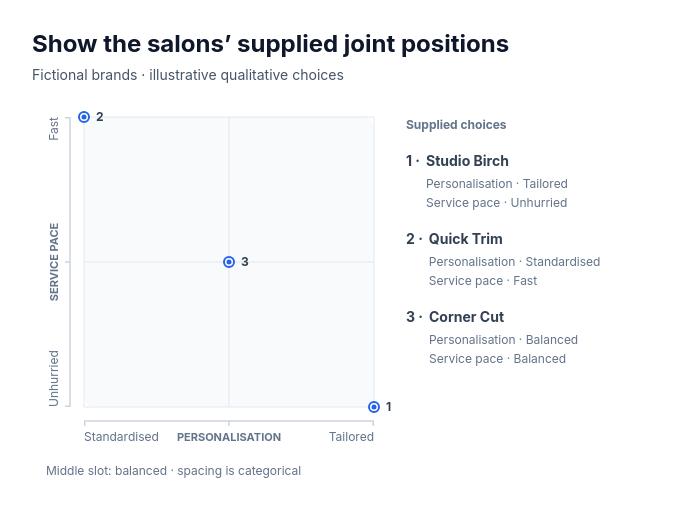
Diagram template
Matrix: two categorical axes
ProThree or four options share two opposed categorical axes, with exact joint-position markers and a complete grouped key retaining partial unknowns.
Categories
Included in
Pro, Power, Max
When to use it
For supplied qualitative choices of three or four options on exactly two opposed criteria: competing brands on personalisation and pace, vendors on cost model and support depth, product concepts on complexity and audience, or initiatives on effort and reach. Low, balanced and high are named categories with schematic spacing, not numeric coordinates. Coincidence shares one marker; partial unknowns remain unplotted and keep both choices visibly in the key. Not for inferred assessment, distances, preference, numerical scores or actual market evidence.
Adjust after generating
Change the style, colors, and font, and these options, as often as you like without spending credits.
- Card shape
- Typography
- Spacing
What you fill in
Describe your topic in plain words and the AI fills these in. You can edit every field afterwards.
- Options
- 3 to 4, each with id and name
- Criteria
- Exactly 2, each with id, name, low, and high
- Nodes
- 6 to 8, each with group, from, and kind
Related templates
All matrix templates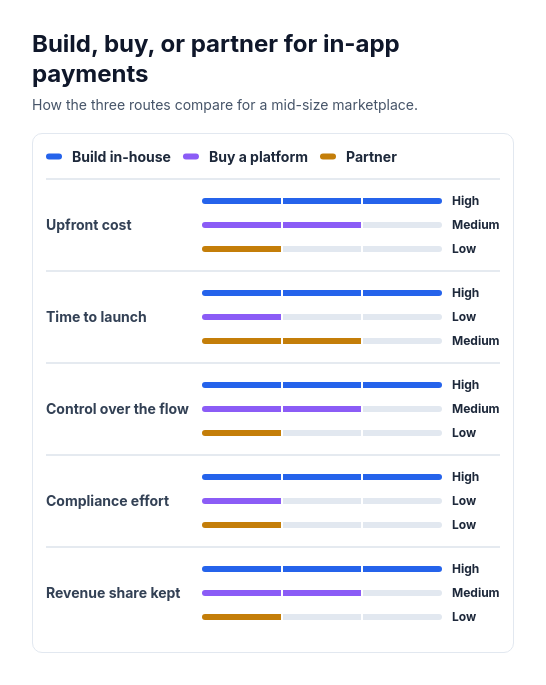 Attribute barsCompare two or three options across three to six attributes that can be scored or rated low, medium, or high, such as cost, speed, and effort.
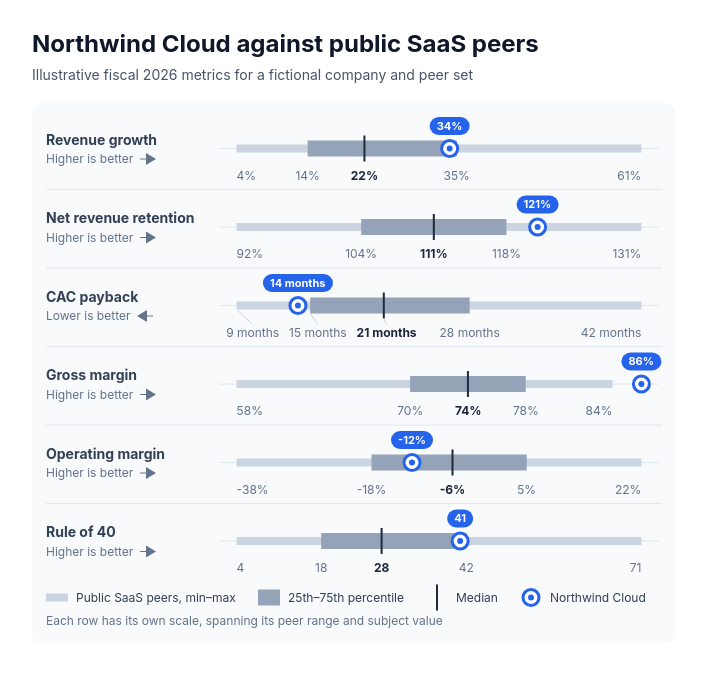 BenchmarkPlace one subject against a peer group's spread on two to eight metrics with different units: company or product benchmarks, a store or region against its network, salary or offer positioning against a market survey, a team or school against its organization.
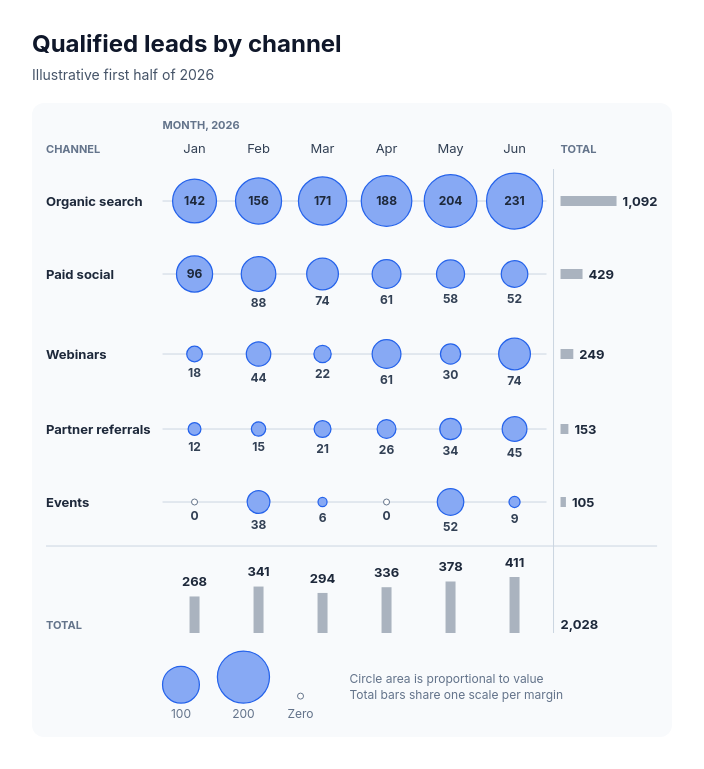 Chart: bubble gridShow how one additive measure spreads across two lists when the pattern of large and small amounts matters more than exact shades, such as leads by channel and month, feature usage by customer segment, skills by team, or orders by store and weekday.
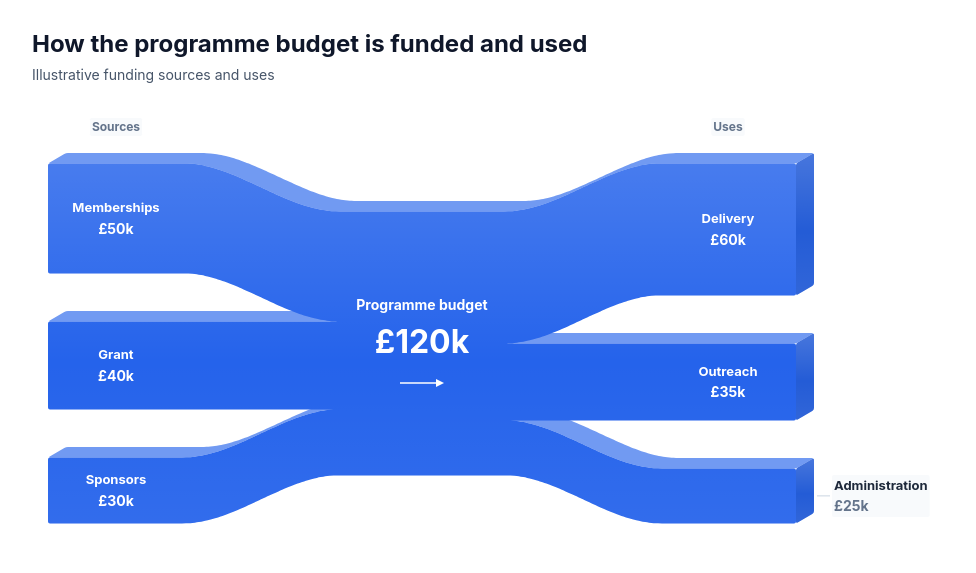 Conserved wholeTwo complete nonnegative marginal breakdowns of one positive common-unit total: funding sources and uses, staffing hours and work allocations, or energy supply and end uses.
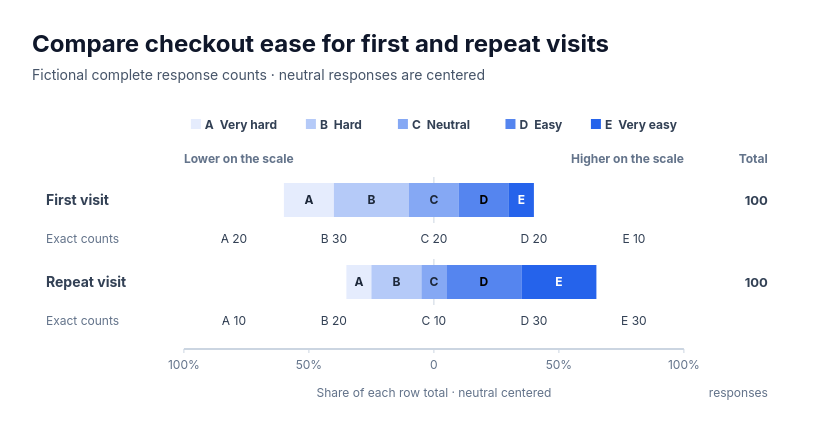 Chart: five-class ordered scaleFor complete supplied counts on one five-class ordered scale compared across two or three groups: survey agreement by segment, review star ratings by product, risk ratings by business unit, performance grades by team or difficulty ratings by release.
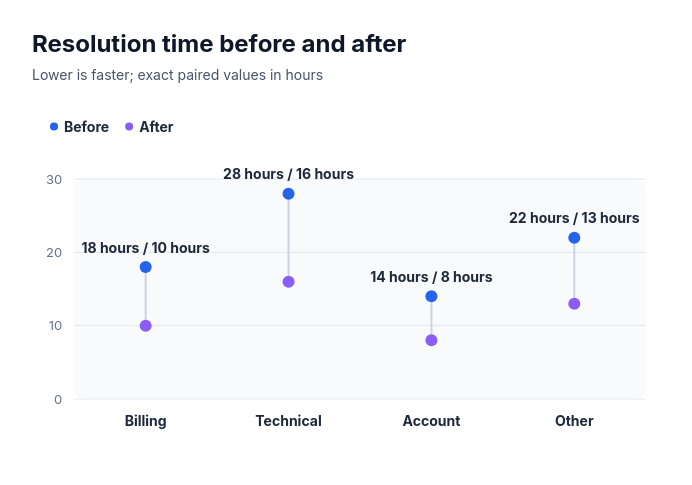 Dumbbell: vertical paired valuesCompare 2–8 paired signed finite before and after amounts as linked vertical points on one common axis.