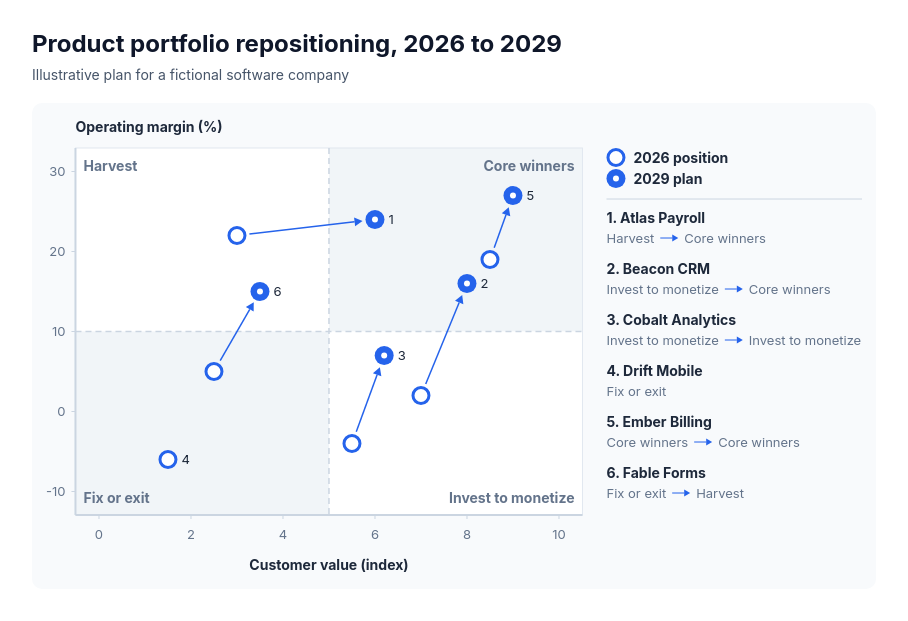
Diagram template
Movement matrix
PowerThree to ten entries on two numeric axes split by supplied thresholds into four named quadrants, each a hollow marker at its current position with an optional arrow to a solid marker at its destination, labeled at the destination, with a key and a ledger of each entry's quadrant move. Numbered plotted keys match the complete entry names in the adjacent movement ledger.
Categories
Included in
Power, Max
When to use it
Plans and observed shifts where entries move between positions: a portfolio repositioning plan by customer value and profitability, a capability shift by maturity and importance, accounts migrating by spend and engagement, markets moving by attractiveness and strength. Not for a single snapshot without movement (use a numeric quadrant matrix or scatter), for sized entries (use a bubble matrix) or for categorical positions.
Adjust after generating
Change the style, colors, and font, and these options, as often as you like without spending credits.
- Card shape
- Typography
- Spacing
What you fill in
Describe your topic in plain words and the AI fills these in. You can edit every field afterwards.
- X axis
- Label and optional unit
- Y axis
- Label and optional unit
- X split
- Number
- Y split
- Number
- Quadrants
- Exactly 4
- Current label
- Text
- Target label
- Text
- Nodes
- 3 to 10, each with label, x, y, and optional destination
Related templates
All matrix templates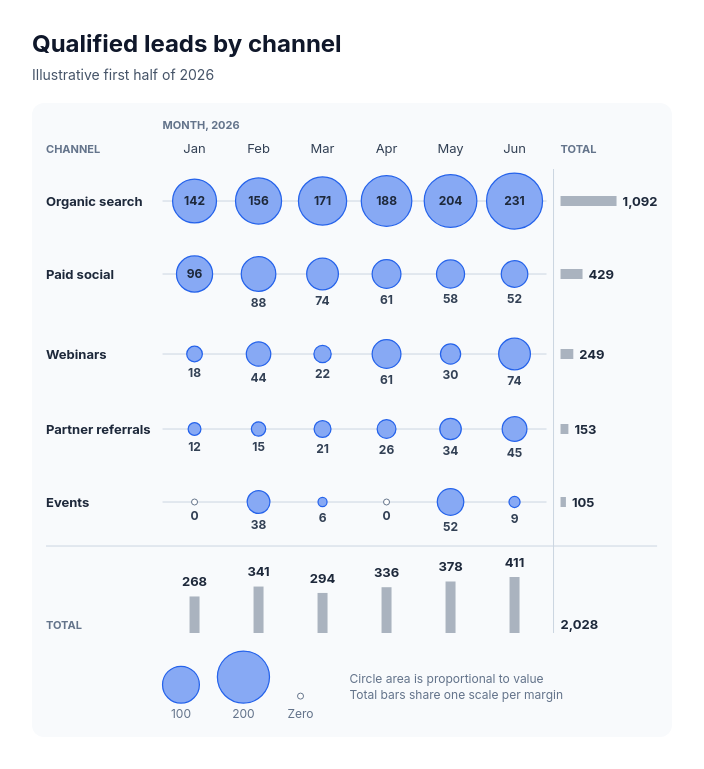 Chart: bubble gridShow how one additive measure spreads across two lists when the pattern of large and small amounts matters more than exact shades, such as leads by channel and month, feature usage by customer segment, skills by team, or orders by store and weekday.
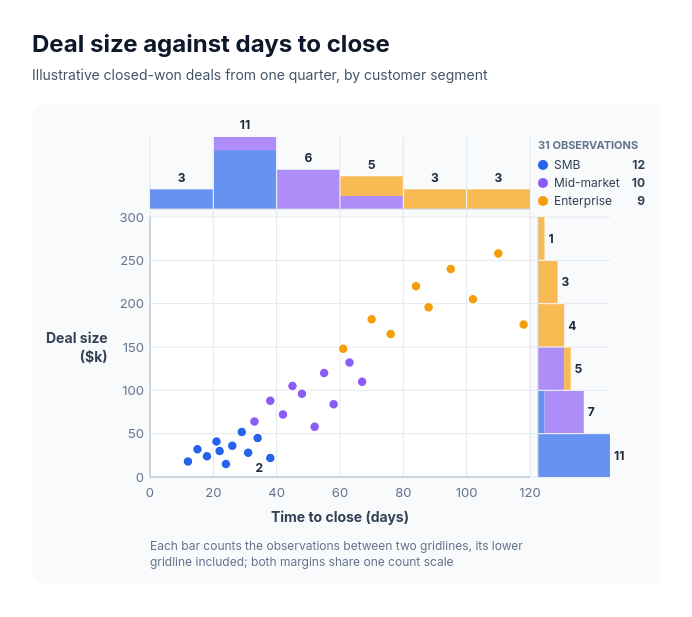 Chart: scatter plotShow how two measures relate across many observations and how each one is distributed, such as deal size against days to close by segment, delivery time against distance by region, customer tenure against monthly spend by plan, or response time against satisfaction score by channel.
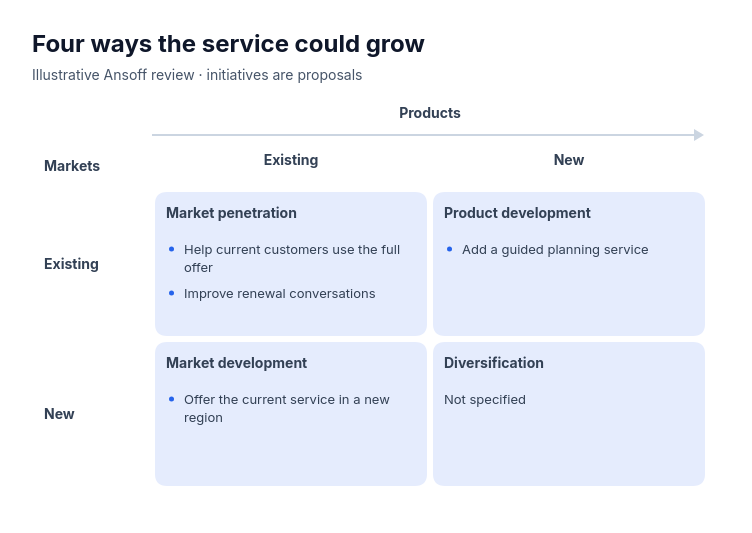 Ansoff matrixFor a product, service or retail offer’s proposed growth choices using explicitly classified initiatives.
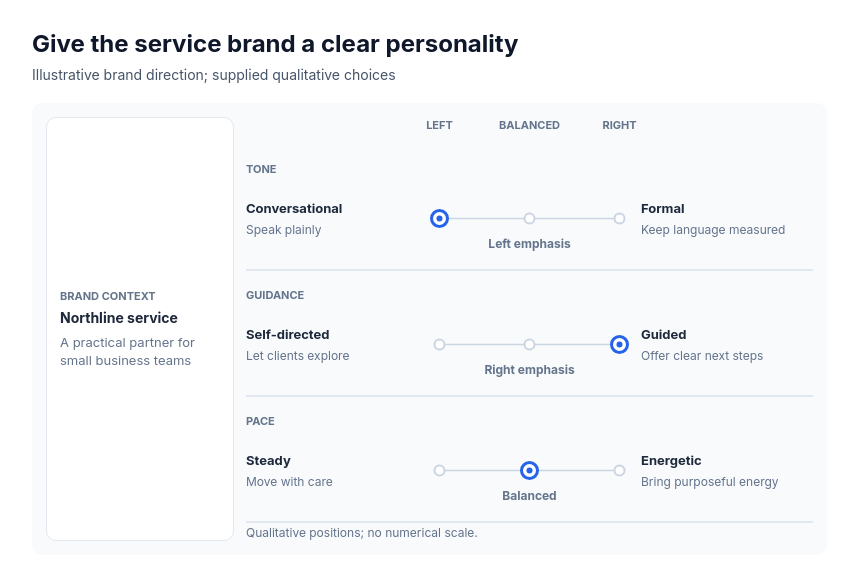 Framework: context panelFor two to four supplied trait pairs with explicitly chosen qualitative positions for one subject: a brand personality, a team's working style, a product's design principles, a leadership stance or a service's character.
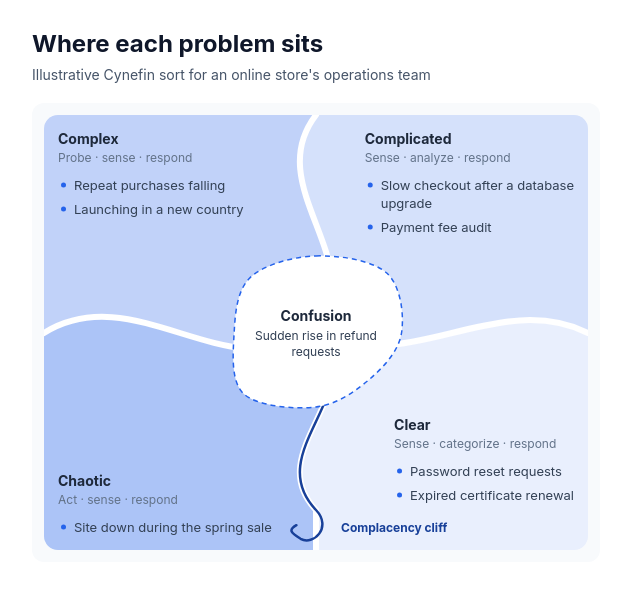 CynefinFor sorting supplied situations, incidents, decisions or kinds of work by how cause and effect relate, so a team agrees how to respond: incident triage, strategy choices, portfolio or project work types, leadership coaching.
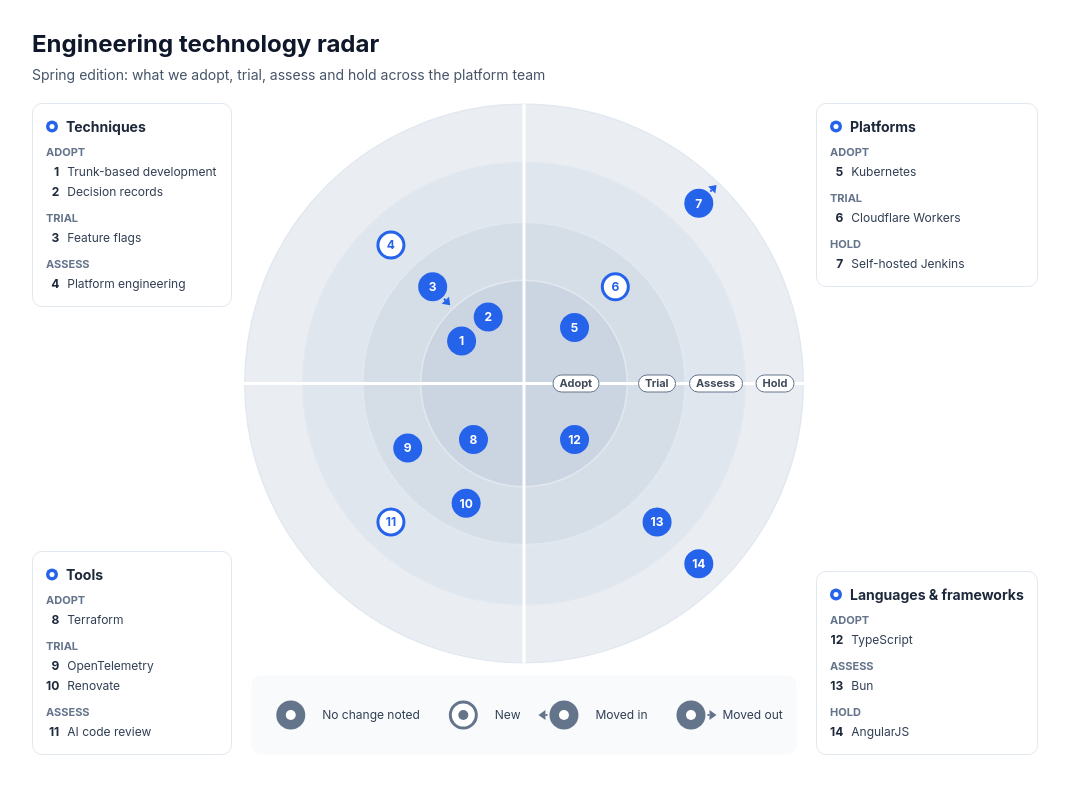 Radar: four quadrantsFor sorting six to twenty named items into four categories and three or four ordered commitment levels: technology radars (adopt, trial, assess, hold), vendor and tool shortlists, initiative portfolios by readiness, market or channel bets by commitment, and practices by maturity.