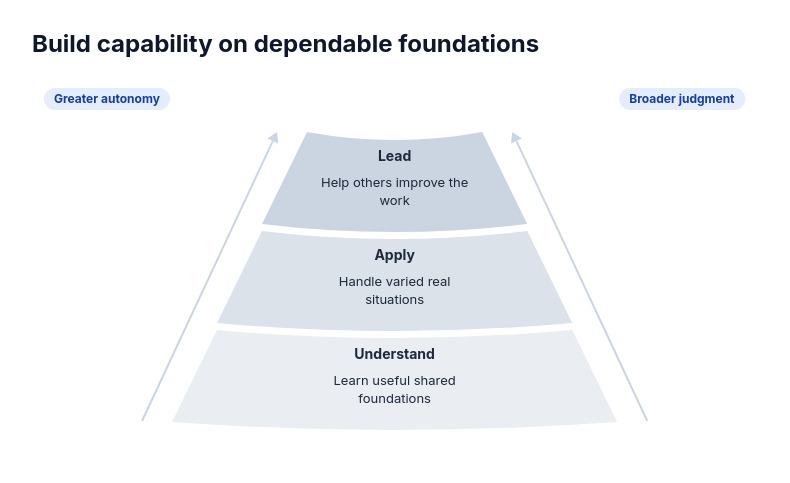
Diagram template
Pyramid: curved bands
PowerCurved level boundaries form one tapered model with two explicitly named upward progressions beside it.
Categories
Included in
Power, Max
When to use it
Use for a capability pathway, a service hierarchy or levels of learning. The paired rails name two whole-model progressions, without per-level pair claims or measured gradients.
Adjust after generating
Change the style, colors, and font, and these options, as often as you like without spending credits.
- Typography
- Spacing
- Color distribution
- Card fill
What you fill in
Describe your topic in plain words and the AI fills these in. You can edit every field afterwards.
- Left
- Name
- Right
- Name
- Levels
- 3 to 5, each with label and description
Related templates
All pyramid templates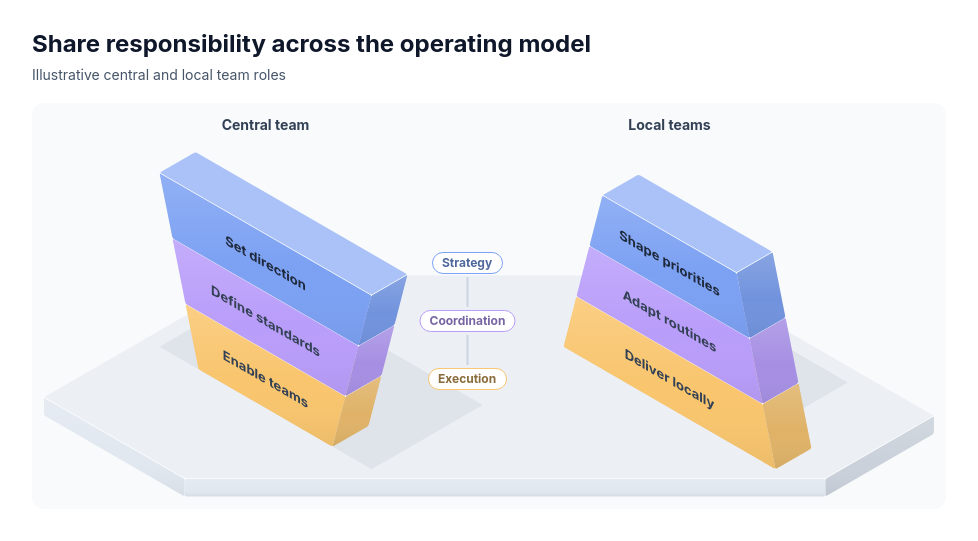 Comparison: isometric opposed pyramid tiersCompare central and local responsibilities, paired service-tier roles or two learning perspectives at the same ordered levels.
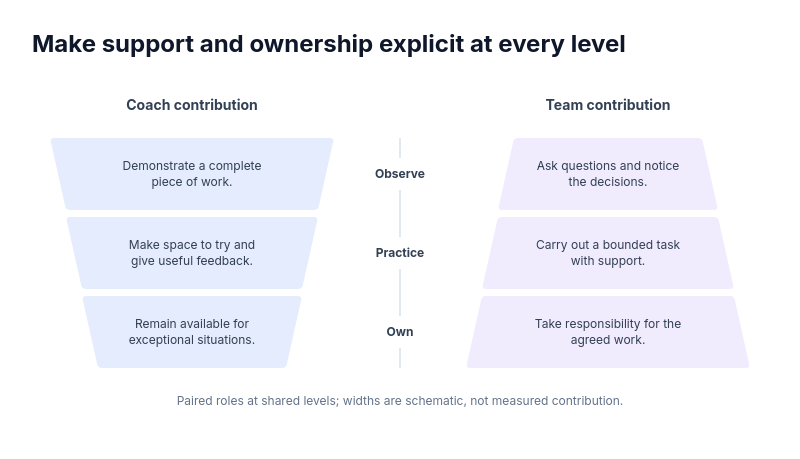 Comparison: opposed tapered tiersFor paired support and ownership roles, training perspectives or current and future responsibilities.
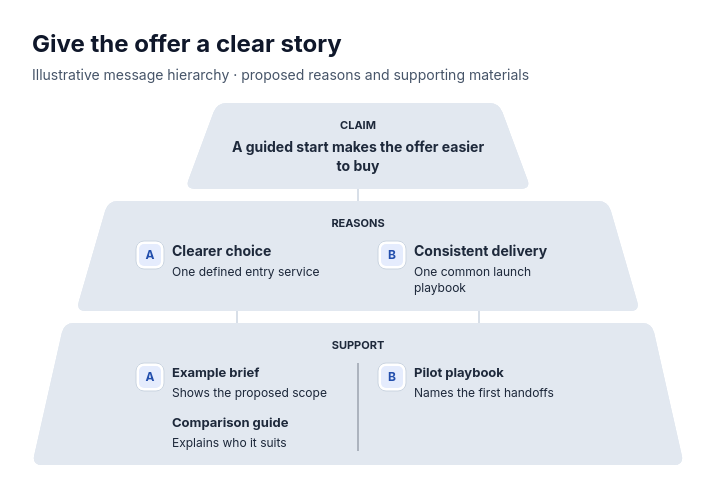 Pyramid: claim apexFor any argument that connects one proposed claim to two or three supplied reasons and the specific support behind each: executive recommendations, offer pitches, research or policy summaries, hiring or investment cases, project proposals.
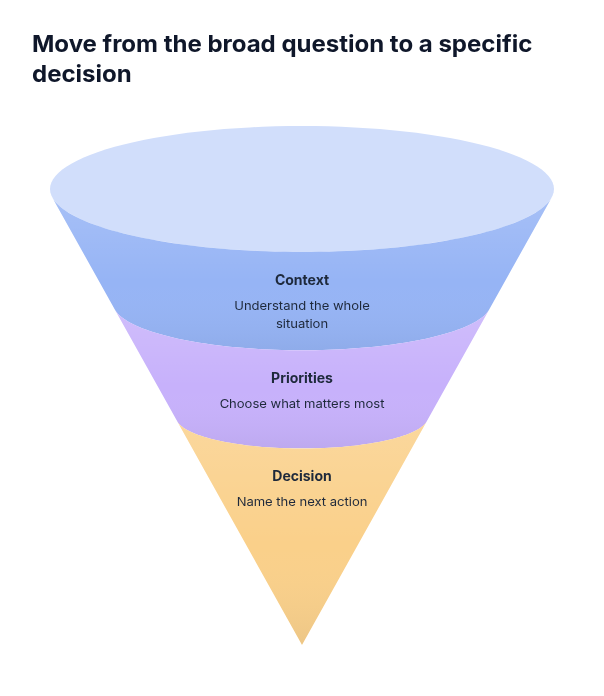 Pyramid: inverted curved solid tiersBroad-to-specific explanations, editorial hierarchies and narrowing priorities.
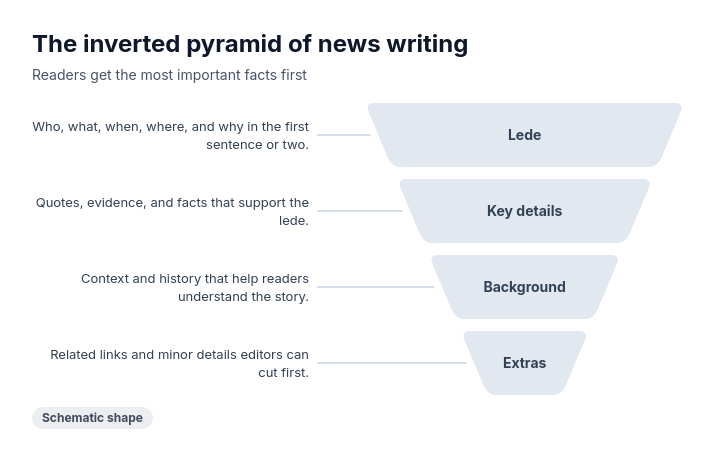 Pyramid: inverted levels with left explanationsA supplied top-to-bottom hierarchy such as news-writing structure or broad-to-specific scope.
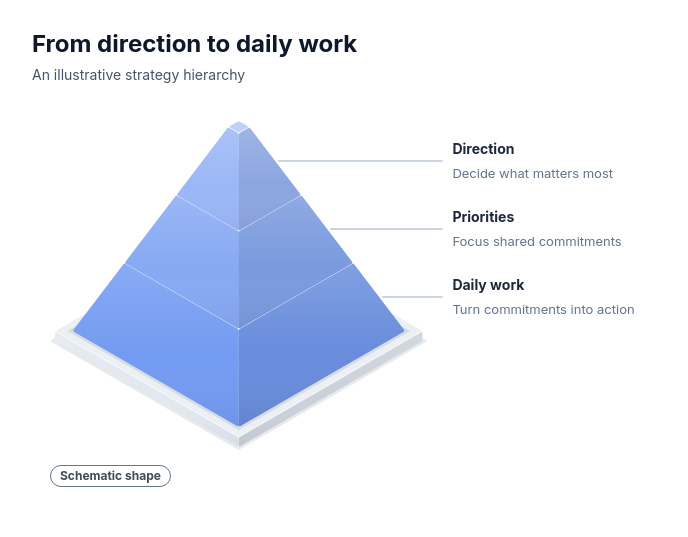 Pyramid: isometric tapered solid tiersA familiar hierarchy with short tier-owned explanations: strategic direction to daily work, support escalation levels, or learning levels.