Diagram template
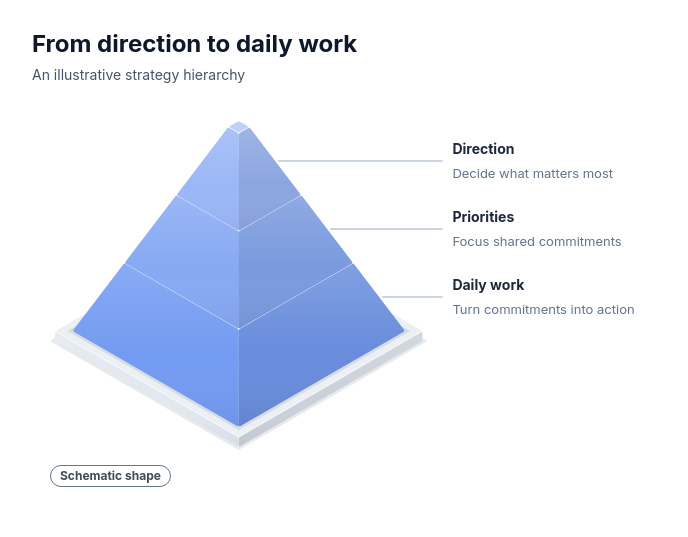
Pyramid: isometric tapered solid tiers
MaxThree or four touching tapered solid tiers form one continuous square pyramid with a small flat cap. Upright side notes connect to the exact tier they explain.
Categories
Included in
Max
When to use it
Use for a familiar hierarchy with short tier-owned explanations: strategic direction to daily work, support escalation levels, or learning levels. Supply the hierarchy from apex to base. Shape, areas and heights are schematic and do not encode quantities, elapsed time or inferred rank. Not a funnel, an unordered list or a quantitative population pyramid.
Adjust after generating
Change the style, colors, and font, and these options, as often as you like without spending credits.
- Typography
- Material
What you fill in
Describe your topic in plain words and the AI fills these in. You can edit every field afterwards.
- Levels
- 3 to 4, each with title and description
Related templates
All pyramid templates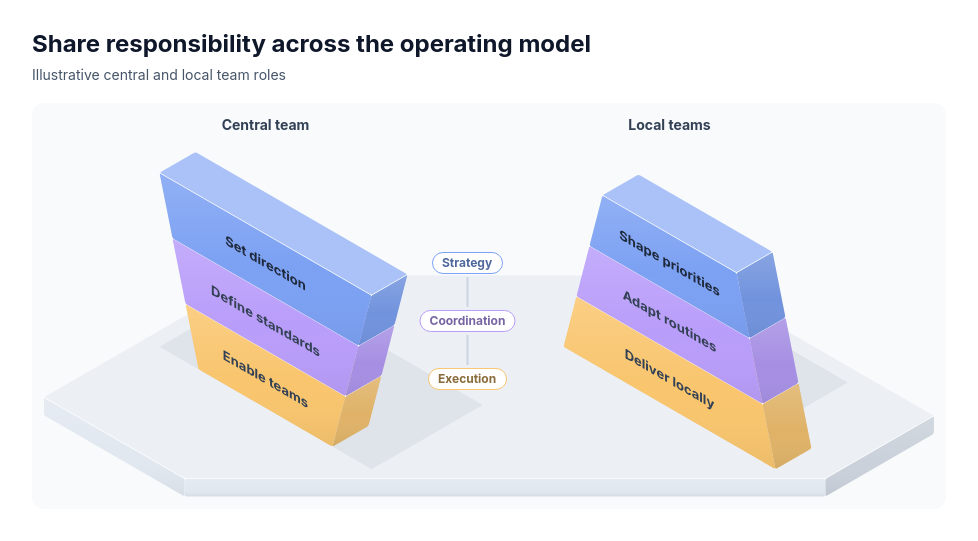 Comparison: isometric opposed pyramid tiersCompare central and local responsibilities, paired service-tier roles or two learning perspectives at the same ordered levels.
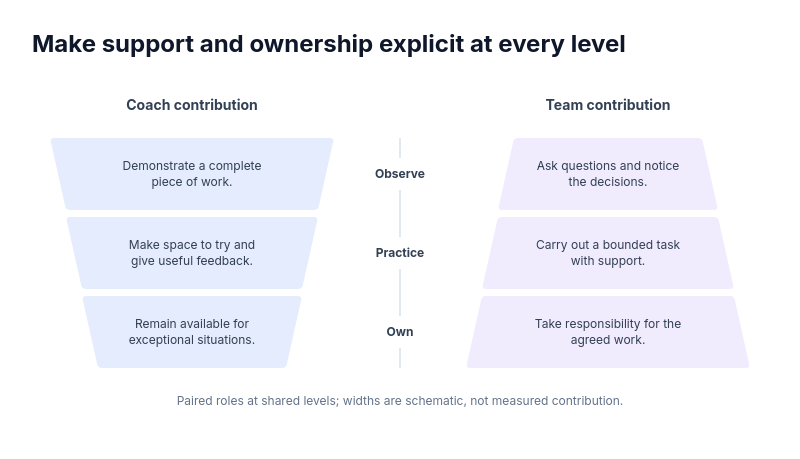 Comparison: opposed tapered tiersFor paired support and ownership roles, training perspectives or current and future responsibilities.
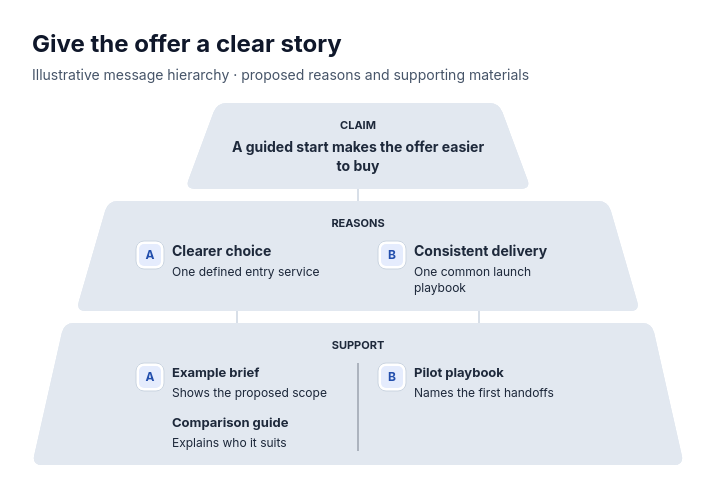 Pyramid: claim apexFor any argument that connects one proposed claim to two or three supplied reasons and the specific support behind each: executive recommendations, offer pitches, research or policy summaries, hiring or investment cases, project proposals.
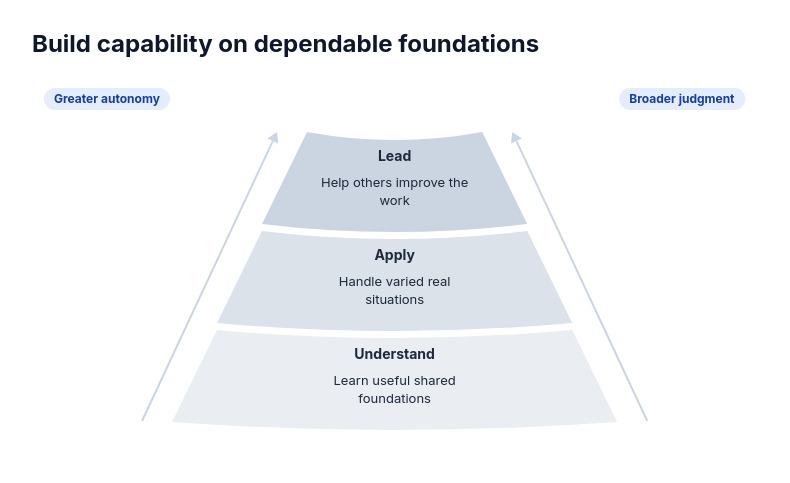 Pyramid: curved bandsA capability pathway, a service hierarchy or levels of learning.
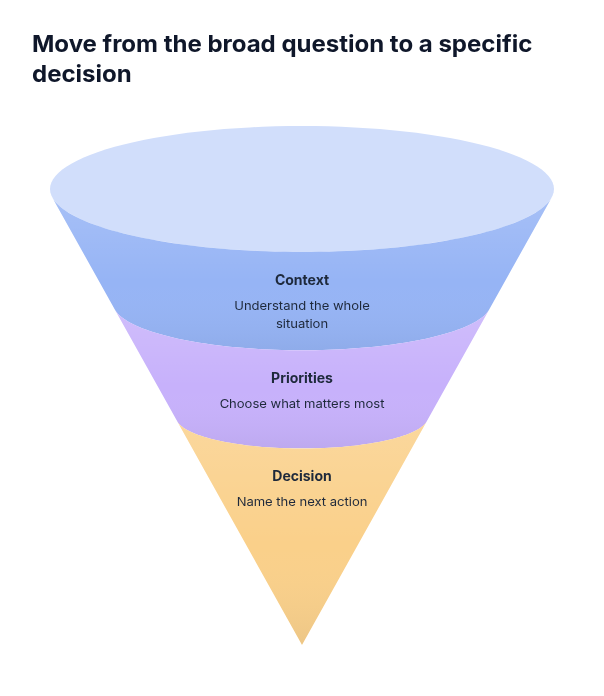 Pyramid: inverted curved solid tiersBroad-to-specific explanations, editorial hierarchies and narrowing priorities.
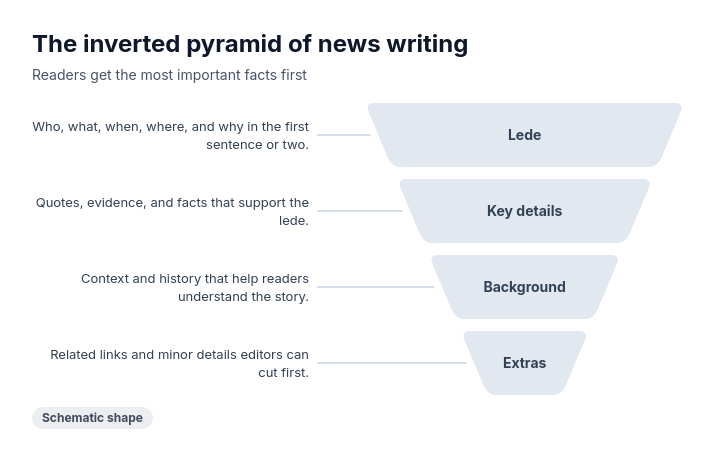 Pyramid: inverted levels with left explanationsA supplied top-to-bottom hierarchy such as news-writing structure or broad-to-specific scope.