Diagram template
Tree
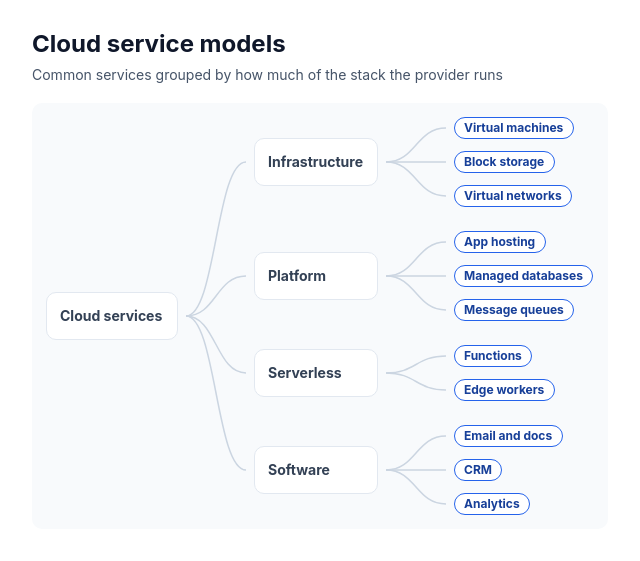
A left-to-right taxonomy with measured root and category cards, compact leaf pills, and curved parent-child links. Every subtree uses its top-level branch color; terminal root branches are drawn honestly as leaves.
Categories
Included in
Free, Pro, Power, Max
When to use it
Use for a classification of four to thirty concepts under two to six root branches over up to four levels, such as a product catalog, content taxonomy or platform service catalog. A branch may be terminal or have descendants; only nodes with children draw category cards. Not for processes, timelines, people org charts, comparisons or yes/no decisions.
Adjust after generating
Change the style, colors, and font, and these options, as often as you like without spending credits.
- Card shape
- Card fill
- Color distribution
- Card border
- Card shadow
- Typography
- Spacing
- Alignment
- Material
- Connectors
- Line weight
What you fill in
Describe your topic in plain words and the AI fills these in. You can edit every field afterwards.
- Nodes
- 4 to 30, each with id, optional parent, and label
Related templates
All tree templates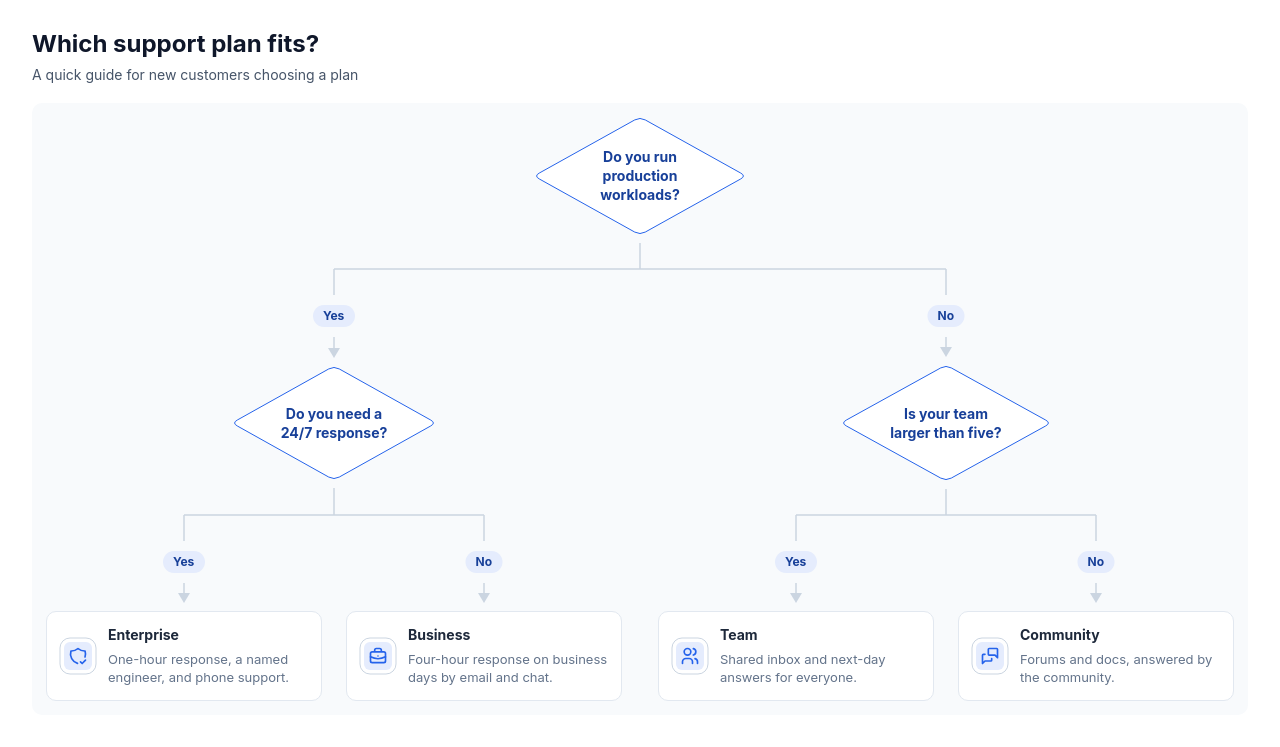 Decision treeOne to four questions with two or three answers each that lead to two to six outcomes over up to four levels, such as choosing a plan, approving a request, triaging a ticket, or picking a tool.
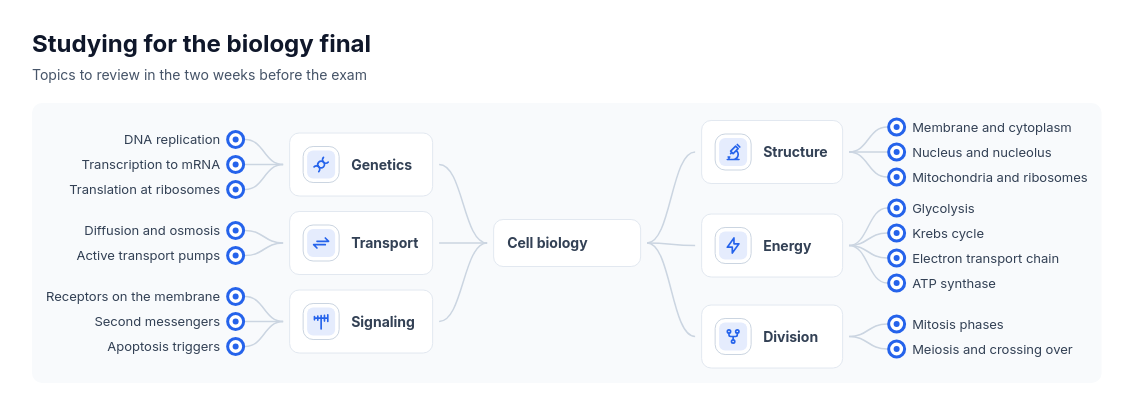 Mind mapOne topic broken into two to eight branches with up to five short sub-items each, such as a brainstorm, a study outline, a feature map, or the areas of a plan.
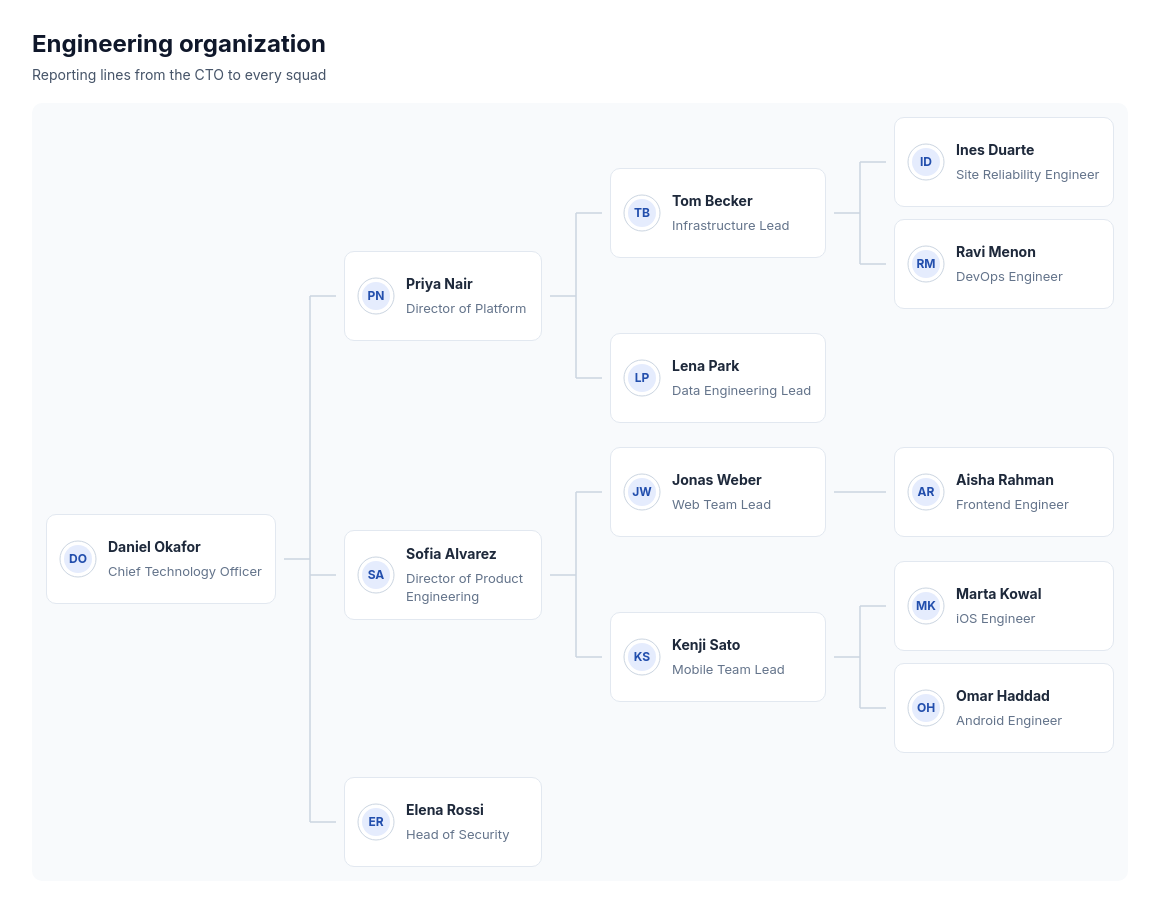 Org chart: left to rightA reporting hierarchy of three to twenty people over up to four levels, with at most six direct reports each, such as a company down to its team leads or a department down to individual contributors, with or without names.
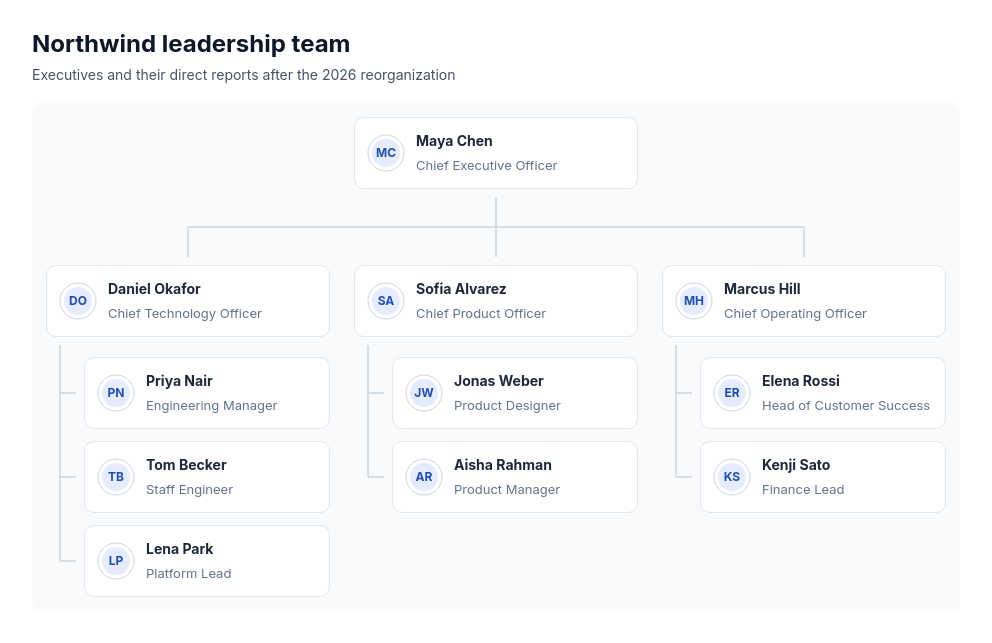 Org chart: top-downThree to fifteen people over up to three reporting levels, with two to five direct reports to the leader and up to five reports per manager.