Diagram template
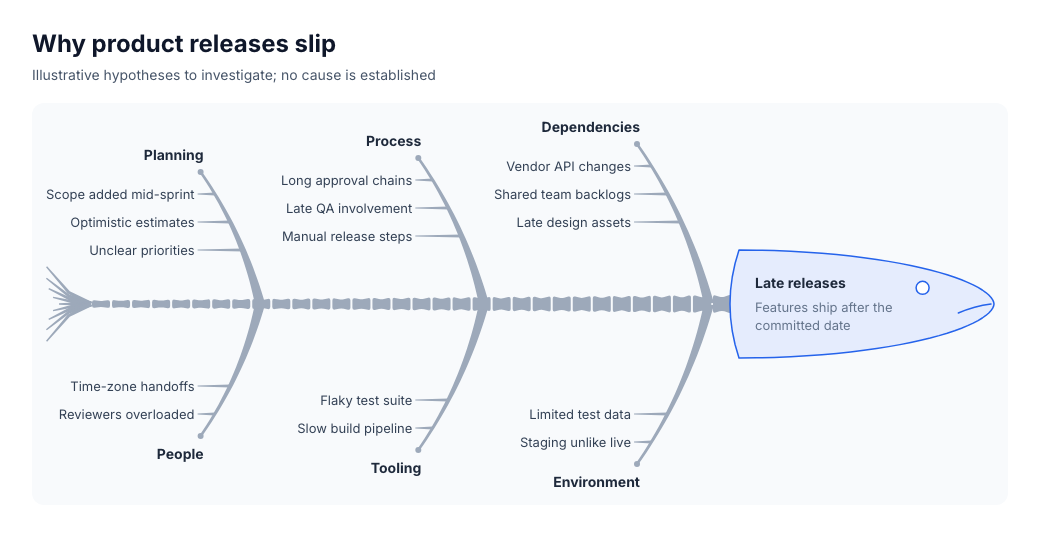
Fishbone: fish skeleton
A fish skeleton whose head holds the effect: a spine of vertebrae tapering from the head to a rayed tail fin, with two to six categories named at the tips of curved, tapering ribs that sweep back above and below it, and zero to four causes listed beside each rib, each joined to it by a fine barb.
Categories
Included in
Max
When to use it
Use to organize supplied or explicitly brainstormed possible causes of one problem or outcome, such as late releases, a recurring defect or customer churn, with two to six categories and zero to four causes per category. Empty categories remain open; supplied causes may belong to multiple categories. Rib length and position are schematic: no cause is ranked or proven by them. Not for multi-level chains of subcauses, hierarchies, taxonomies, processes, timelines, or comparisons.
Adjust after generating
Change the style, colors, and font, and these options, as often as you like without spending credits.
- Typography
- Spacing
What you fill in
Describe your topic in plain words and the AI fills these in. You can edit every field afterwards.
- Effect
- Label and optional description
- Groups
- 2 to 6, each with name and causes
Related templates
All tree templates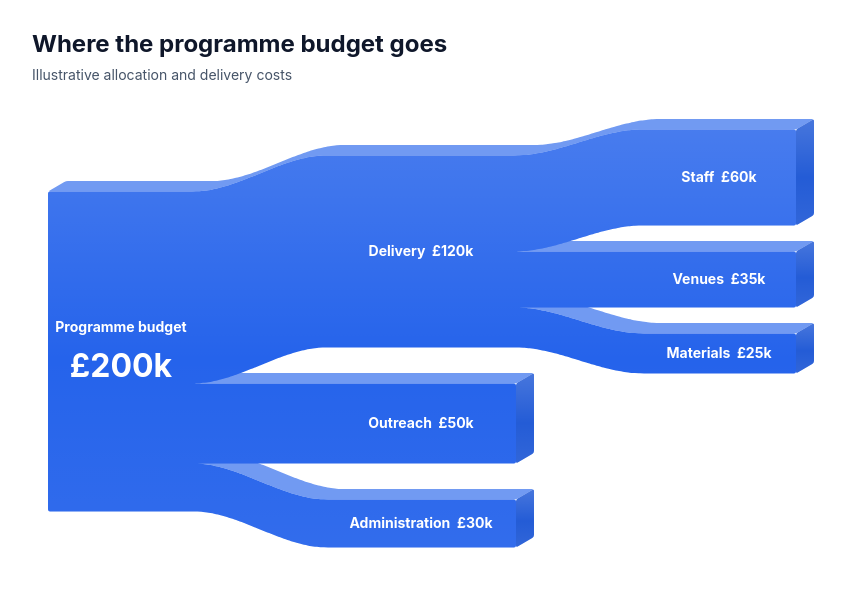 Allocation treeA positive common-unit allocation with two to four parts and an exact complete two-to-four-part breakdown of one selected parent.
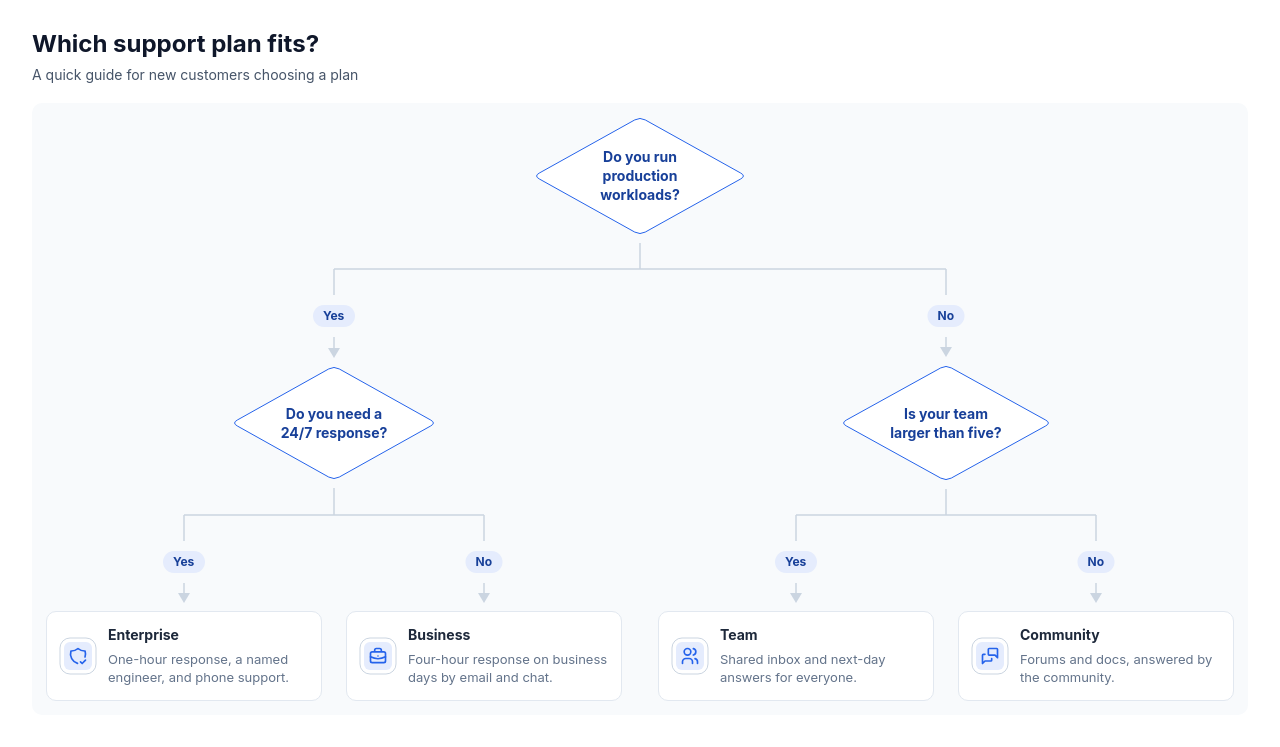 Decision treeOne to four questions with two or three answers each that lead to two to six outcomes over up to four levels, such as choosing a plan, approving a request, triaging a ticket, or picking a tool.
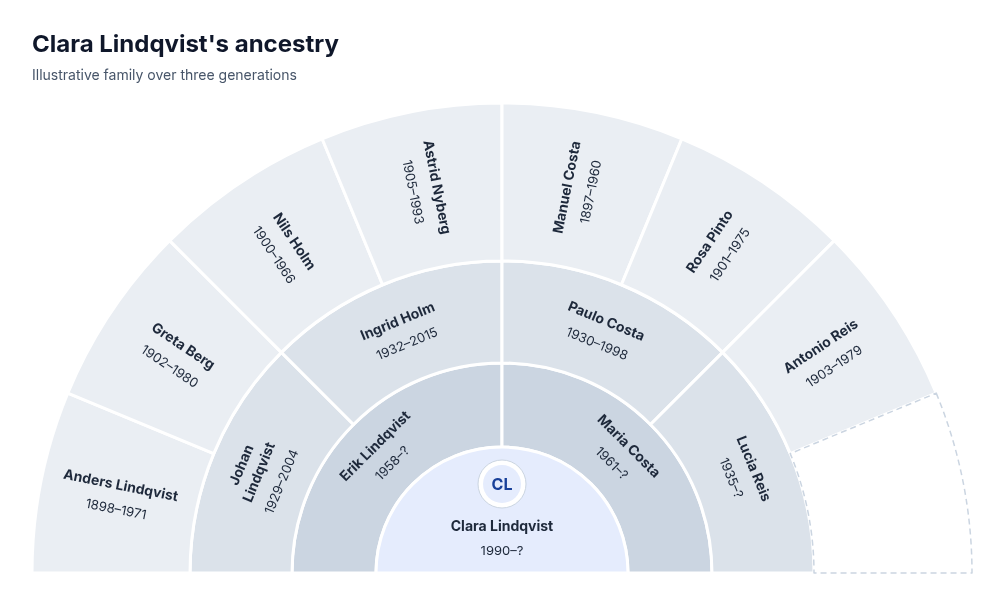 Family tree: ancestor fan chartThe ancestors of one person over one to three generations, such as a genealogy summary, a heritage or school family project, or a biography's background.
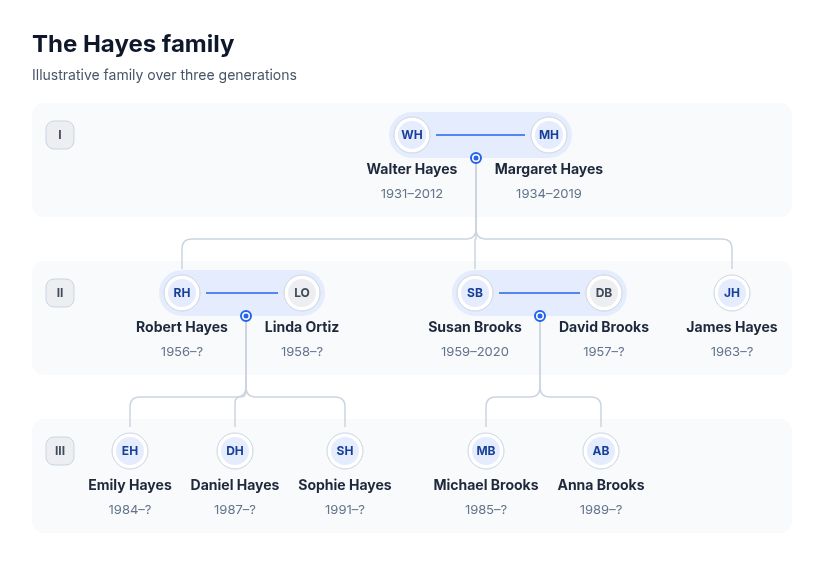 Family tree: top-down generation bandsA family's descendants over two to four generations from one founding parent or couple, such as a family history, a reunion handout or a biography's lineage.
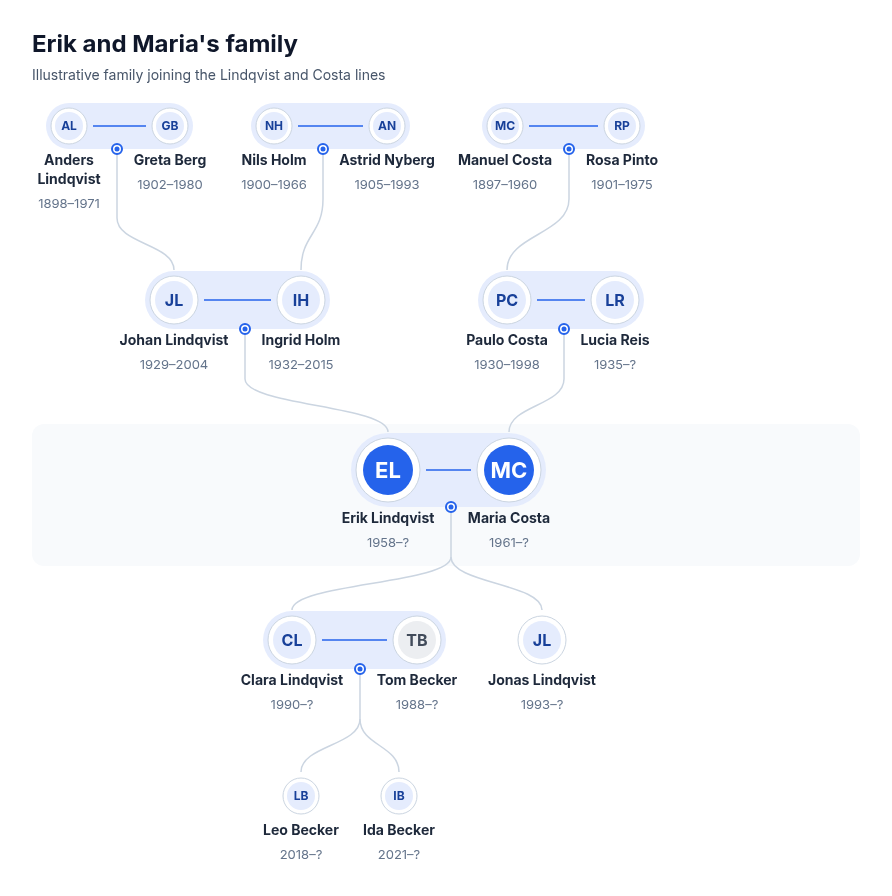 Family tree: hourglass around one coupleOne couple joins two family lines: a wedding or anniversary tree, a family history centred on one generation, a genealogy summary for two sides of a family.
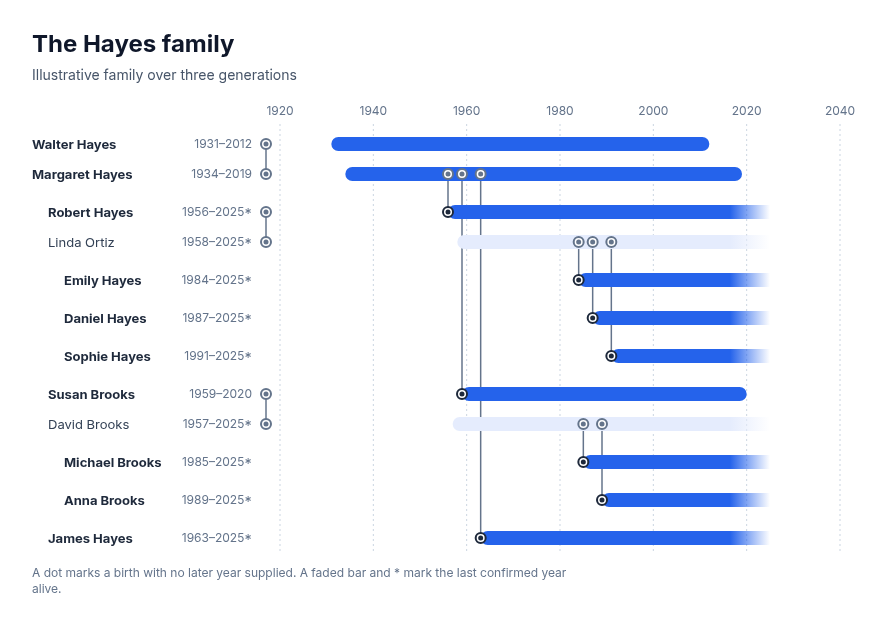 Family tree: lifespan bars on a shared year scaleBirth years and documented lifespan intervals matter, such as family histories, biographies and genealogy reports.