Diagram template
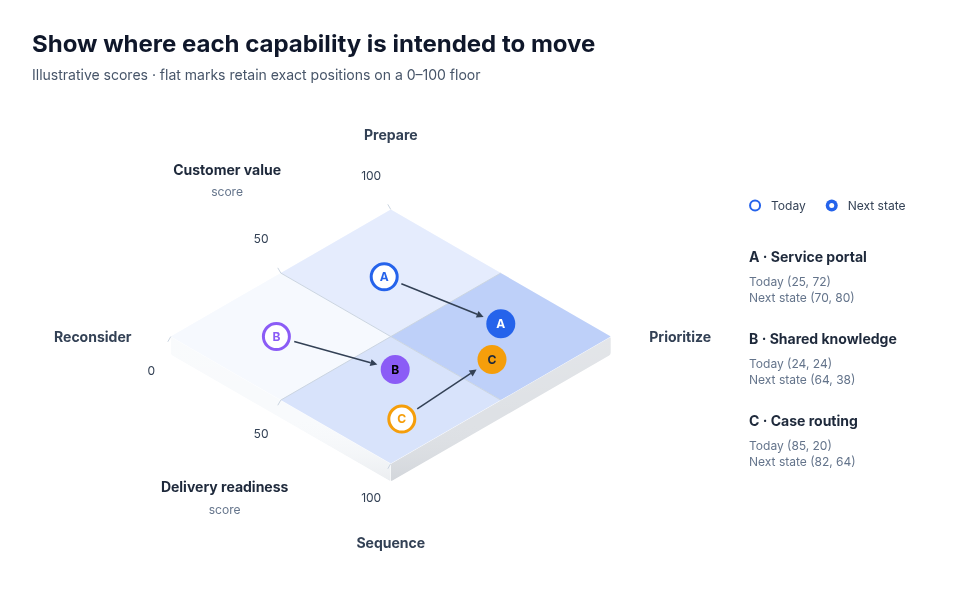
Matrix: isometric current–target floor
MaxA shallow four-quadrant floor retains exact current and target coordinates on fixed zero-to-one-hundred axes. Direct arrows and matching letter keys connect positions to a complete coordinate ledger.
Categories
Included in
Max
When to use it
Three capability shifts, service priorities or portfolio moves on supplied zero-to-one-hundred scores. Thresholds and destinations must be supplied. Sparse positions are required; collisions fail visibly instead of moving data.
Adjust after generating
Change the style, colors, and font, and these options, as often as you like without spending credits.
- Typography
- Material
What you fill in
Describe your topic in plain words and the AI fills these in. You can edit every field afterwards.
- X axis
- Label and optional unit
- Y axis
- Label and optional unit
- X split
- Number
- Y split
- Number
- Quadrants
- Exactly 4
- Current label
- Text
- Target label
- Text
- Nodes
- Exactly 3, each with id, label, x, y, and destination
Related templates
All matrix templates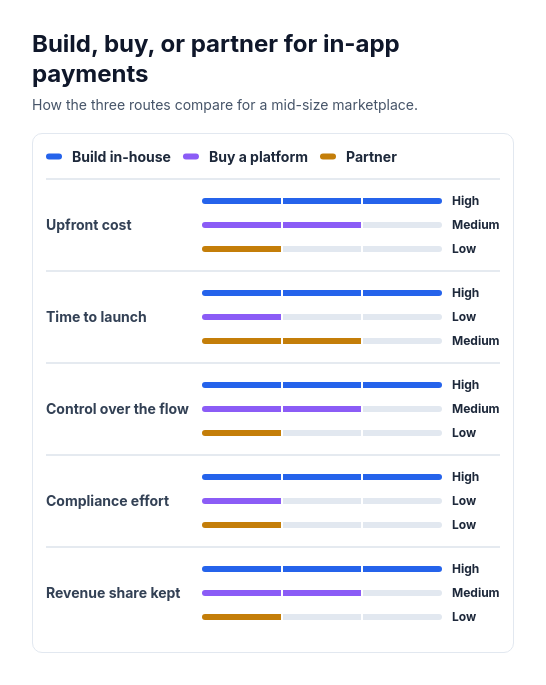 Attribute barsCompare two or three options across three to six attributes that can be scored or rated low, medium, or high, such as cost, speed, and effort.
 Bar chartCompare three to ten amounts of the same kind, such as sales by region, survey answers, or time per task.
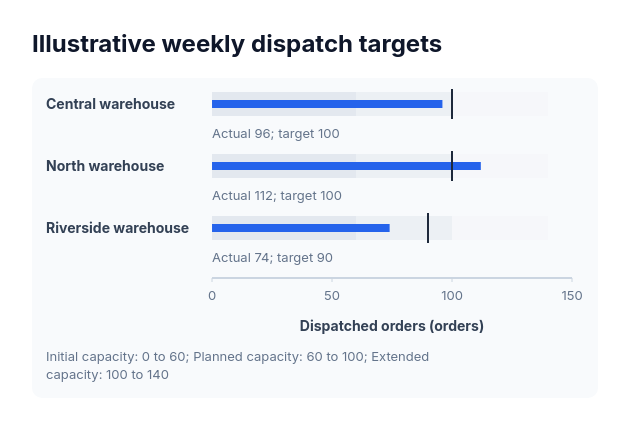 BulletActual-versus-target values sharing one nonnegative scale and explicitly supplied range boundaries.
 Annotated lineSuits explaining the turns in one measure over time: monthly active users with launches and outages, revenue with pricing changes, support volume with policy changes, website traffic with campaigns, headcount with reorganisations.
 Chart: arc diagramShow how much pairs of participants share, and who is most connected, when order along a line helps: joint projects between teams, referrals between channels, cross-sell between products, trade between regions, co-authorship between groups.
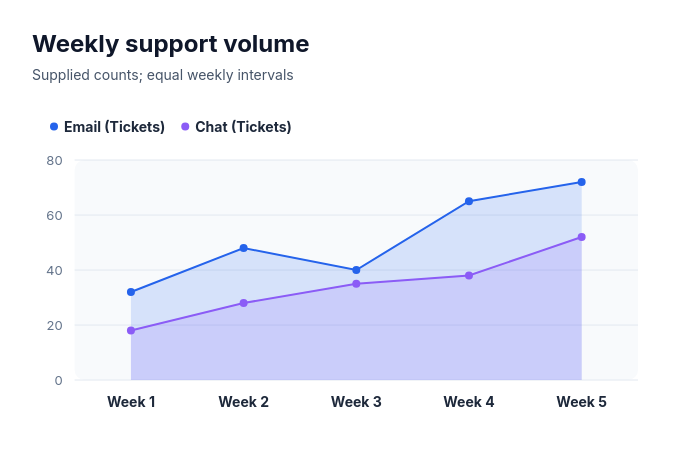 Area chartCompare 1–4 complete nonnegative series over 3–10 supplied equally spaced ordered categories as overlapping filled areas from zero, with point and line boundaries.