Diagram template
Force field
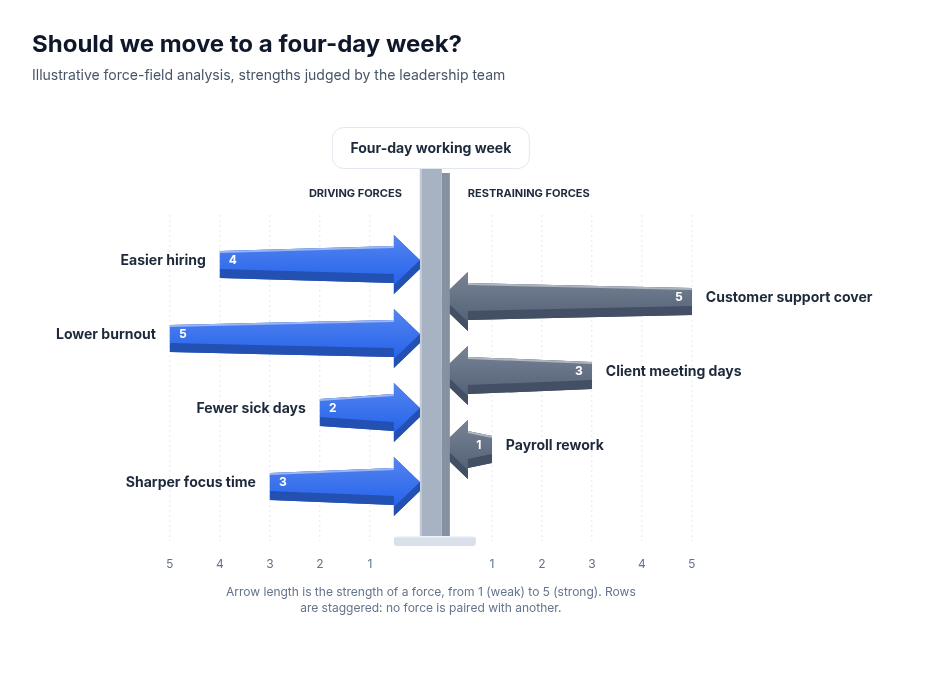
A force-field analysis drawn as two sets of solid tapered arrows pressing on one central wall that carries the proposed change. Driving forces push from the left and restraining forces from the right, each arrow as long as its supplied strength on one shared scale of one to five, with the score on its shaft and faint unit lines behind. The two sides sit on staggered rows so no force is paired with an opposing one. Each side has its own heading.
Categories
Included in
Max
When to use it
Suits weighing what pushes for and against one proposed change when each force has a judged strength: adopting a tool, a reorganization, a policy or pricing change, a migration. Needs two to five driving and two to five restraining forces, each scored from one to five. Not for comparing two options, pros and cons without strengths, or customer switching forces with their four fixed roles: use a comparison, a pros and cons list, or the switching-forces framework.
What you fill in
Describe your topic in plain words and the AI fills these in. You can edit every field afterwards.
- Center
- Text
- Driving label
- Text
- Restraining label
- Text
- Driving
- 2 to 5, each with label and strength
- Restraining
- 2 to 5, each with label and strength
Related templates
All framework templates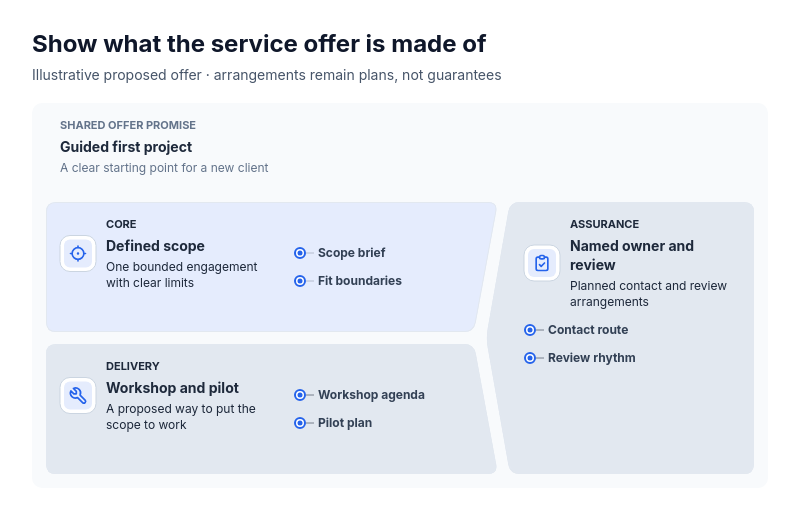 Anatomy: crowned subjectFor explaining what one thing is made of as a primary part, the part that carries it out and a part that spans both: a service offer (scope, delivery, assurance), a product (core function, how it ships, support), a course (content, format, learner support), an event (program, logistics, hosting) or a team charter (mission, ways of working, backing).
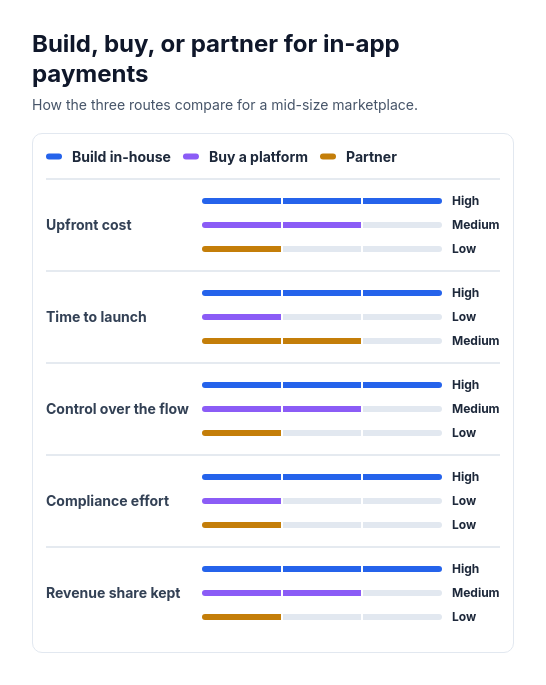 Attribute barsCompare two or three options across three to six attributes that can be scored or rated low, medium, or high, such as cost, speed, and effort.
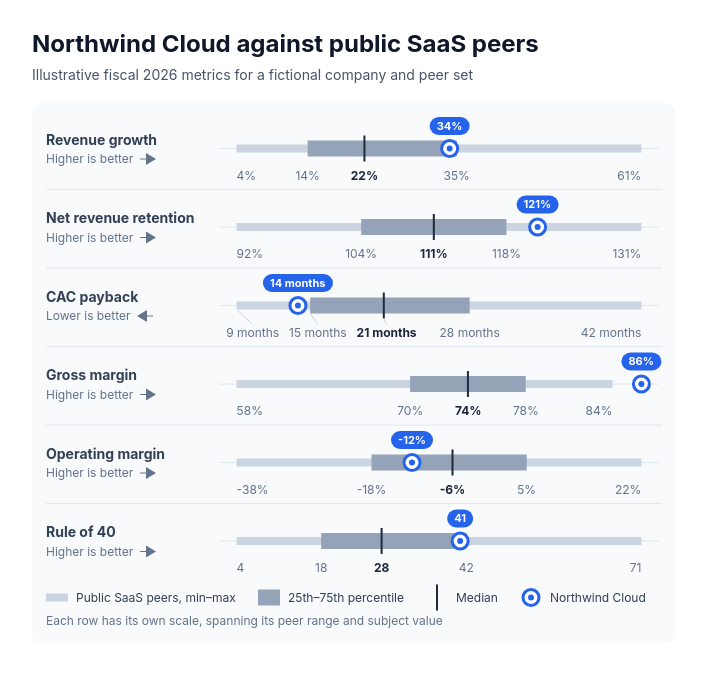 BenchmarkPlace one subject against a peer group's spread on two to eight metrics with different units: company or product benchmarks, a store or region against its network, salary or offer positioning against a market survey, a team or school against its organization.
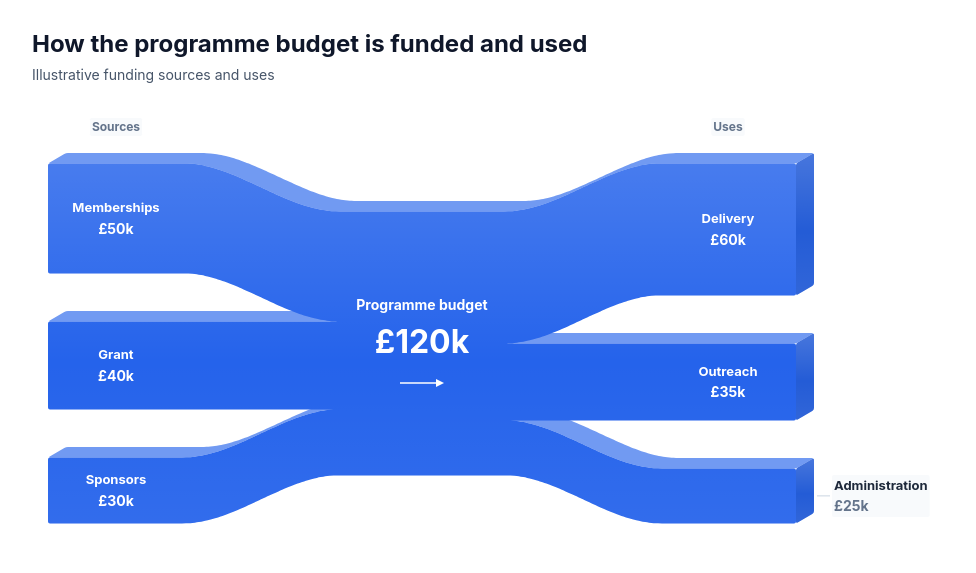 Conserved wholeTwo complete nonnegative marginal breakdowns of one positive common-unit total: funding sources and uses, staffing hours and work allocations, or energy supply and end uses.
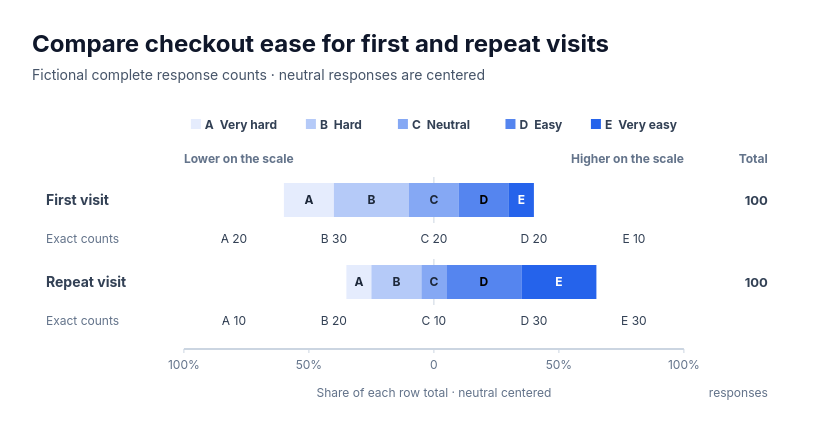 Chart: five-class ordered scaleFor complete supplied counts on one five-class ordered scale compared across two or three groups: survey agreement by segment, review star ratings by product, risk ratings by business unit, performance grades by team or difficulty ratings by release.
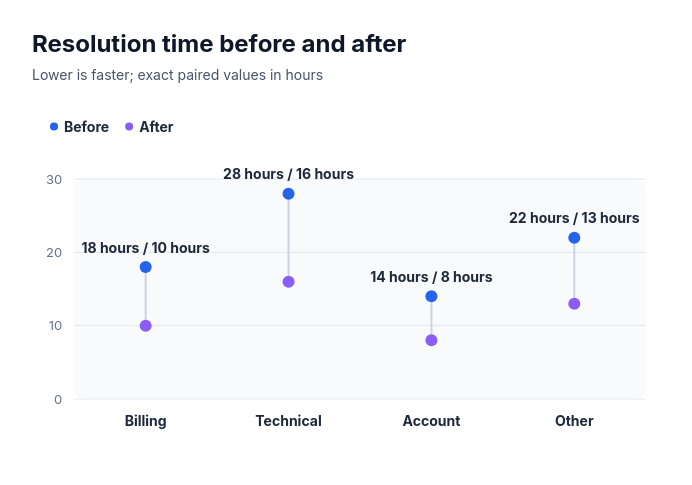 Dumbbell: vertical paired valuesCompare 2–8 paired signed finite before and after amounts as linked vertical points on one common axis.