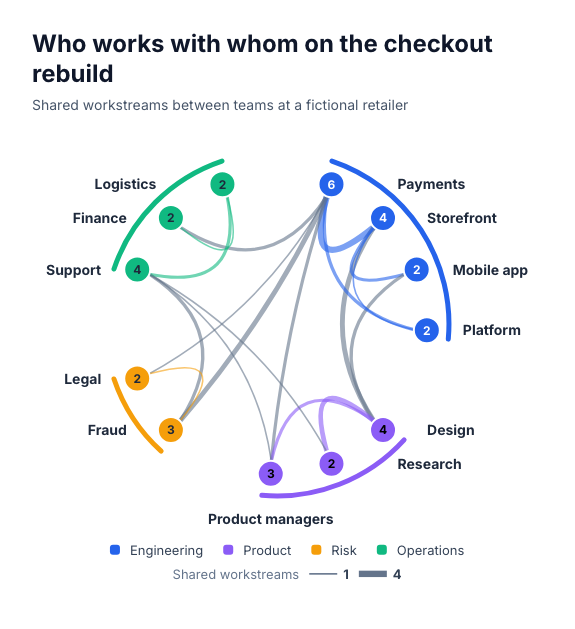
Diagram template
Network diagram
Six to fourteen named nodes placed on one circle in two to four named groups, each group marked by an outer arc, with undirected links drawn as curved chords through the interior whose width is a supplied whole-number value, each node disc showing its derived number of links, and a key of groups and link widths below.
Categories
Included in
Max
When to use it
Suits who works with whom and how strongly: stakeholder maps, partner ecosystems, collaboration between teams, dependencies between systems, trade between regions. Needs every node in one group and one whole-number value per link in a common unit. Not for hierarchies or reporting lines (use an org chart or tree), ordered flows (use a flowchart or Sankey), or one central hub with satellites (use a hub-and-spoke design).
Adjust after generating
Change the style, colors, and font, and these options, as often as you like without spending credits.
- Typography
- Spacing
What you fill in
Describe your topic in plain words and the AI fills these in. You can edit every field afterwards.
- Value label
- Text
- Nodes
- 6 to 14, each with id, name, and group
- Edges
- 5 to 24, each with from, to, and value
Related templates
All hub & spoke templates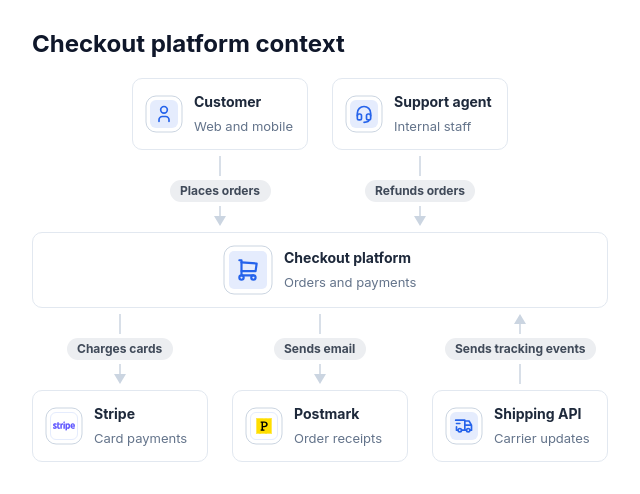 Architecture: system contextA C4 system context diagram, a "who uses it and what it depends on" slide, or an integration overview: one system, one to four actors that use it, and one to five external systems it calls or that call it, each link saying what it does.
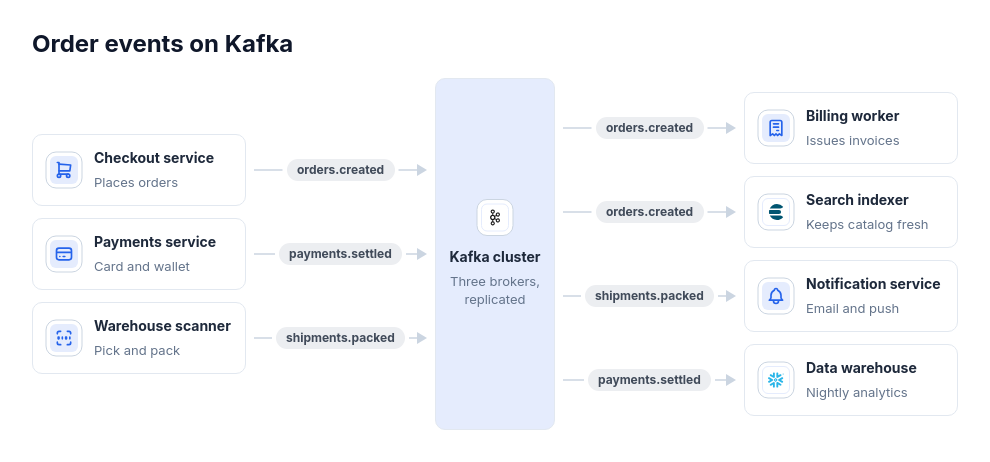 Architecture: event hubEvent flows through one broker, bus, or topic hub with one to five producers and one to five consumers, such as Kafka topics, Google Pub/Sub, SNS fanning out to SQS queues, EventBridge rules, or a webhook gateway delivering to several handlers; built for fan-in and fan-out.
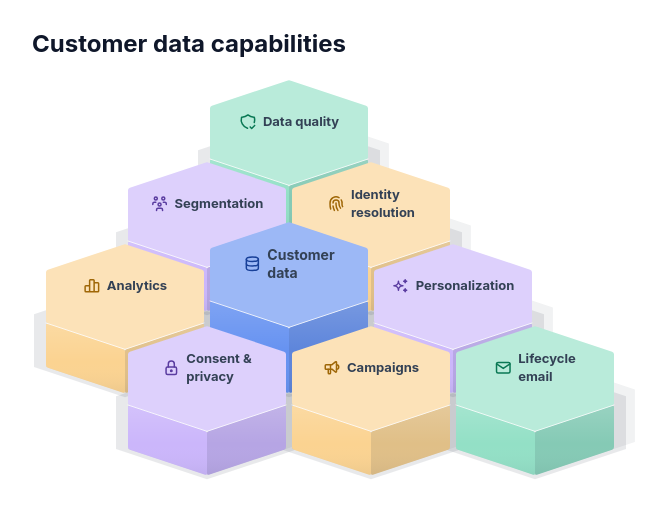 Framework: hexagonal prism clusterCapabilities around a core offer, skills around a team's purpose, services around a platform or workstreams around a programme goal, where which parts sit next to each other matters.
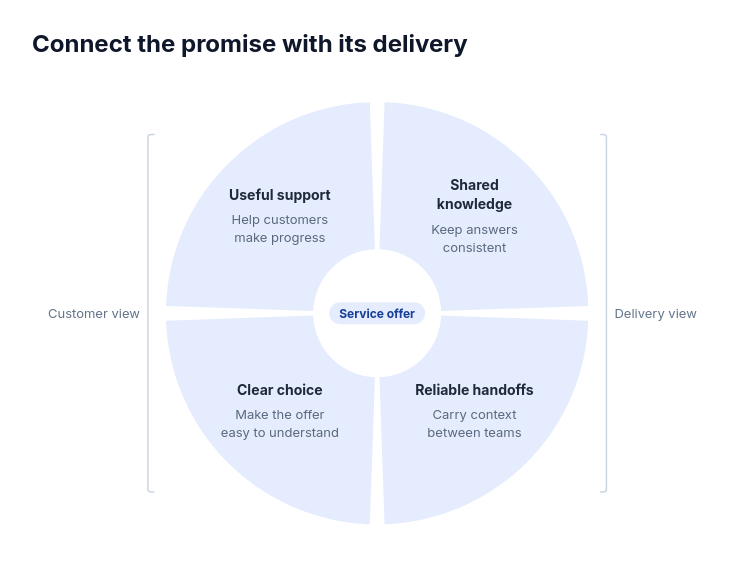 Framework: quarter ringOffer design with demand and delivery; Programme inputs and outcomes; Partnership contribution and support.
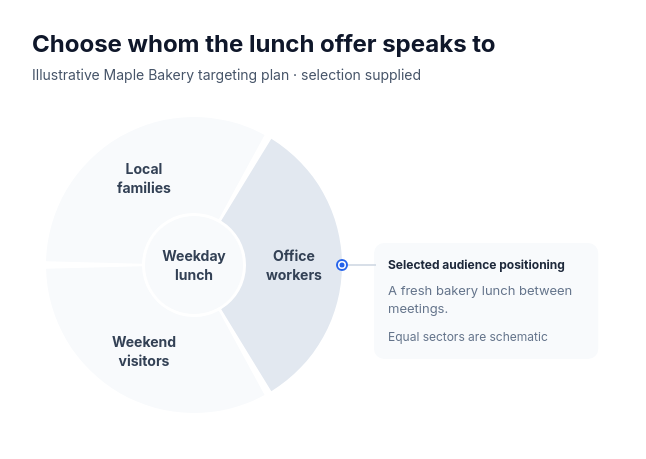 Framework: ring sectorsFor one supplied choice among three or four considered options with a single statement about the selected one: a target audience and its positioning, a pilot region and why it goes first, a shortlisted vendor and the deciding reason, or a chosen scenario and its premise.
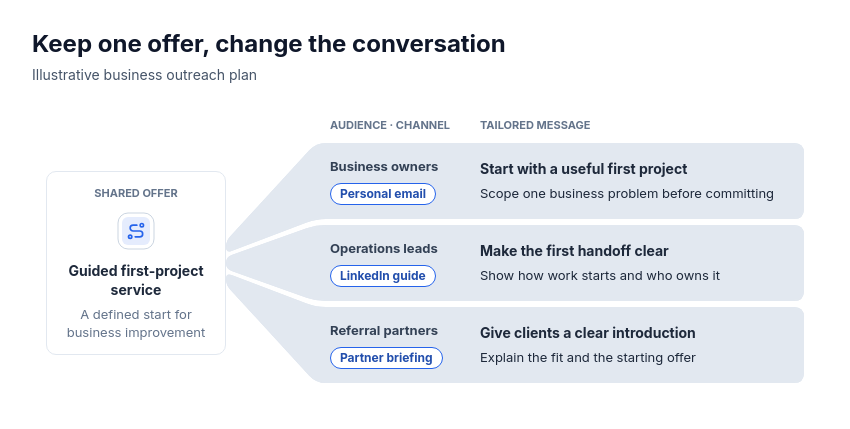 Framework: shared source fanFor one shared basis adapted per branch: an offer tailored to audiences with their channels, a platform packaged into tiers with their prices, a policy applied per region with its owner, or a curriculum adapted per cohort with its format.